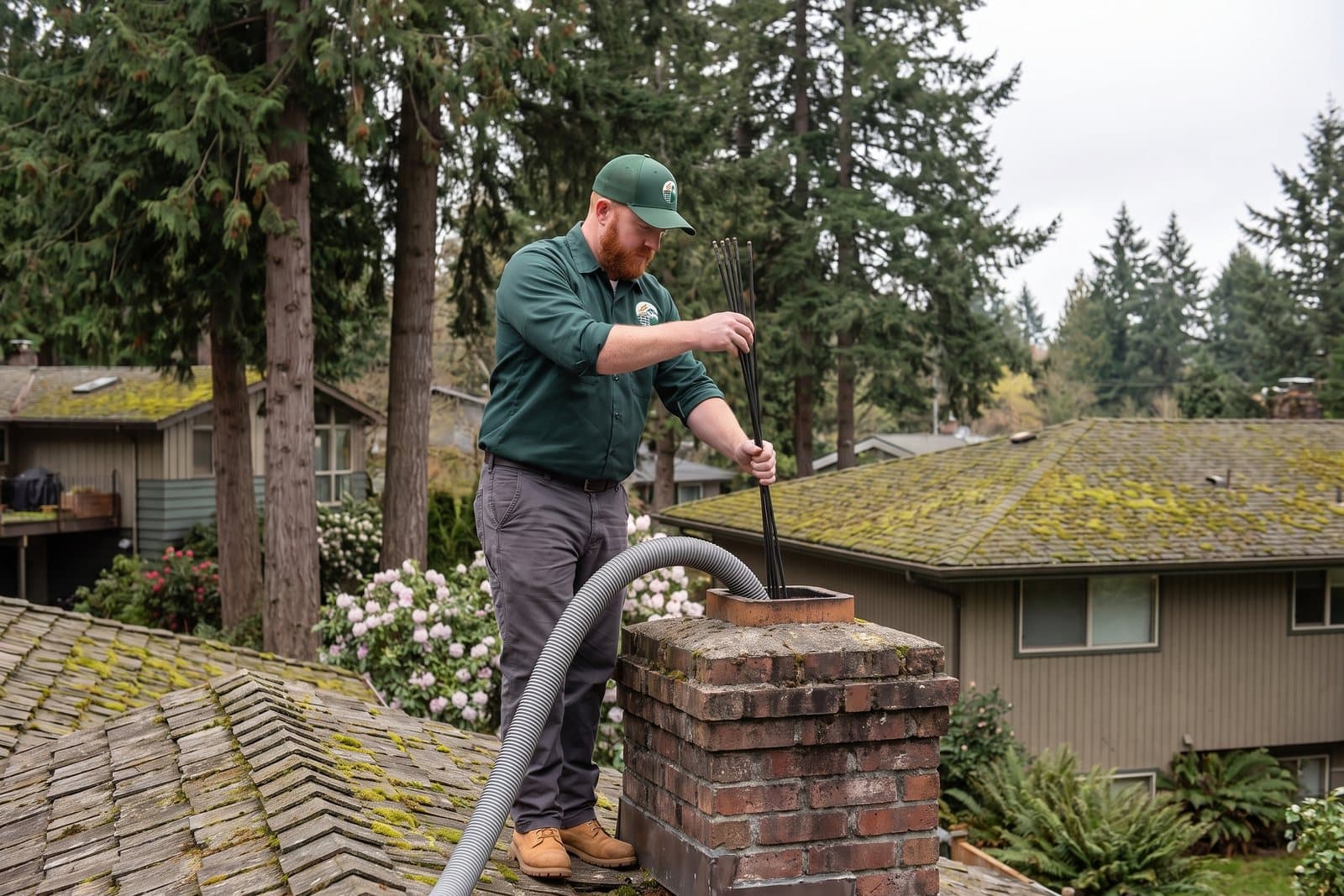
A gas fireplace leaves no ash in the firebox and no creosote on the flue walls, so it is easy to assume it looks after itself. The flame is the clean part. Everything around it, from the vent pipe and the liner to the cap on the roof and the gasket that seals the glass, keeps aging whether the fire burns every night or twice a winter. Kirkland adds its own stresses: long wet seasons, steady winter wind and a canopy of trees that feeds moss and needles onto roofs. Below is what a yearly look at a gas fireplace should cover, why each item matters, and the signs that should not wait for the next scheduled visit.
A clean flame still has parts that wear
The yearly inspection in NFPA 211 applies to gas venting as much as to wood-burning flues. The State Fire Marshal's September 2026 heating-safety notice, citing national data, ranks chimneys, flues and burners as the source of 77 percent of reported home heating fires in 2024, using national data. Gas units are part of that picture: burners clog, ignition parts corrode, and a vent that stops drawing properly does its damage quietly.
Gas is also the everyday fuel on the Northshore. Nearly half of the city's households, per recent Census survey data, use piped natural gas as their primary heat, so gas lines and gas appliances are common in the same houses where gas fireplaces are installed.
Wind, water and what lands on the vent
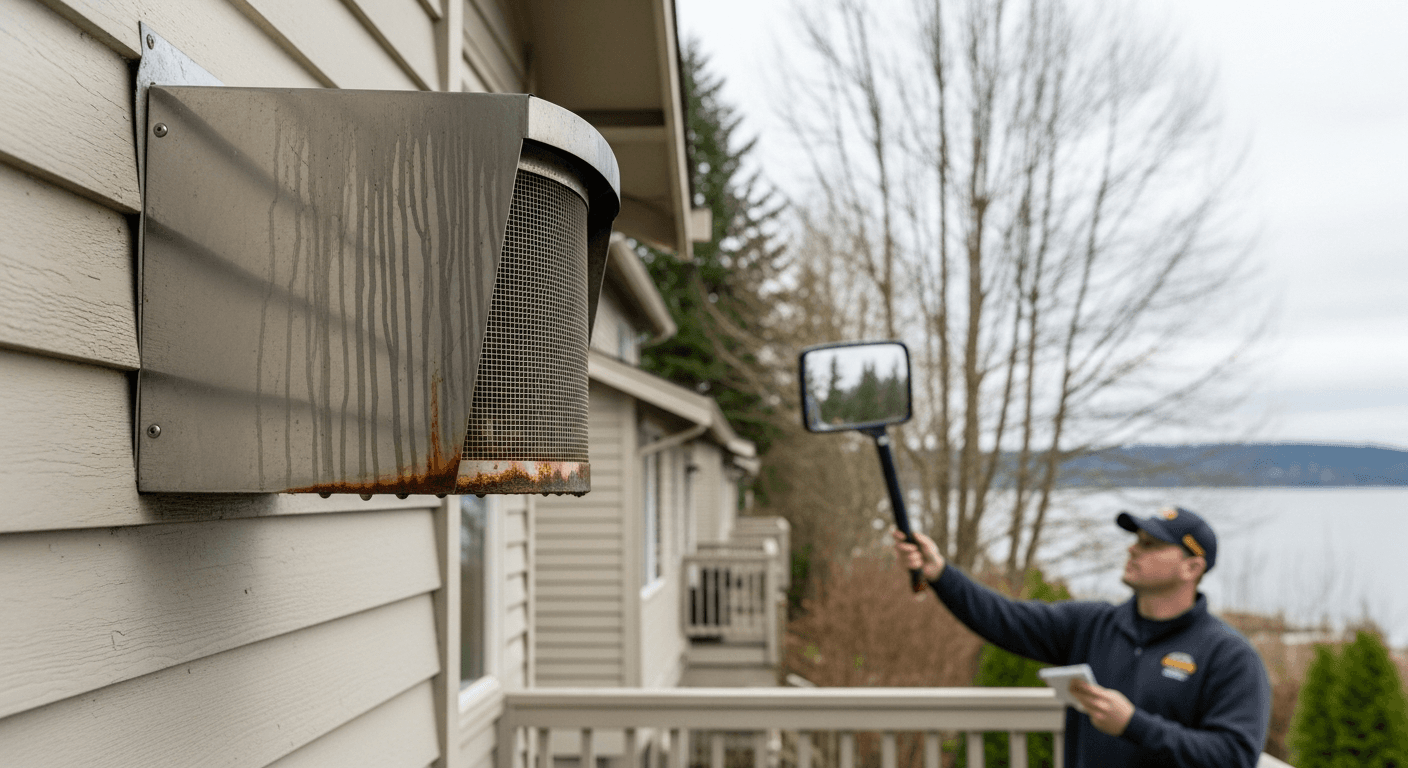
WeatherSpark places Kirkland's windier months between mid-October and late April, with December the windiest, and the wind blowing mostly from the south for about nine months of the year. That is the season when branches, needles and nesting material end up in vent terminations and chimney caps. A partly blocked termination can make a fireplace shut itself off, or worse, stop venting properly while it still runs.
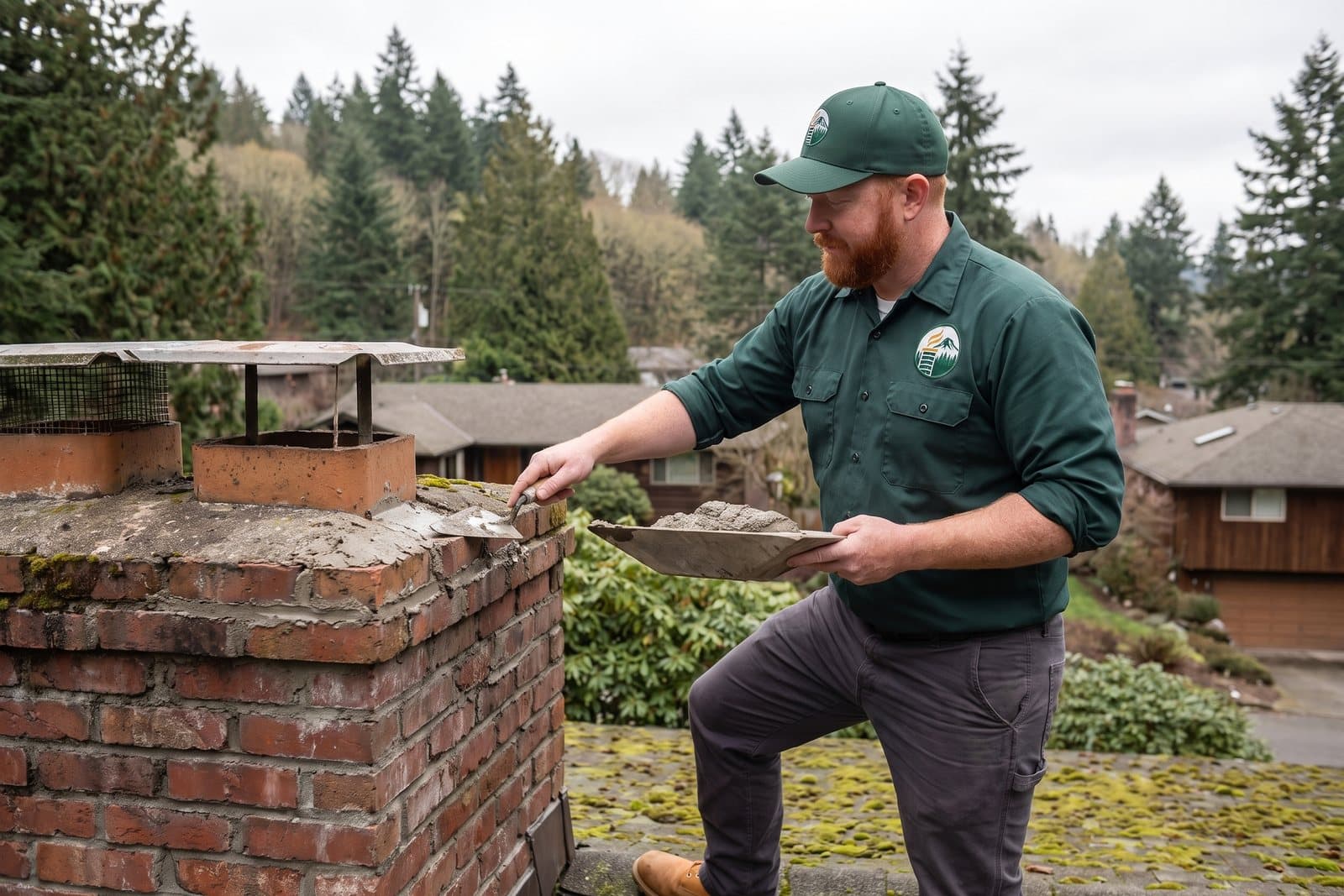
Oregon State University's extension service notes that moss in the Pacific Northwest is close to inevitable on shaded roofs and holds moisture and debris against everything it grows on. Around a chimney chase or a flashing joint, that trapped wetness speeds up rust on metal parts.
What a gas fireplace inspection covers
The checks below apply to most direct-vent units and gas inserts. Older vented log sets in masonry fireplaces add a look at the damper, which must be fixed open.
| Part | What gets checked | What trouble looks like |
|---|---|---|
| Vent termination and cap | Clear openings, secure mounting, intact screen | Nests, leaves, a loose or rusted cap |
| Liner or vent pipe | Joints sealed along the run, no corrosion | Separated sections, rust flakes, water stains |
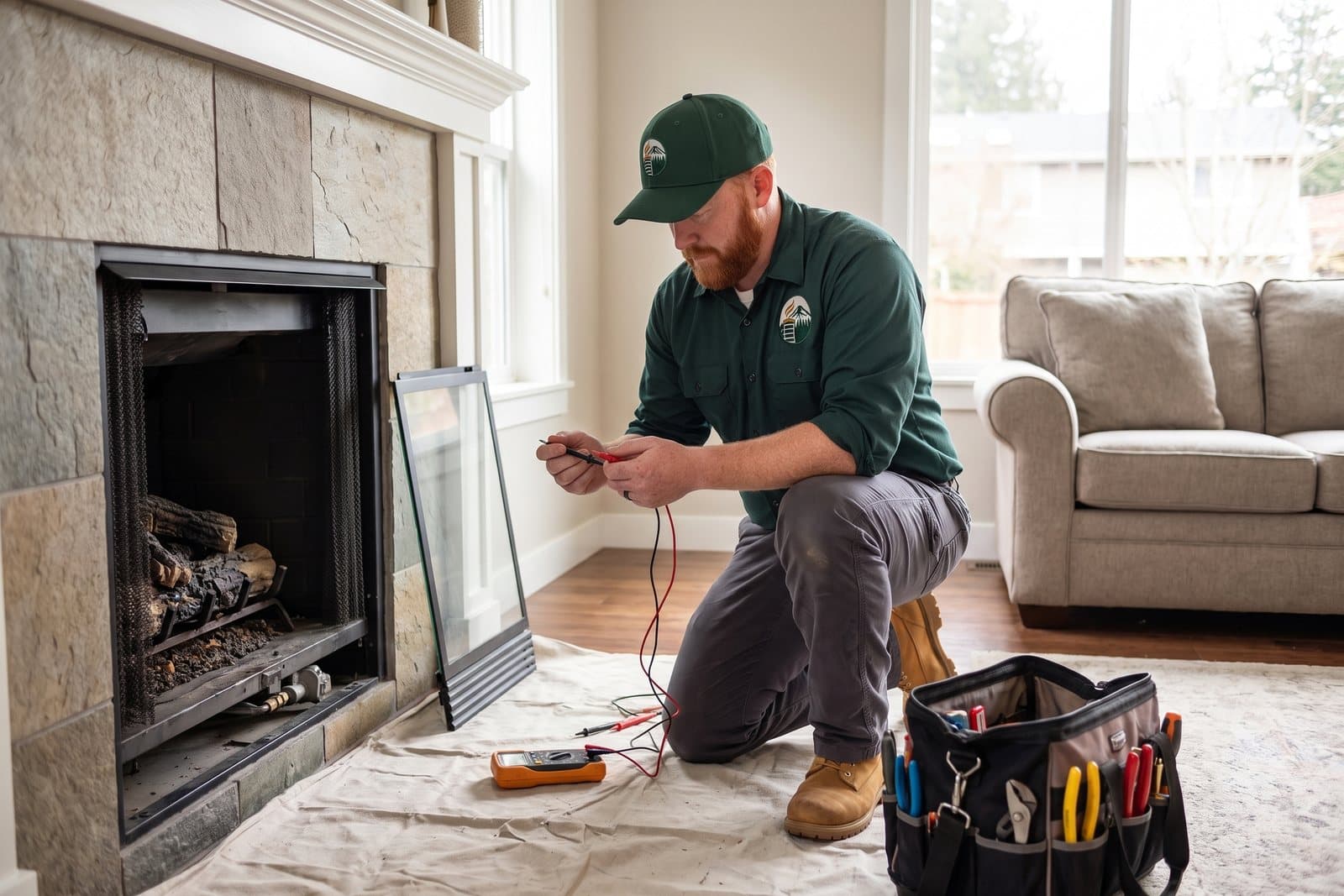
| Burner and log set | Ports clear, logs placed per the manual | Yellow, lazy or uneven flame |
| Glass and gasket | Seal intact, no cracks | White film or soot on the glass, a gap at the edge |
| Pilot and ignition | Steady pilot, reliable start | Pilot that goes out, repeated clicking with no flame |
Signs that should not wait for the yearly visit
Shut the fireplace off and call for service if you see soot building on the glass, flames that turn tall and yellow, or a smell of gas or of exhaust in the room. A pilot that keeps going out, or water marks on the wall or ceiling near the chimney chase, point to venting or sealing problems that get worse with every rainy week.
Whatever the appliance, make sure a working carbon monoxide alarm sits on each floor, with one close to where people sleep. An inspection finds problems that exist on the day of the visit; an alarm catches the ones that start later.
Booking and what it runs
Our inspection is priced per chimney at $99 plus tax, and that fee is credited back when you accept the repair quote that comes out of it. If the unit just needs cleaning and adjustment, gas fireplace service on our grid runs $189 to $479. A corroded or undersized liner is a relining job, from $1,900.
August and September leave the most open appointments, ahead of the first chilly week when half the neighborhood turns its fireplace on.
Frequently asked questions
Is a yearly inspection required by law for a gas fireplace?
Washington does not require homeowners to book one. NFPA 211 recommends a yearly look at any chimney or vent system, and the State Fire Marshal urges the same for chimneys. It is a recommendation, not a legal mandate.
What does it mean when the glass on my gas fireplace turns black?
Soot on the glass usually means the flame is not burning cleanly: ceramic logs knocked out of place, clogged burner ports, or exhaust that is not leaving freely. Turn the fireplace off and have it checked before using it again.
Do I still need a carbon monoxide alarm with a gas fireplace?
Yes. Any appliance that burns gas can produce carbon monoxide when venting fails. An alarm on each level of the home, and near bedrooms, is the backstop the inspection cannot replace.
How is the inspection priced?
Each chimney inspection is $99 plus tax; approve the repair quote it produces and we subtract that sum from the job. A routine gas fireplace service, when needed, is $189 to $479.
Sources
- CSIA — Homeowner Resources — accessed September 29, 2026
- WA State Fire Marshal — Heating safety — accessed September 29, 2026
- Census Reporter — ACS heating fuel — accessed September 29, 2026
- WeatherSpark — Kirkland climate — accessed September 29, 2026
- Oregon State University Extension — Controlling roof moss — accessed September 29, 2026
Related services