Chimney safety
A chimney does two dangerous jobs every time you light a fire: it carries away heat and it carries away gas. This guide covers what makes it fail in our climate and what you can do about it.
Almost every chimney problem ends in one of two places: fire, when deposits in the flue ignite or heat reaches framing it should never touch, or carbon monoxide, when exhaust that should leave through the top finds its way into the house. Going by the national numbers the Washington State Fire Marshal quotes, in 2024 more than three in four heating fires in residential buildings traced back to the chimney, its flue or the fuel-burning appliance.
Our part of the lake adds its own pressure. Kirkland lines the lake's eastern edge, Kenmore wraps its northern tip, and Bothell and Woodinville follow the Sammamish River inland. All four get the same long wet season, occasional snow in December and January, and a fault map that geologists take seriously. None of that makes a chimney unsafe by itself. It just means the yearly check does more work here.
The yearly baseline
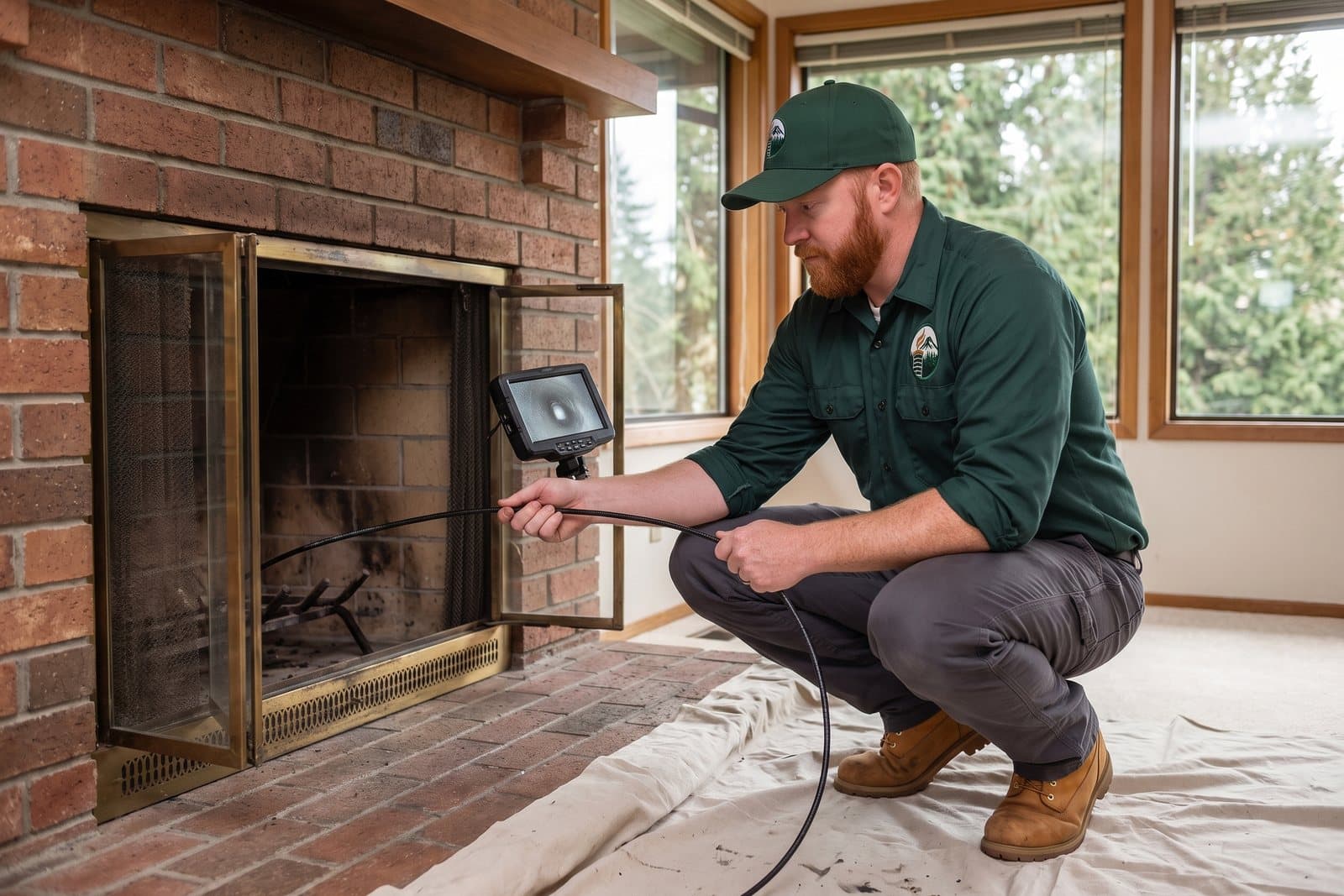
Under NFPA 211, the fire-safety standard that governs these systems, every chimney is due a yearly check of its structure, its deposits and its clearances. The Chimney Safety Institute of America recommends doing that Level 1 inspection together with a sweep. It sounds like routine, and it is, which is exactly why it works: small cracks and early buildup get caught while the fix is cheap.
A proper chimney inspection puts a camera where a flashlight cannot reach. Late summer, before the rain returns in October, is the easiest time to get it done.
Fuel in the flue
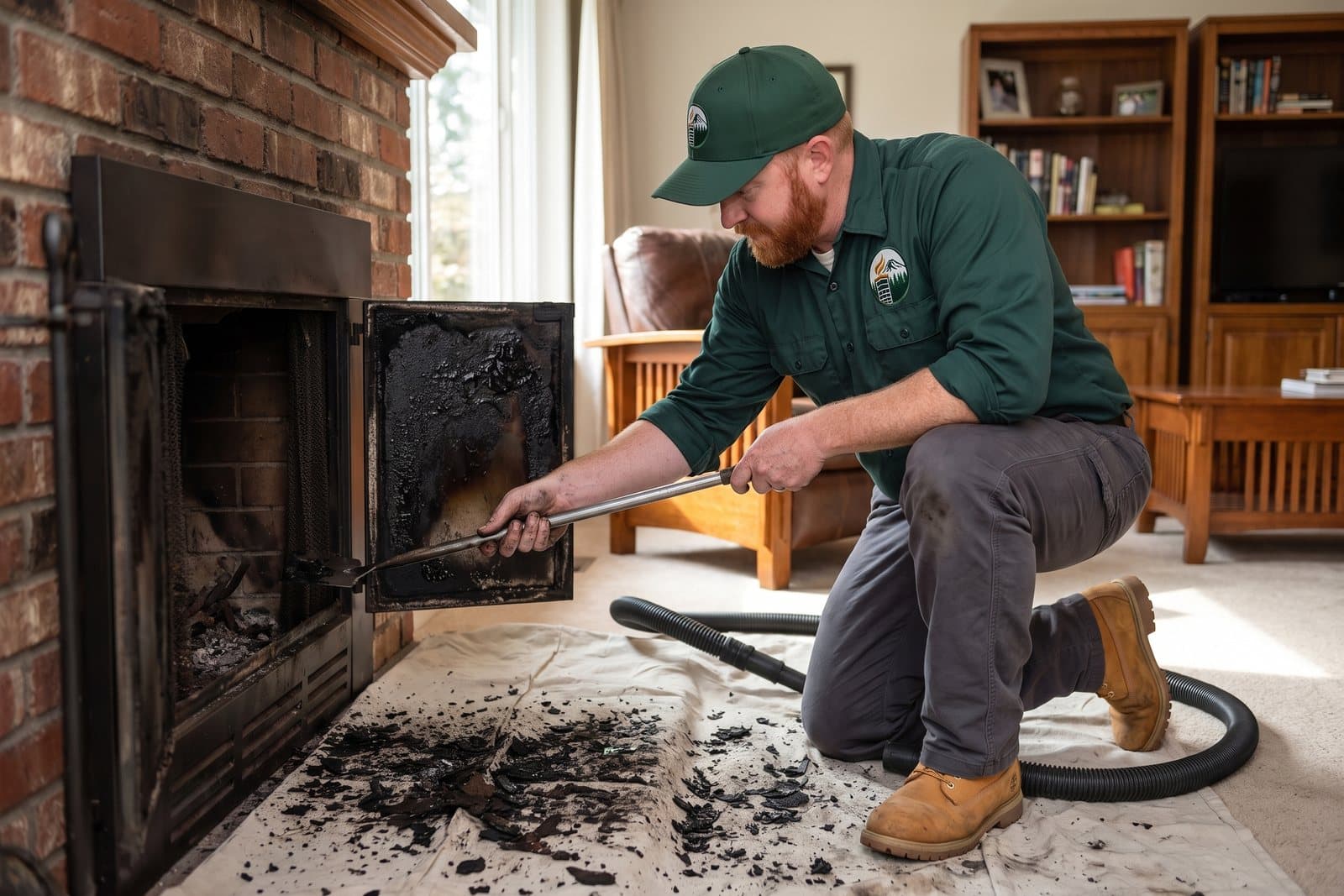
Smoke cools as it climbs, and what condenses on the flue walls is creosote. Wet wood and slow, smoldering fires make more of it. Every layer is fuel, and a chimney fire burning through that fuel can run hot enough to split clay tiles and scorch nearby framing.
Washington's rules help here too: only dry, seasoned firewood or manufactured logs may be burned, never garbage, treated lumber or plastic. A yearly chimney sweep handles the first two stages; the glazed third stage calls for creosote removal with dedicated treatment.
It has no smell and no color. Wood, gas, pellets and oil all produce it, and a blocked or broken flue can send it back indoors. An open flue, a sound liner and a CO alarm on each floor are what stand between it and you.
More on carbon monoxide
A chimney can serve more than the fireplace: in many houses a furnace or water heater vents into a flue of its own inside the same masonry. When all of it drafts properly, the exhaust rises and leaves. Trouble starts when something changes the path: a bird's nest in a capless flue, a liner joint that has separated, creosote narrowing the opening, or a gas insert added to a flue that was never sized for it. Then combustion gas can linger in the firebox or seep into a wall cavity and reach the bedrooms. A liner matched to the appliance, a cap to keep animals out, and a working alarm near every sleeping area are the simple answers. If the alarm sounds, get everyone outside first and ask questions later.
The wet half of the year
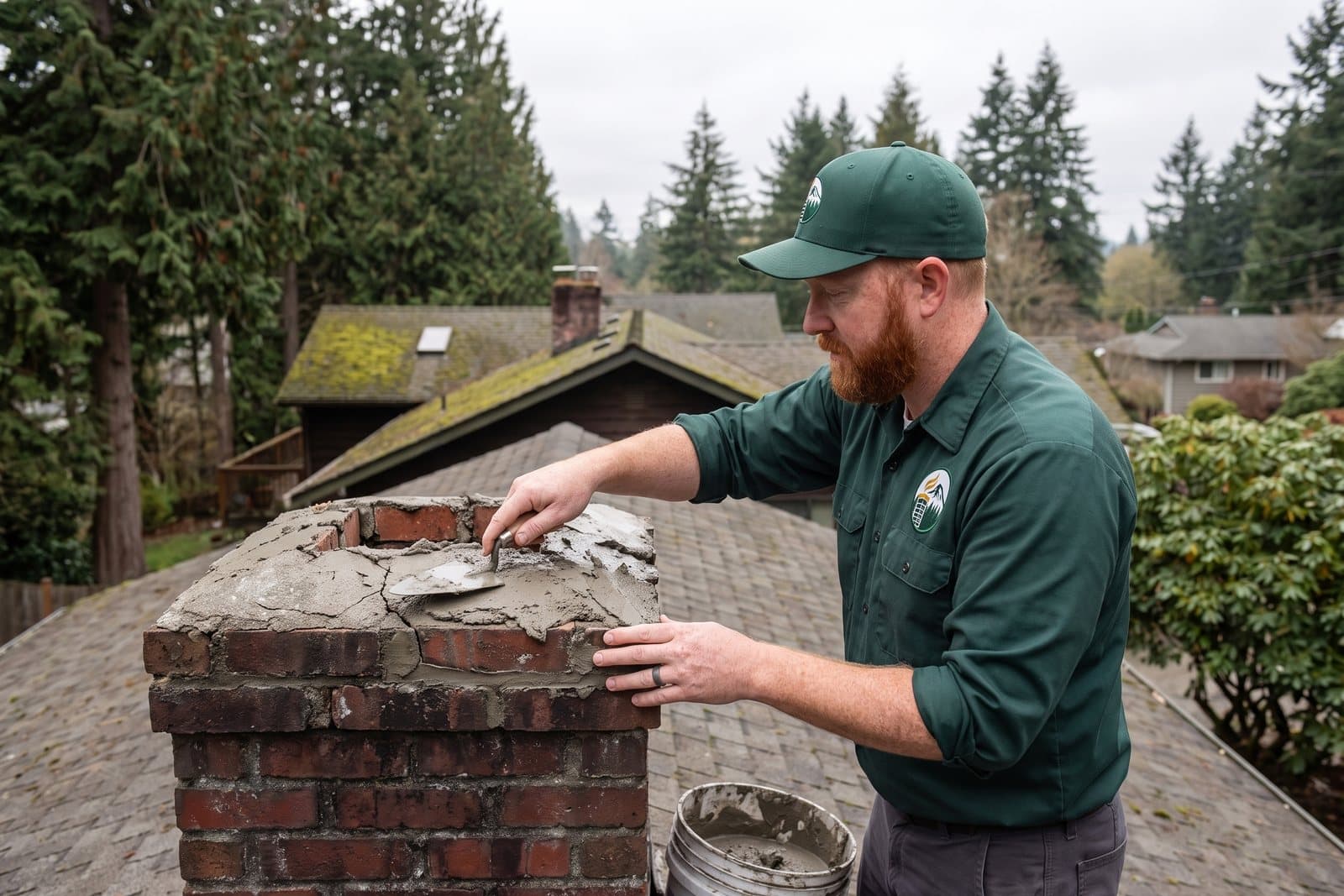
Brick and mortar are porous. Here they soak for more than half the year, and November is the rainiest month of all. The cool season runs from mid-November to the start of March, and the snowy stretch falls between about December 11 and January 22. Water that soaked in during the fall freezes on those cold nights and forces the masonry apart, a little more every winter.
Found early, that damage is a masonry repair: a new crown, a few courses repointed. A breathable waterproofing treatment afterward keeps the brick from drinking in the next season's rain while still letting it dry out.
After the ground shakes
A tall stack of brick is the first part of a house to crack in a quake. After the 2001 Nisqually earthquake, USGS researchers walked block by block through the greater metro area, looked at about 60,000 chimneys and counted 1,556 damaged. They also noted that unreinforced brick chimneys in this region had already been damaged in the 1949 and 1965 earthquakes. Closer to home, a 1996 USGS study found that the southern Whidbey Island fault, which runs southeast toward Woodinville, should be considered capable of large earthquakes. If you felt shaking, have the chimney looked at before the next fire: loose bricks at the roofline and cracked flue tiles are both easy to miss, and a chimney repair is far simpler before a stack starts to lean.
Inside the masonry
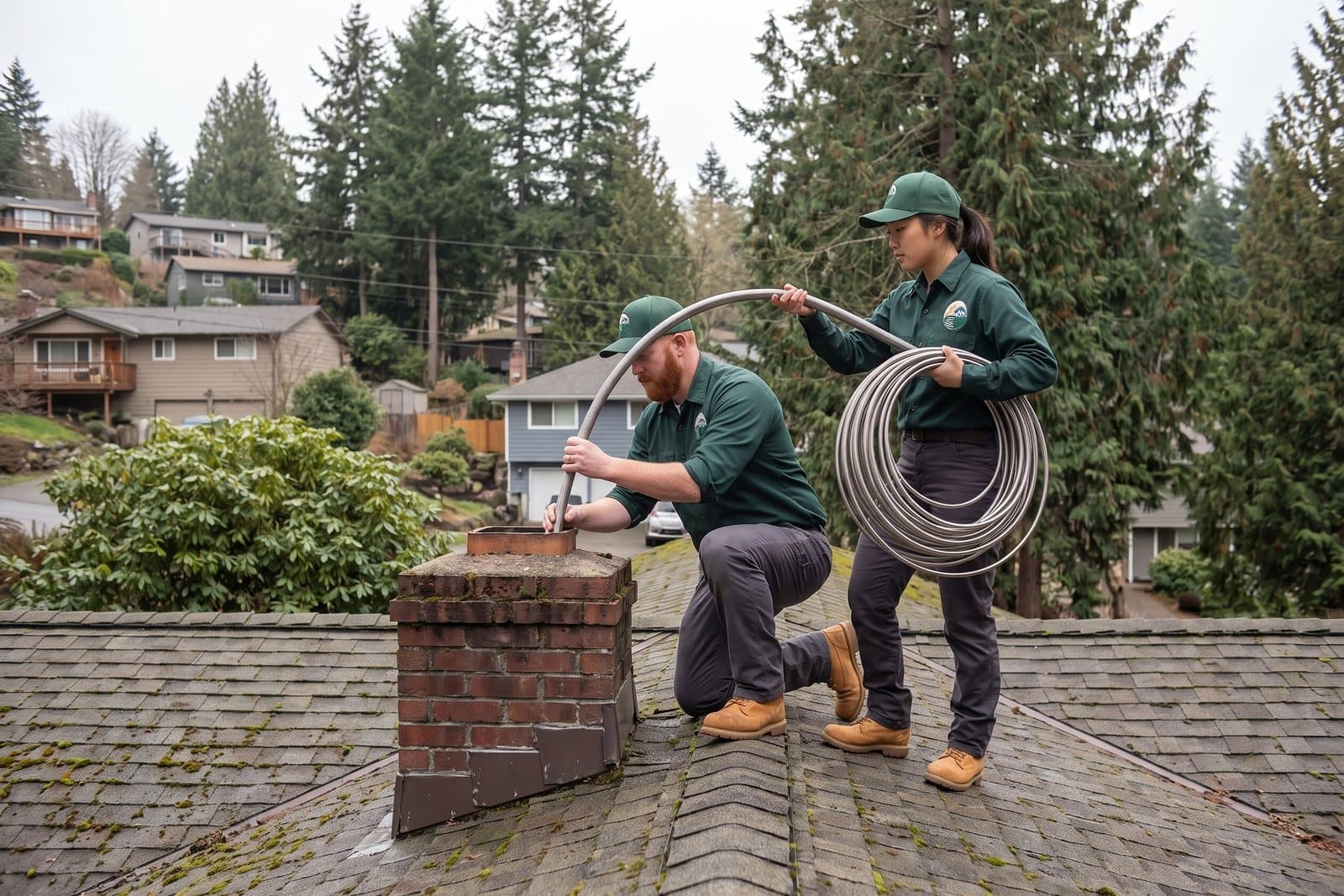
Washington's residential code makes a liner mandatory in a masonry chimney (clay flue tile, a listed liner system or other materials the code approves) and must keep an air gap from nearby combustibles. Much of our housing dates from the 1960s through the 1980s: the Census puts about 37% of Kirkland's homes in the 1960s and 1970s alone. Clay tiles that old can crack from age, from moisture, and above all from a chimney fire.
A cracked or missing liner is not cosmetic. When a camera turns one up, chimney relining puts back both the heat barrier and a proper draft, using stainless pipe matched to the appliance.
Where the chimney meets the weather
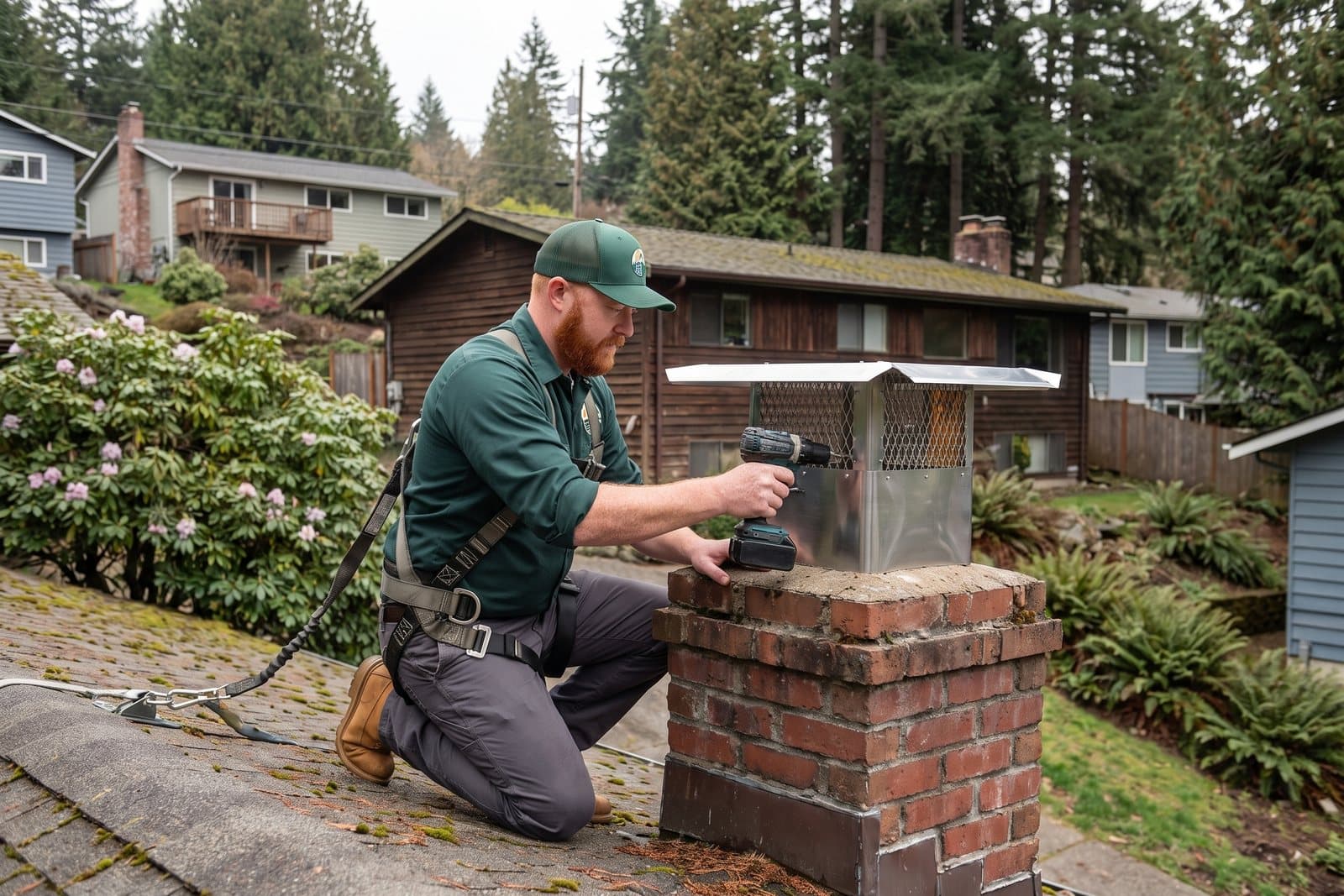
An uncapped flue collects rain all winter and invites birds to nest in spring. A chimney cap stops both. If it carries a spark arrestor screen, the code dictates how fine the mesh is and insists you can lift it off to clean it. At the roofline, flashing is the seal that tired roofs lose first, and the code wants a cricket behind a chimney more than 30 inches across, measured along the ridge, when the chimney stops short of it.
Moss plays its part too. Oregon State University Extension calls roof moss inevitable in the moist Pacific Northwest and notes that it traps debris and moisture; its advice also rules out zinc sulfate wherever copper flashing is present, since the zinc eats the copper.
Who does what
Good habits between visits prevent a lot. The flue, the roof and anything that carries gas are different: that work needs training, equipment and a harness.
A September routine
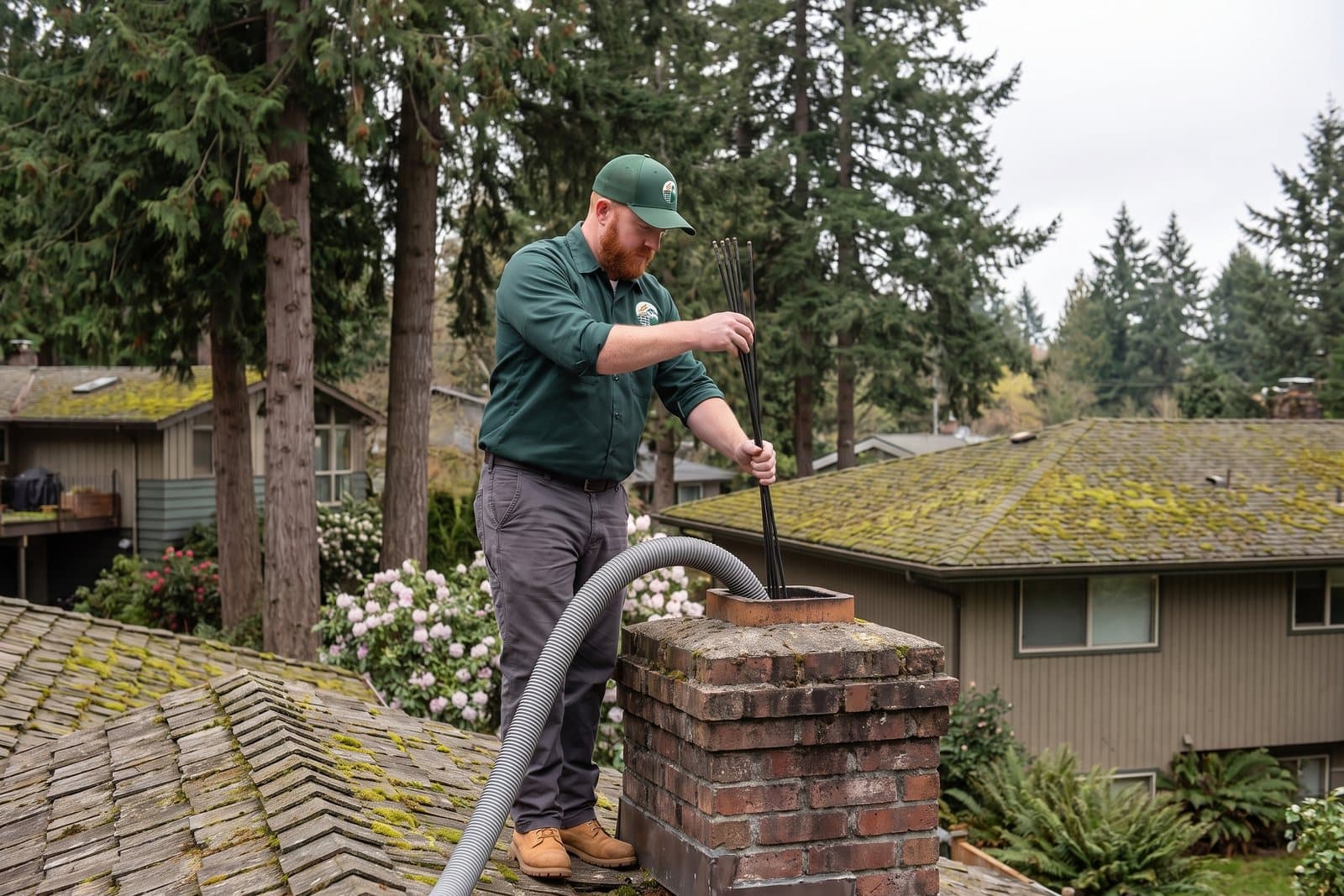
August and September leave time to schedule any repair before the wet season starts around October 9.
A clean flue drafts better and holds nothing that can catch fire on the first cold evening.
Cap, crown and flashing take the rain first. Replacing a missing cap is quicker than drying out a damp flue.
Every smoke and CO alarm, on each floor and near every bedroom, tested after the new batteries go in.
Split, covered and seasoned. Green or rain-soaked logs smolder and coat the flue far faster.
Keep reading
Short articles on burn bans, gas inserts, relining and repair decisions, written for the houses and the weather of Kirkland, Bothell, Woodinville and Kenmore.
Questions
Book an inspection online, no card needed to reserve. Kirkland Chimney Pros photographs what it finds, and the $99 plus tax fee is deducted from any work you approve in writing.