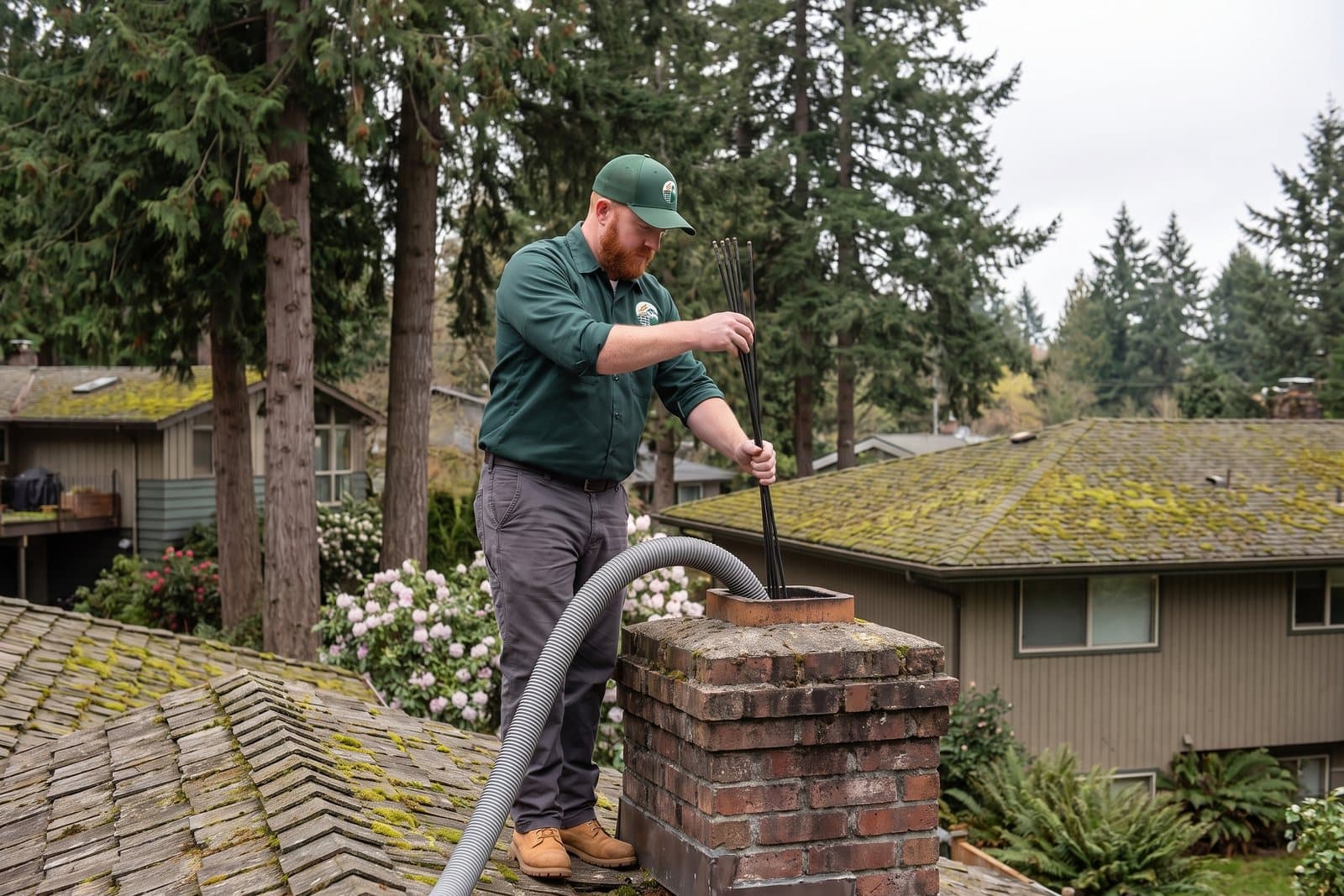
A chimney sweep in Kirkland, WA costs between $150 and $350 for most homes — and that price should always include a camera-assisted flue inspection and a written condition report, not just a brush pass. What you pay beyond that baseline depends on three Kirkland-specific factors: how much creosote hardened during the wet season, whether your flue is sized for a modern insert or an older craftsman firebox, and how long it's been since your last professional cleaning.
What drives the price of a chimney sweep in Kirkland?
Kirkland's wet winters — roughly 37 inches of annual rainfall concentrated between November and March — are the single biggest variable in sweep pricing. Sustained moisture causes creosote to cure and harden faster in wood-burning fireplaces than it does in drier climates. Older craftsman-style homes throughout the Juanita, Bridle Trails, and Lakeview neighborhoods often have taller, narrower flues that were built for smaller fireboxes and now serve larger inserts, which compounds the buildup problem. A sweep on a flue with glazed second-degree creosote takes significantly more labor than one with light first-degree deposits — and that difference shows up in the invoice.
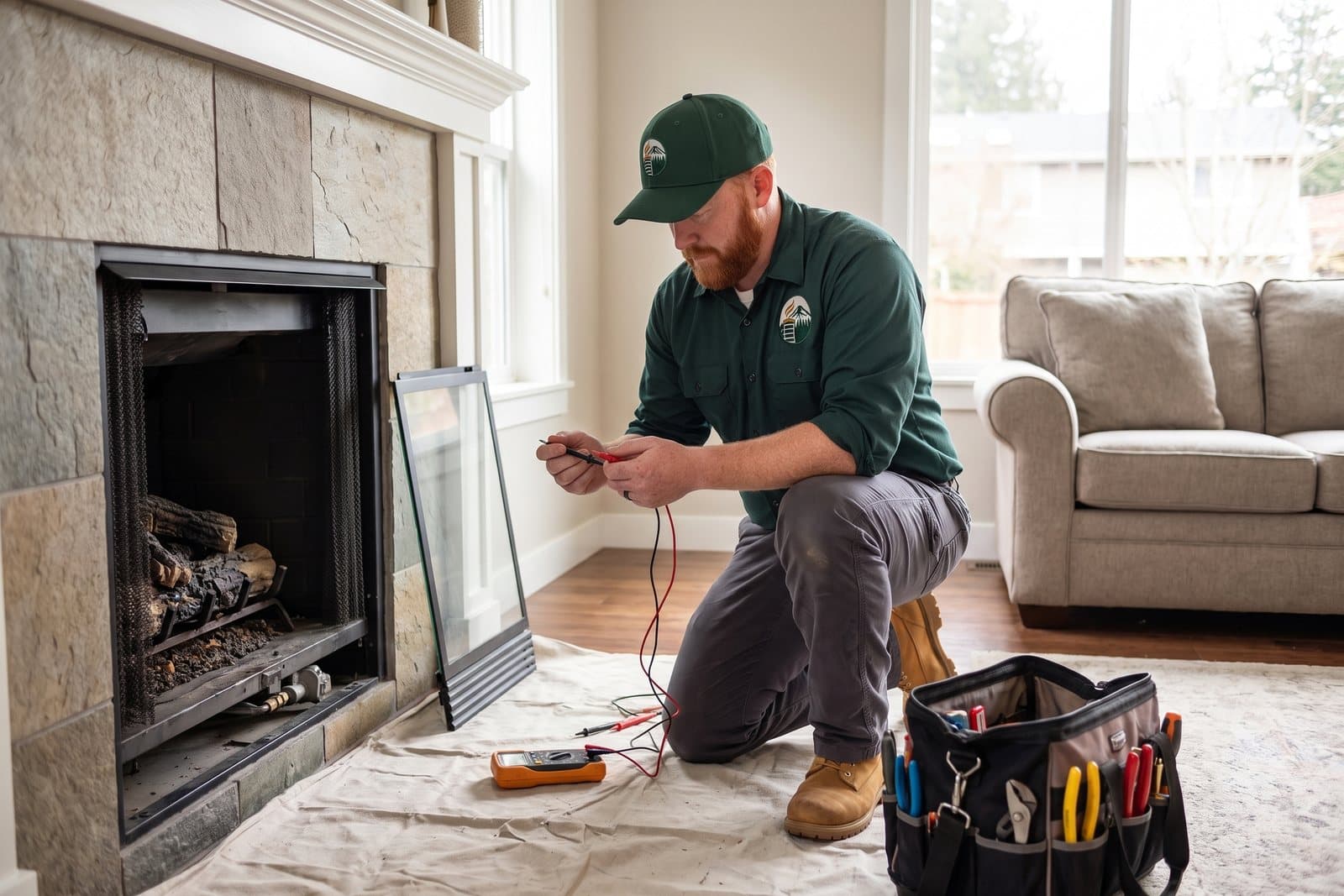
Gas insert owners still need annual service. Kirkland has a high concentration of gas inserts installed during the 2000s remodel boom, and those flues accumulate dust, nesting debris, and occasional moisture intrusion that can compromise vent integrity and void appliance warranties. The cleaning itself is less intensive than a wood-burning sweep, but skipping it entirely is not a safe option.
Puget Sound Clean Air Agency burn bans — typically triggered December through February during high-pollution events — create a counterintuitive scheduling problem. Homeowners who comply and stop burning during ban days often postpone their sweep, then fire the fireplace heavily on the first clear day. That irregular pattern accelerates glazed creosote buildup. Scheduling a sweep in September or early October, before the first ban alert of the season, is the most cost-effective move: the weather is dry enough for any crown or masonry repairs, and you avoid the pre-ban rush.
Kirkland chimney sweep price ranges by service type
The table below reflects current pricing for Kirkland and the immediate Eastside market. Low-end figures assume single-story access, light creosote, and a recently serviced flue. High-end figures reflect steep rooflines common in Kirkland's hillside neighborhoods, heavy or glazed creosote, or minor repairs discovered during the visit.
Some companies advertise a low base rate and then charge separately for the inspection camera, drop cloth setup, or a written report — items that should be standard. Before booking, ask two specific questions: Does the quoted price include a visual flue inspection? Will I receive a written condition report at the end of the visit? If either answer is unclear, that tells you something important.
| Service | Typical Price Range | What's Included |
|---|---|---|
| Wood-burning fireplace sweep (light buildup) | $150 – $200 | Brush cleaning, hearth drop cloth, camera-assisted flue inspection, written condition report |
| Wood-burning fireplace sweep (heavy or glazed creosote) | $250 – $400+ | All of the above plus chemical treatment and extended labor |
| Gas insert flue cleaning | $130 – $220 | Debris and nesting removal, vent inspection, written condition report |
| Two-fireplace combo sweep (single visit) | $280 – $450 | Both units cleaned and inspected, single-visit pricing applied |
| Sweep + Level 1 inspection bundle | $200 – $320 | Cleaning plus formal NFPA 211 inspection documentation |
| Dryer vent cleaning (added to chimney visit) | $80 – $130 | Lint removal, airflow test — discounted when bundled with a sweep |
A real scenario: the mossy crown that changed the whole visit
Consider a hypothetical Kirkland homeowner in the Bridle Trails neighborhood who purchases a home near the Eastside Rail Trail. A buyer's inspection marks the chimney 'functional with exterior weathering.' After using the fireplace a handful of times, a faint musty smell appears that the homeowner cannot place.
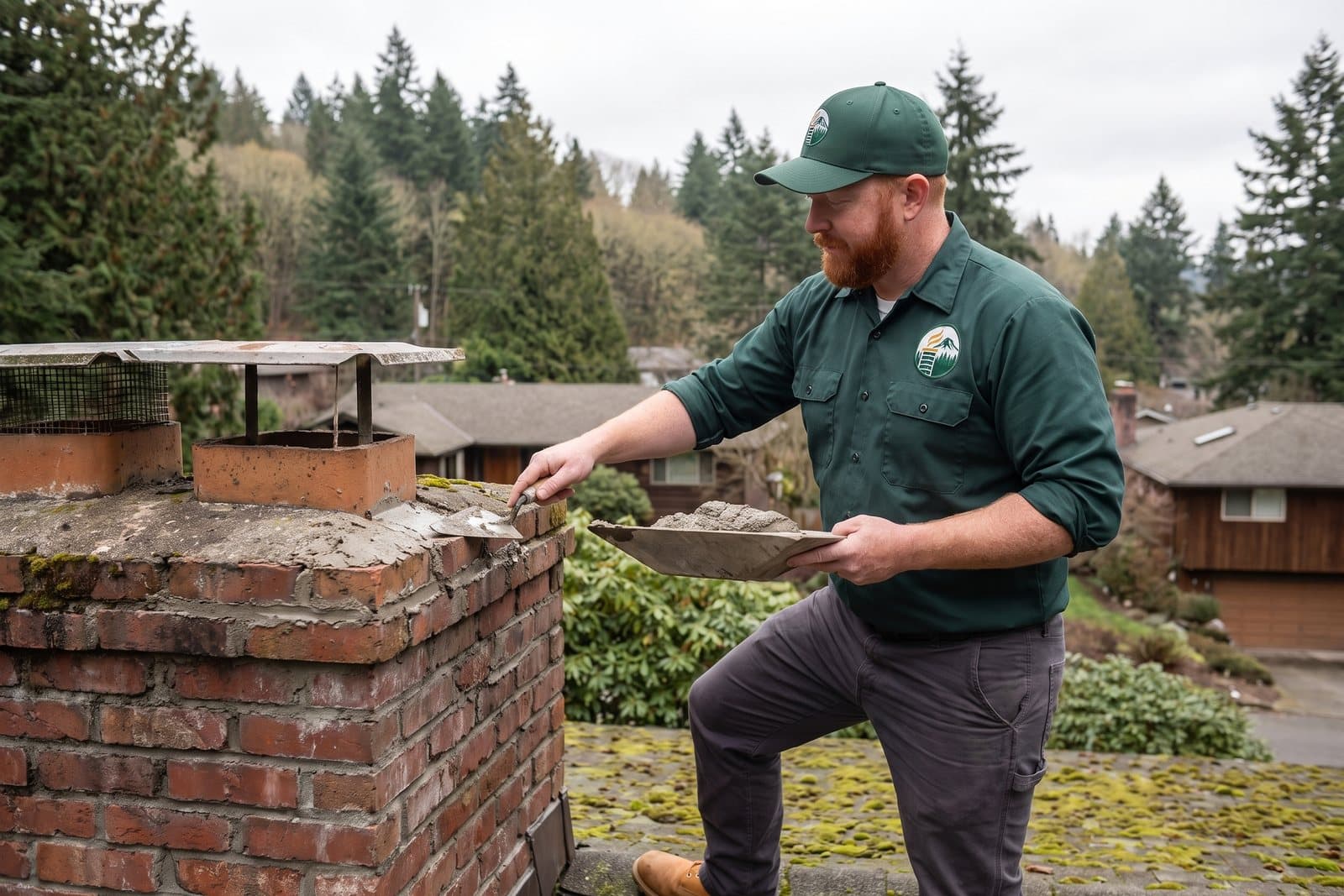
A sweep technician clears the flue and finds roughly a quarter-inch of second-degree creosote throughout the upper section — not immediately dangerous, but accelerating. The camera tells the more urgent story: the chimney crown has visible moss colonization and a hairline crack along its back edge. North-facing crowns in Kirkland's tree-lined neighborhoods can go from clear to heavily moss-covered in two or three wet seasons, and the organic material retains moisture directly against the masonry.
The sweep itself comes to $185. A recommended crown repair and waterproofing treatment at $480, completed on the same visit, saves a second service-call fee and gets ahead of the rainy season. The musty smell traces directly to moisture wicking through the cracked crown, not a liner defect. Finding it at the sweep stage rather than after a full winter of water intrusion avoids a repair bill that would have been several times larger.
How often does a Kirkland chimney actually need to be cleaned?
NFPA 211 sets the minimum at once per year for any fireplace in regular use. In Kirkland's climate, that standard is a floor, not a ceiling. Homeowners who burn wood consistently from October through March — particularly with older hardwoods that weren't fully seasoned — should consider a second sweep in January or February before the back half of burn season. A single heavy-use winter can move a flue from clean to borderline without any visible warning inside the firebox.
Gas insert flues warrant annual inspection even when cleaning needs are minimal. Sealed gas flues can still collect nesting debris from fall and winter wildlife activity, and the Pacific Northwest's minor but real seismic activity can shift liner joints over time. An inspection bundled with a neighbor's sweep or added to an annual service visit costs very little and rules out problems that are genuinely dangerous.
The table below translates common Kirkland homeowner situations into recommended cleaning frequencies. Use it as a starting point, then describe your burn habits honestly when you call — a brief conversation with your technician is worth more than any fixed rule.
| Homeowner Situation | Appliance Type | Recommended Cleaning Frequency |
|---|---|---|
| Light use — occasional fires, October through March | Wood-burning fireplace | Once per year (September or October) |
| Heavy use — fires multiple nights per week all season | Wood-burning fireplace | Twice per year (September and January/February) |
| Unseasoned or older hardwood burned regularly | Wood-burning fireplace | Twice per year minimum; mid-season inspection advised |
| Regular use, properly seasoned wood, modern insert | Wood-burning insert | Once per year (September or October) |
| Typical daily or near-daily heating use | Gas insert | Once per year inspection; cleaning as needed |
| Home purchased without sweep records; flue history unknown | Any appliance type | Immediate sweep and Level 1 inspection before first use |
| Flue idle for two or more years | Any appliance type | Sweep and full inspection before resuming use |
Red flags to watch for when hiring a chimney sweep in Kirkland
The most consistent complaint from new customers involves pricing that expands on-site: a low advertised rate, then separate charges for the inspection camera, the written report, or creosote treatment that most sweeps include as standard. Get the full scope of what's covered in writing — even a confirmation email — before the technician arrives.
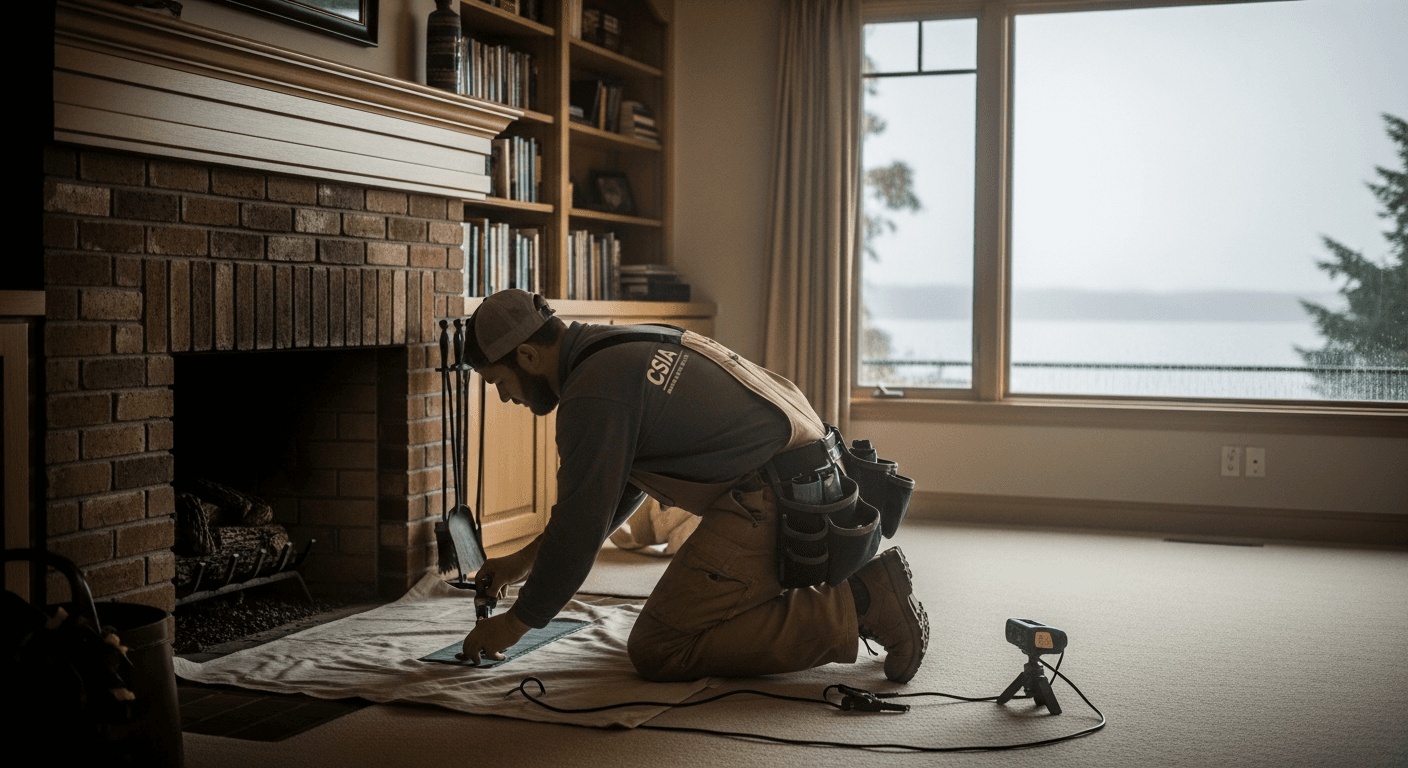
Ask whether your technician is certified through the Chimney Safety Institute of America (CSIA). Washington State does not require licensing for chimney sweeps, which means certification is the primary way to verify that the person working on your flue has been trained to NFPA 211 standards — the code governing residential chimney safety. For a service where the failure modes include house fires and carbon monoxide exposure, that credential is not a minor detail.
Be skeptical of any technician who identifies a major repair need on the spot without showing you camera footage or a written inspection report first. Legitimate findings get documented, explained clearly, and presented with enough time for you to make an informed decision. You should see the evidence before approving anything beyond the cleaning you booked.
Frequently asked questions
How much should I pay to have my chimney swept in Kirkland, WA?
Most Kirkland homeowners pay $150 to $350. Wood-burning fireplaces with heavy or glazed creosote, or gas inserts with complex venting, can reach $400 or more. That price should always include a camera-assisted flue inspection and a written condition report — not just the cleaning.
Will homeowners insurance cover chimney cleaning or repairs in Kirkland?
Routine sweeping is considered maintenance and is not covered. If a covered peril — a windstorm, a falling tree limb, or sudden structural damage — causes chimney damage, your policy may cover repairs above your deductible. Document the cause with timestamped photos and contact your insurer before any repair work begins.
How often does a chimney need to be cleaned in Kirkland's climate?
At minimum, once per year per NFPA 211. Kirkland homeowners who burn wood regularly October through March should consider a second sweep in January or February, given how quickly creosote hardens in the wet season. Gas insert flues in Kirkland should be inspected annually even when full cleaning isn't required.
How much does chimney repair typically cost in Kirkland?
Minor repairs such as a chimney cap replacement or limited tuckpointing run $200–$600. Crown repair and waterproofing in Kirkland typically costs $400–$900 depending on crown size and damage extent. Full flue relining ranges from $2,500 to $7,000 based on flue length and liner material. Issues caught at the sweep stage almost always cost less to fix than those discovered after a season of water intrusion.
Is fall or spring better for scheduling a chimney sweep in Kirkland?
Fall — specifically September or October — is better for most Kirkland homeowners. You avoid the pre-burn-season rush, the weather is still dry enough for crown or masonry repairs to cure properly, and you're compliant before Puget Sound Clean Air Agency burn-ban season begins. A spring sweep makes sense as a second cleaning after a particularly heavy burn season.
Related services