Most Kirkland chimneys need to be cleaned once a year — and wood-burning fireplaces used more than two or three times a week through a wet Puget Sound winter often need a second cleaning mid-season. The cost surprises many homeowners because a professional sweep is not vacuuming soot: it is a skilled inspection of a fire-safety system built into your walls, one that takes a harder beating in Kirkland's damp Lake Washington basin than it would in almost any drier corner of Washington State. Here is an honest breakdown of what drives the price, what you actually get for it, and how to know whether a quote is fair.
Why Kirkland's climate makes annual cleaning non-negotiable
Kirkland sits on Lake Washington's western shore, and that position pulls moisture-laden marine air through the city from October through March. Every time a cold, damp flue meets warm combustion gases, the temperature differential accelerates creosote condensation on the liner walls. What might take two full burning seasons to accumulate in eastern Washington can build to a hazardous level in a single Kirkland winter.
The same wet conditions that coat Kirkland chimney crowns and brick exteriors in moss and algae also wick moisture into mortar joints and liner seams. A sweep visit catches those warning signs before they escalate into a liner replacement or full masonry rebuild — jobs that routinely cost five to ten times as much as a standard cleaning.
The Puget Sound Clean Air Agency issues wood-burning bans on high-pollution days, most frequently between November and February. Many Kirkland households respond by burning harder on the non-ban days to compensate for lost heat. That pattern of concentrated, high-output burns deposits creosote faster than a steady, moderate burning schedule would, which is a second reason the once-a-year minimum is not just a sales pitch.
The table below shows recommended cleaning frequency for Kirkland chimneys based on appliance type and usage pattern, reflecting the accelerated buildup conditions of the Puget Sound basin.
| Situation / Appliance Type | Recommended Cleaning Frequency | Primary Reason in Kirkland, WA |
|---|---|---|
| Wood-burning fireplace, light use (fewer than 2 burns/week) | Once per year, pre-season | Annual creosote and moisture inspection required regardless of use level |
| Wood-burning fireplace, heavy use (3+ burns/week Oct–Mar) | Twice per year: pre-season + mid-season (Jan–Feb) | Damp marine air accelerates Stage 2 creosote buildup over a single season |
| Wood stove or insert, daily winter use | Twice per year minimum; inspect mid-season | High-output, concentrated burns on non-ban days deposit creosote rapidly |
| Gas insert or gas fireplace | Once per year inspection; cleaning as needed | Minimal creosote but acidic condensate corrodes stainless liner sections over time |
| Pellet stove | Once per year; more often if ash buildup is visible | Ash and clinker accumulation can restrict airflow and reduce combustion efficiency |
| Chimney not used in 2+ years (any appliance) | Inspect and clean before first use | Moisture intrusion, animal nesting, and mortar deterioration occur even without burning |
| After any chimney fire (any appliance) | Immediate Level 2 inspection before next use | Even a small flue fire can crack liner sections and create carbon monoxide risk |
What a chimney sweep actually does — and why the labor justifies the price
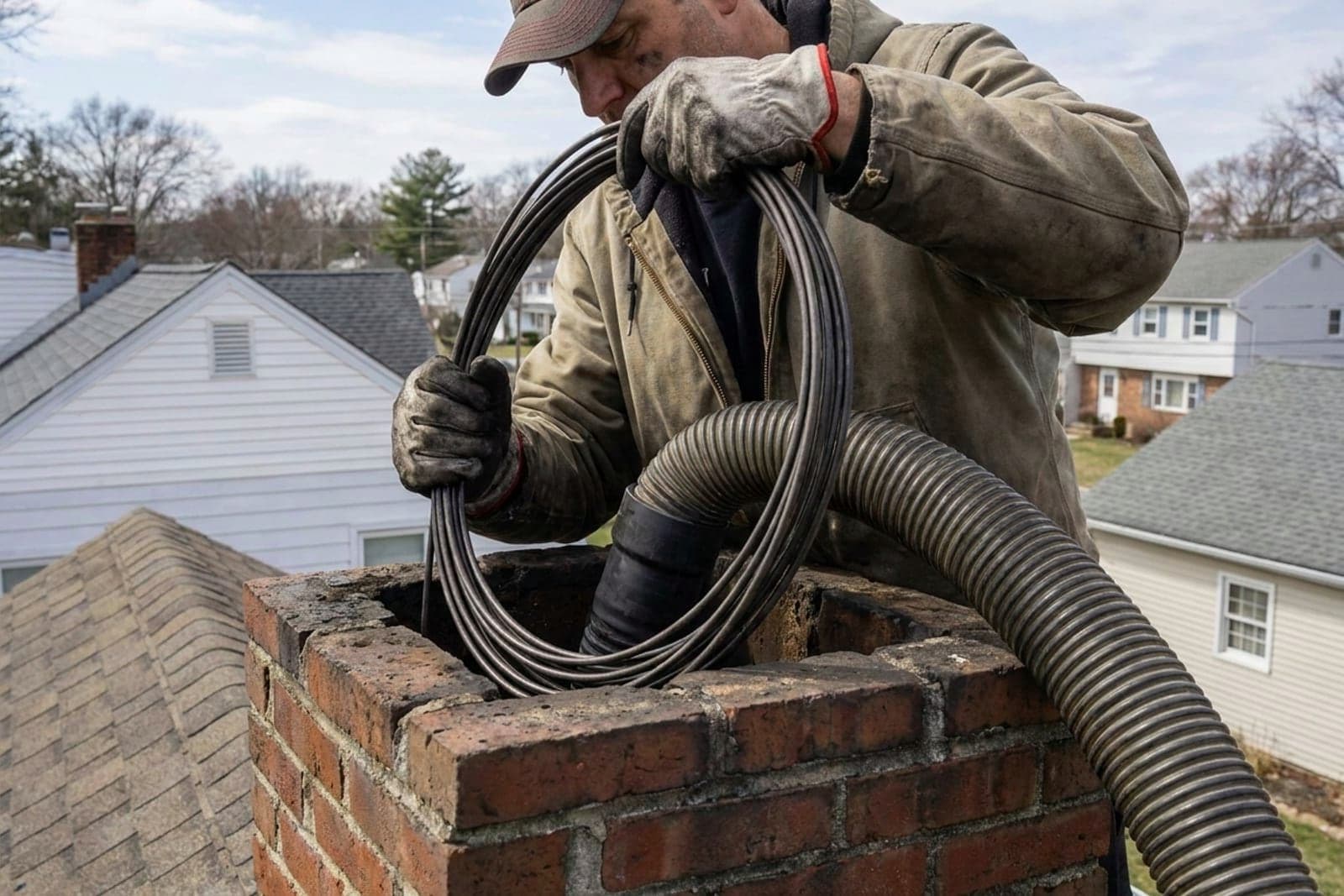
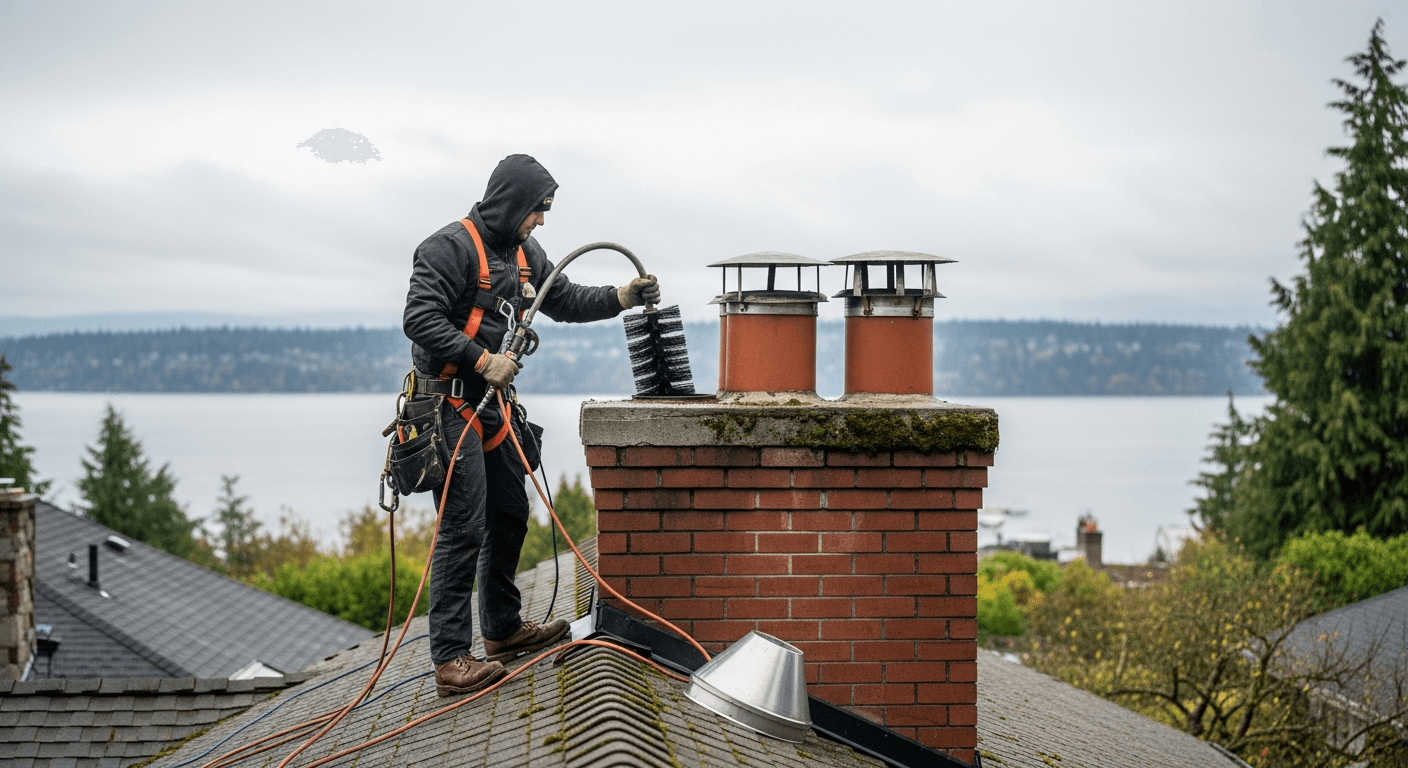
A thorough chimney sweep in Kirkland is not a fifteen-minute job. A proper visit includes laying drop cloths in your living room, a hands-on inspection of the firebox and damper, rotary brush work driven down through the full length of the flue liner, a HEPA-vacuum pass to capture fine particulate before it settles into your home, and a visual assessment of the crown, cap, flashing, and mortar joints while the technician is on the roof.
The cost reflects specialized rotary equipment, HEPA vacuum systems rated for fine combustion particulate, roof-access safety gear, liability and workers-compensation insurance, and the trained eye that distinguishes cosmetic wear from a liner crack capable of allowing carbon monoxide into your living space. A sweep priced well below the market rate is often skipping the roof inspection, using a standard shop-vac, or carrying inadequate insurance — each of which transfers real risk to you.
For gas insert owners — a common appliance on Kirkland's Eastside — the process differs but the cost does not drop dramatically. Gas logs produce little creosote but do generate moisture and acidic condensate that corrode stainless liner sections over time. The National Fire Protection Association and most gas-insert manufacturers both recommend annual inspection and cleaning of the venting system to maintain warranty coverage and confirm safe operation.
What chimney services cost in Kirkland, WA — a realistic price guide
The prices below reflect what Kirkland homeowners realistically pay as of 2024–2025. Cost varies based on flue height, roof pitch and access difficulty, creosote stage, and whether a Level 1 or Level 2 inspection is included. A single-story home with easy roof access and light buildup lands at the low end; a multi-story craftsman near the waterfront with heavy third-degree creosote sits at the high end.
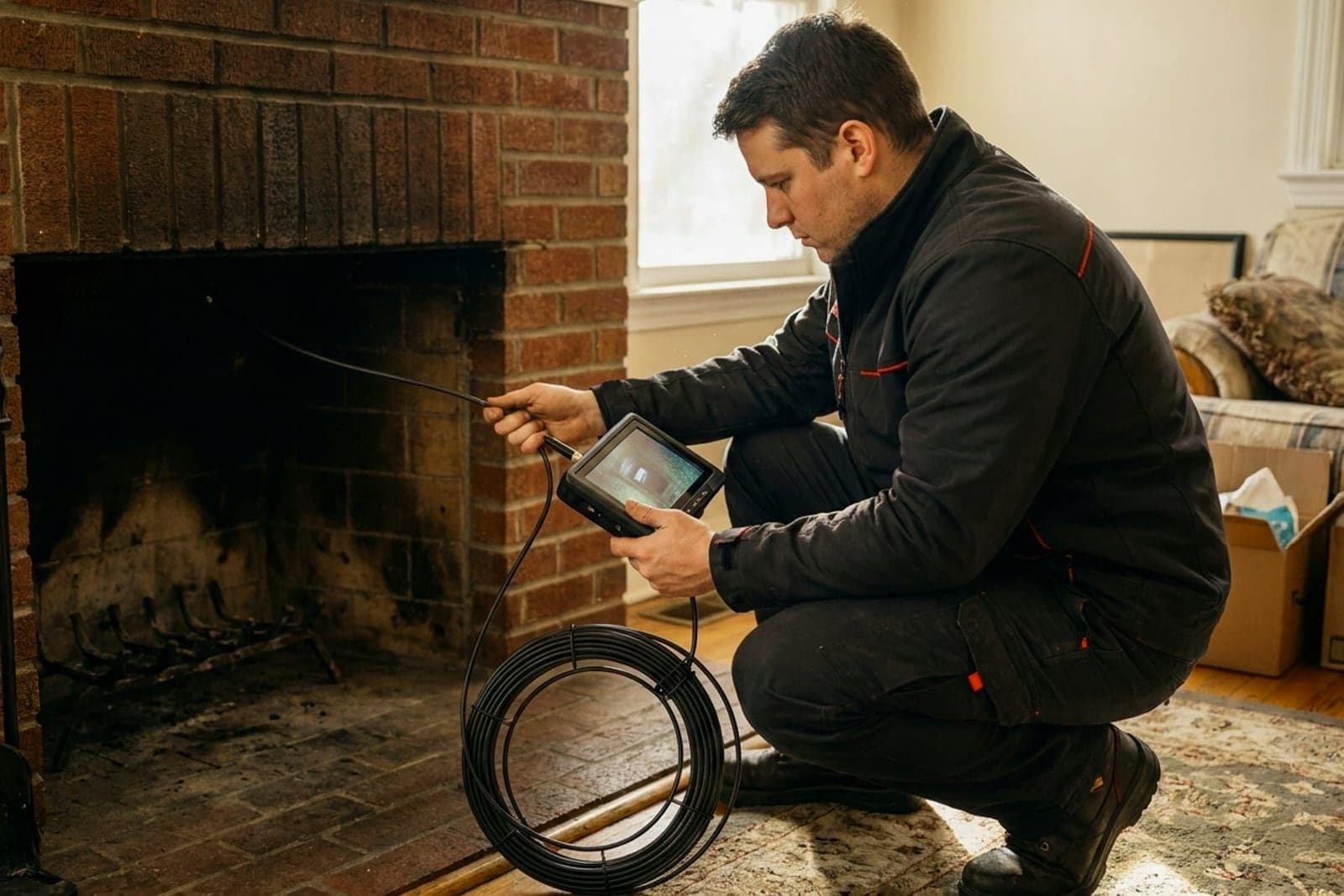
A Level 2 inspection — required by NFPA 211 when you sell a home, after any chimney fire, or when changing fuel type or appliance — adds camera equipment and a documented written report to the standard visual check. It is the inspection your real estate agent or homeowner's insurance carrier may specifically request, and it takes meaningfully longer, which is why it costs more.
Bundling a sweep with an inspection on the same visit almost always saves money compared to scheduling them separately, because you pay only one mobilization fee. Ask for a combined quote upfront before committing to either service alone.
| Service | Typical Kirkland Price Range | Notes |
|---|---|---|
| Standard chimney sweep (wood-burning, light buildup) | $150 – $220 | Includes basic Level 1 visual inspection |
| Chimney sweep with moderate creosote (Stage 2) | $220 – $350 | May require rotary power tools and extended time on site |
| Heavy or glazed creosote removal (Stage 3) | $400 – $1,200+ | Chemical treatment often required; may need two visits |
| Gas insert flue cleaning and inspection | $130 – $200 | Liner and venting system check included |
| Level 2 chimney inspection (camera) | $250 – $450 | Required for home sales, post-fire events, or fuel-type changes |
| Level 2 inspection + sweep (combined visit) | $350 – $550 | Best value; single mobilization fee |
| Annual maintenance plan (2 visits/year) | $280 – $420/year | Pre-season + mid-season; priority scheduling included |
A Kirkland homeowner scenario: when 'we skipped last year' turned into a full morning
Consider a homeowner in the North Rose Hill neighborhood who calls in late October, a few weeks before planning to start the fireplace for the season. They mention skipping the previous year's cleaning because the fireplace 'seemed fine.' When the technician arrives, the liner has significant Stage 2 creosote — the hard, tar-like deposits that form when fires burn at low temperatures for long periods. That is exactly the pattern produced by the slow, smoldering burns many Kirkland households default to on drizzly weeknights when the goal is background warmth, not a roaring fire.
The cleaning takes nearly twice as long as a standard visit and requires a rotary power system rather than a hand brush. The technician also finds that moss growth on the crown has allowed enough moisture into the mortar that two small cracks have opened near the top of the liner — still repairable at modest cost, but another ignored season and the conversation shifts to a full liner replacement.
The bill comes to roughly $310 for the extended cleaning — about $90 more than a standard sweep would have cost. The homeowner leaves with a clean flue, a written repair quote for the crown, and an automated reminder set for the following September. Staying on an annual schedule keeps every future visit at the standard rate and eliminates the compounding damage that turns a $90 cost difference into a $2,000 liner job.
How to know whether a chimney sweep quote is fair — or a red flag
The most reliable warning sign in this trade is an extremely low teaser price followed by upsells once the technician is inside your home. A legitimate sweep company can give you a firm price range over the phone after asking three questions: what type of appliance you have (wood-burning fireplace, gas insert, pellet stove), approximately when it was last cleaned, and how many stories your home is. If a company refuses to give any range until they are on site, treat that as a caution flag.
Fair quotes include the sweep, a basic Level 1 inspection, and full cleanup of any debris or soot. They do not automatically include repairs — and that is reasonable, as long as any recommended repair comes with a written explanation of what was found and why it matters. Requesting a photo from the technician's inspection camera is entirely appropriate and any professional should accommodate it.
Certifications are a practical filter. Look for technicians certified by the Chimney Safety Institute of America (CSIA) or affiliated with the National Chimney Sweep Guild (NCSG). In Washington State, chimney contractors performing masonry or liner repair work must hold a current contractor's license — ask to see it if structural work is recommended.
Scheduling in August or early September — before the Eastside fall rush — typically means faster appointment availability and sometimes a modest off-season discount. Calling in mid-November, when demand peaks and most Kirkland chimney companies are booked two to three weeks out, removes your ability to compare quotes or negotiate timing.
Frequently asked questions
How often does a chimney need to be cleaned in Kirkland, WA?
Once a year is the NFPA minimum for any chimney in regular use. In Kirkland, wood-burning fireplaces used consistently through the full rainy season — roughly October through March — often benefit from a second cleaning in January or February due to accelerated creosote buildup from the damp climate. Gas insert venting systems should be inspected annually even when cleaning needs are minimal.
What does a Level 2 chimney inspection cost in Kirkland?
A standalone Level 2 inspection with camera-based liner review typically runs $250 to $450. Bundled with a sweep on the same visit, the combined price is usually $350 to $550 — significantly more cost-effective than two separate appointments with two mobilization fees.
Why is chimney sweeping more expensive than I expected?
A professional sweep in Kirkland involves rotary brush equipment, a HEPA vacuum system rated for fine combustion particulate, roof-access safety gear, liability and workers-compensation insurance, and a trained inspection of a life-safety system. Kirkland's damp Lake Washington basin climate creates faster creosote buildup and more involved cleaning conditions than drier parts of Washington, which can extend time on site and justify local pricing above national averages.
What is a fair chimney sweep price in Kirkland, WA?
$150 to $220 is a fair range for a standard wood-burning sweep with a basic Level 1 inspection on a home with light to moderate buildup and normal roof access. Heavy creosote, steep or tall rooflines, or a Level 2 camera inspection will push the price higher. Any quote below $100 should be scrutinized — it typically signals a teaser-and-upsell model, missing insurance, or unlicensed work.
Can I use my Kirkland fireplace during a Puget Sound Clean Air Agency burn ban?
No. Burn bans issued by the Puget Sound Clean Air Agency are legally enforceable, and wood-burning fireplaces and stoves must remain unlit for the duration. EPA-certified devices and natural gas or propane appliances are generally exempt, but you should check the specific ban notice each time because restriction levels and exemptions can vary by day and by ban type.
Related services