Mortar is the sacrificial part of a brick chimney. It is designed to be softer than the brick around it, so when water and temperature swings do their work, the joints wear first and the bricks survive. Replacing that worn mortar is called repointing, and on a chimney that is roughly fifty years old it is one of the most common masonry jobs. This guide explains how to judge the joints from the ground, what a repointing visit actually does, and the signs that point to a bigger problem than mortar.
Why the joints wear out first
A chimney stack is the most exposed piece of masonry on a house. Rain hits all four faces, nothing shades the top, and the flue heats the inside while the outside stays cold. Mortar absorbs part of that punishment by design. When it goes soft or recedes, rain can travel into the wall instead of shedding off it.
The Northshore climate is more about duration than extremes. WeatherSpark puts Kirkland's wetter season at close to seven months, which it dates October 9 through May 1, with roughly 8.2 inches landing in November, the soggiest month. Deep freezes are uncommon: December lows average about 38°F and readings below 27°F are rare. The damage comes from mortar that stays damp for weeks at a time, plus the occasional cold snap that freezes water already sitting in the joints.
Reading the mortar from the ground and the attic
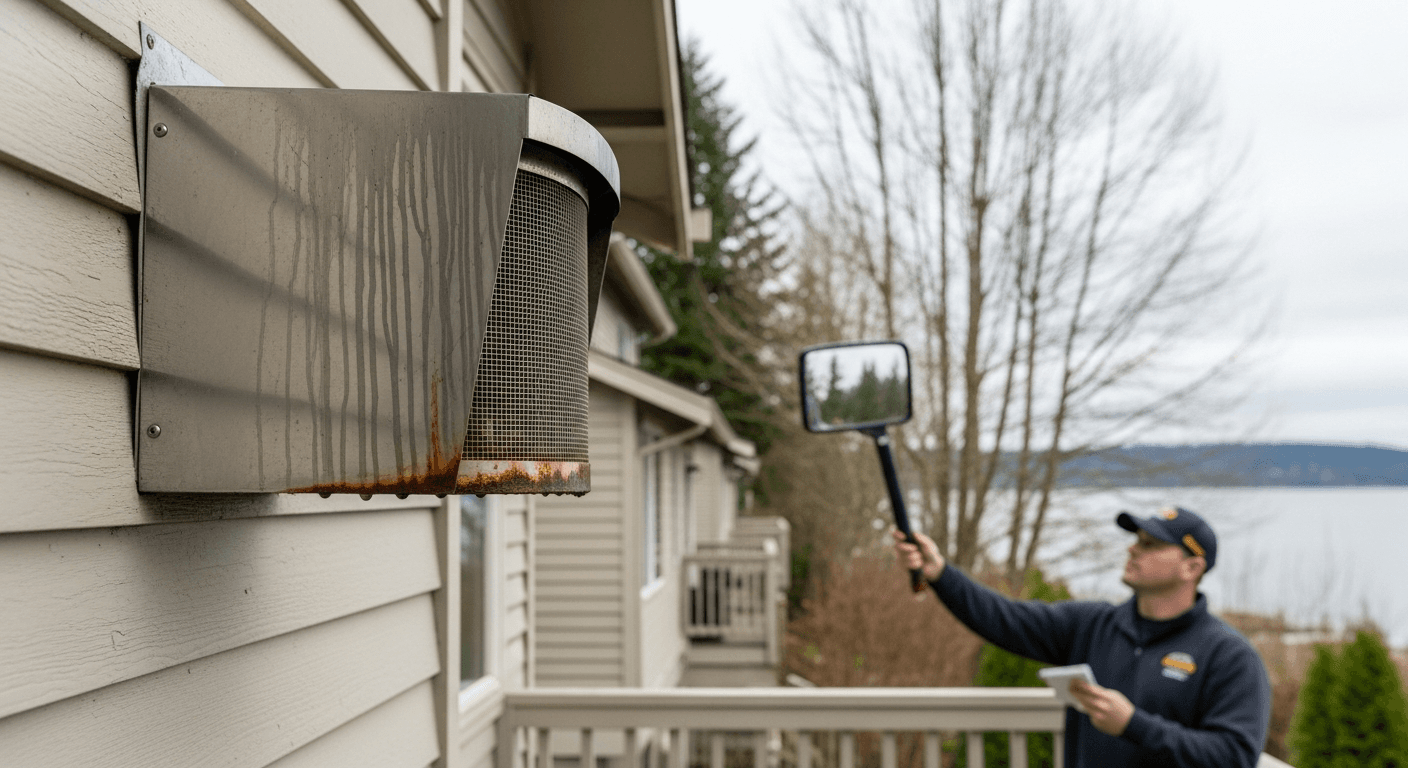
Binoculars and a flashlight tell you a lot. From the yard, look for joints that sit deeper than the brick face, hairline cracks that follow the mortar in a stair-step pattern, and white mineral bloom on the brick. Inside, check the attic around the chimney chase and the ceiling next to the fireplace for stains after a heavy rain. A joint you can scratch loose with a key on a ground-level section is a fair hint about what the higher courses look like.
| What you see | What it usually means | Typical next step |
|---|---|---|
| Joints recessed a quarter inch or more | Mortar eroded by years of rain | Repoint the affected courses |
| Stair-step cracks through the joints | Movement or long-term water entry | Inspection before any repair |
| White bloom on brick faces | Water moving through the masonry | Find the entry point, then seal |
| Brick faces flaking or popping off | Water trapped behind the surface | Replace bricks, not just mortar |
| Leaning or twisted upper stack | Structural failure above the roof | Partial rebuild of the top section |
What a repointing visit involves
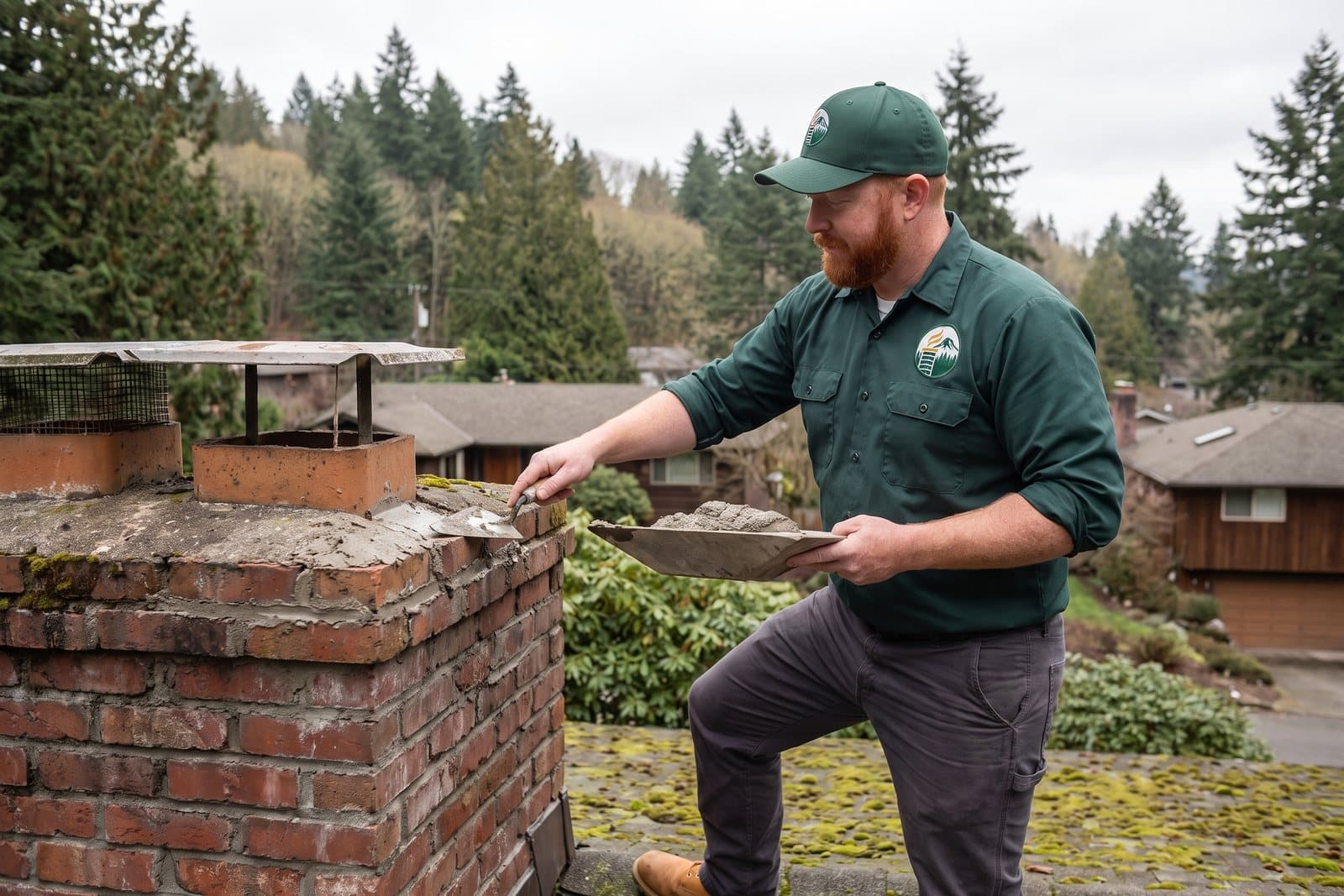
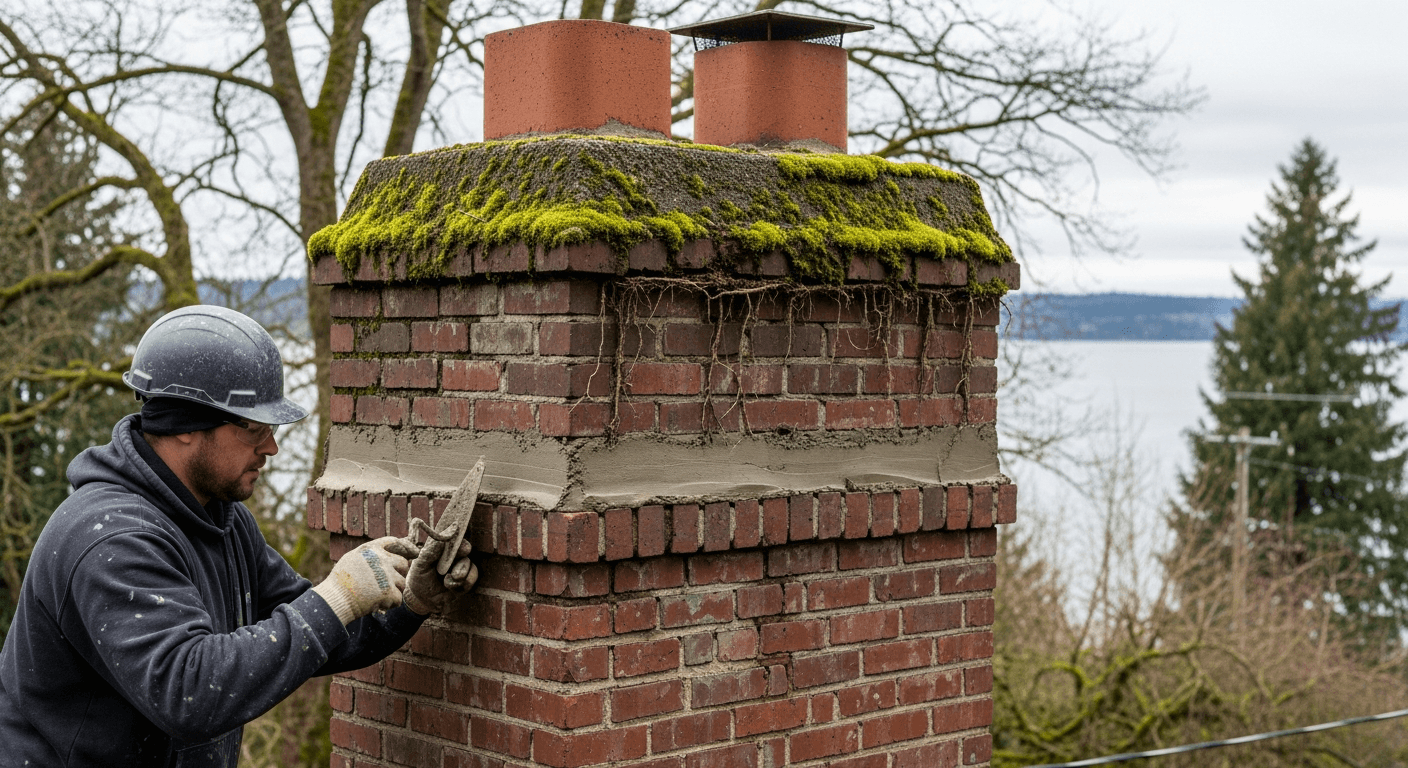
The mason grinds or chisels the failed mortar out to a consistent depth, blows the joints clean, dampens the brick so it does not pull water out of the new mix too fast, then packs fresh mortar in layers and tools the surface to shed water. Mortar strength matters as much as workmanship. It should match or be weaker than the original, so the joint stays the part that wears.
A good repointing job also looks up and down. The crown on top of the stack and the metal seal at the roof line are the two usual sources of water that ruins new joints, and repointing under a cracked crown only resets the clock.
Why so many local chimneys are due now
Kirkland's housing is concentrated in one era. The 2020–2024 American Community Survey places roughly 37 percent of the city's homes as built between 1960 and 1979, and the median home dates from 1984. Neighborhoods such as Kingsgate Highlands, laid out as 957 lots between 1965 and 1976, went up in that window. A masonry chimney from those years has been through fifty or more wet seasons, which is about when original mortar starts to give up.
Earthquakes are the other reason to look closely. When USGS teams surveyed some 60,000 chimneys street by street after the 2001 Nisqually earthquake, 1,556 of them showed damage, and the authors pointed out that the region's unreinforced brick stacks had also failed in the 1949 and 1965 quakes. Cracks from shaking often start in the mortar.
When mortar is not the real problem
Some cracks are about the ground rather than the weather. The City of Kirkland lists new cracks in brick, plaster or foundations, and doors or windows that start to stick, among the warning signs of slope movement. On the steeper parts of Finn Hill and along the lakeshore, a chimney that cracks at the same time as the house deserves a look from someone who deals with slopes, not only a mason.
Our masonry repair starts at $475 and reaches $3,200 when a larger area of the stack needs work, depending on how many courses are affected and how the roof can be reached. Before quoting, we look at the whole chimney on site. That visit is $99 plus tax, and we subtract it from the masonry bill once you accept our written estimate.
Frequently asked questions
Can I repoint a few joints myself?
Small ground-level patches are within reach of a careful homeowner, but most chimney joints that fail sit above the roofline, where the work means roof access and fall risk. The other catch is mortar choice: a mix that is harder than the brick pushes future damage into the brick faces instead of the joints.
Is repointing the same as tuckpointing?
People use the words loosely. Repointing means grinding out damaged mortar and packing new mortar into the joints. Tuckpointing, in the strict sense, is a cosmetic finish where a narrow ribbon of colored mortar is run along each joint. On a chimney, the structural part of the job is the repointing.
How long does repointed mortar last?
Well-matched mortar in a chimney that also has a sound crown and cap can go decades before it needs attention again. The same mortar under a cracked crown fails far sooner, because water keeps arriving from above. That is why the crown gets checked in the same visit.
What time of year is best for masonry work here?
Fresh mortar needs to cure without being soaked or chilled, so the drier stretch from mid-June into early October is the easy window. Work in the wet months is possible with tarps and a watchful eye on the forecast, but it takes more planning.
Sources
- WeatherSpark — Kirkland climate — accessed September 29, 2026
- Census ACS 2024 — year built — accessed September 29, 2026
- Kirkland — Kingsgate plan — accessed September 29, 2026
- USGS — Nisqually chimney damage — accessed September 29, 2026
- Kirkland — Landslides — accessed September 29, 2026
Related services