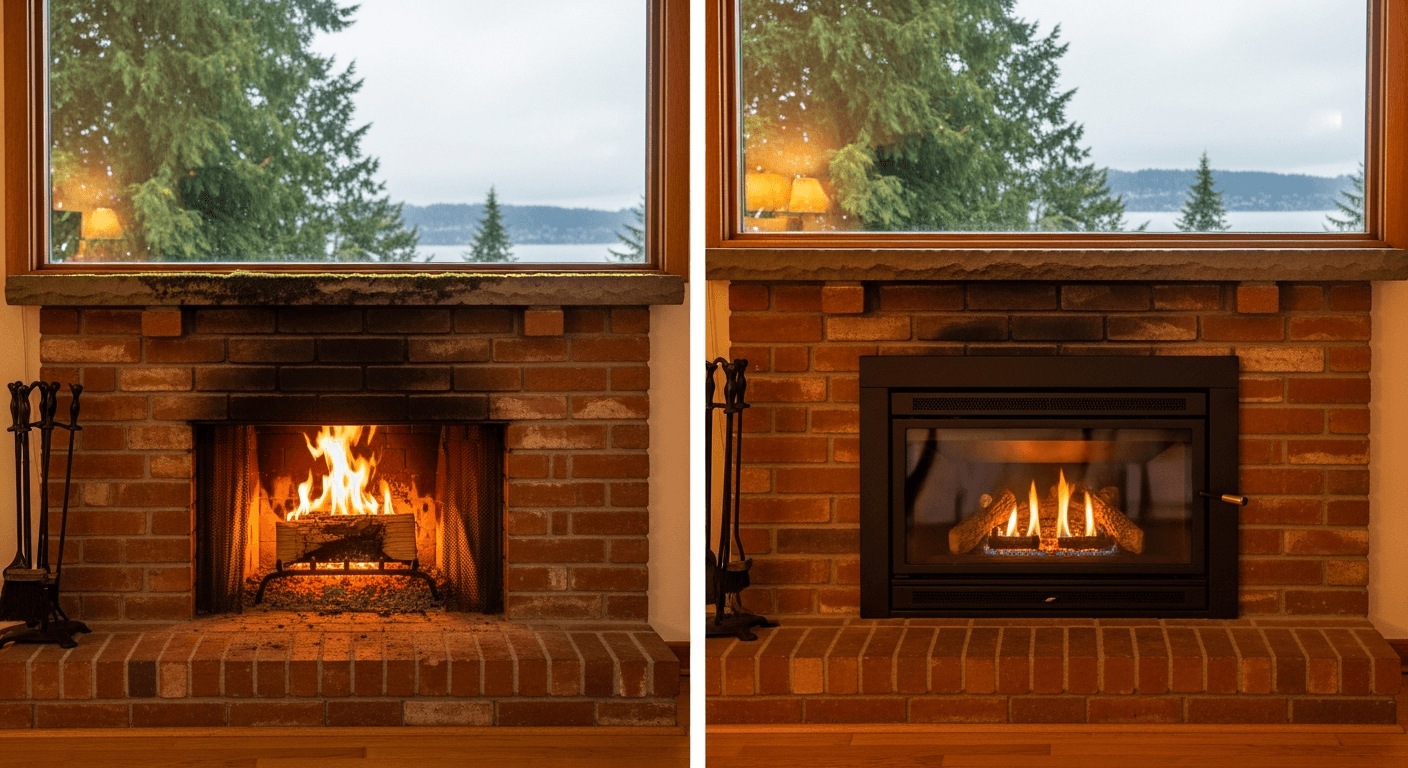
For most Kirkland homeowners, a gas insert is cheaper to own and maintain than a wood-burning fireplace — roughly $330 to $590 per year in total annual costs versus $755 to $1,275 or more for a wood system used moderately through winter. The gap widens here specifically because Kirkland's wet Lake Washington climate accelerates creosote buildup, Puget Sound Clean Air Agency burn bans restrict wood-burning on dozens of winter days each year, and seasoned firewood on the Eastside runs $350 to $500 per cord. If you already have a sound wood-burning system and burn infrequently, the math can shift — but the details below will show you exactly where your situation lands.
Why Kirkland's Climate Changes the Calculation
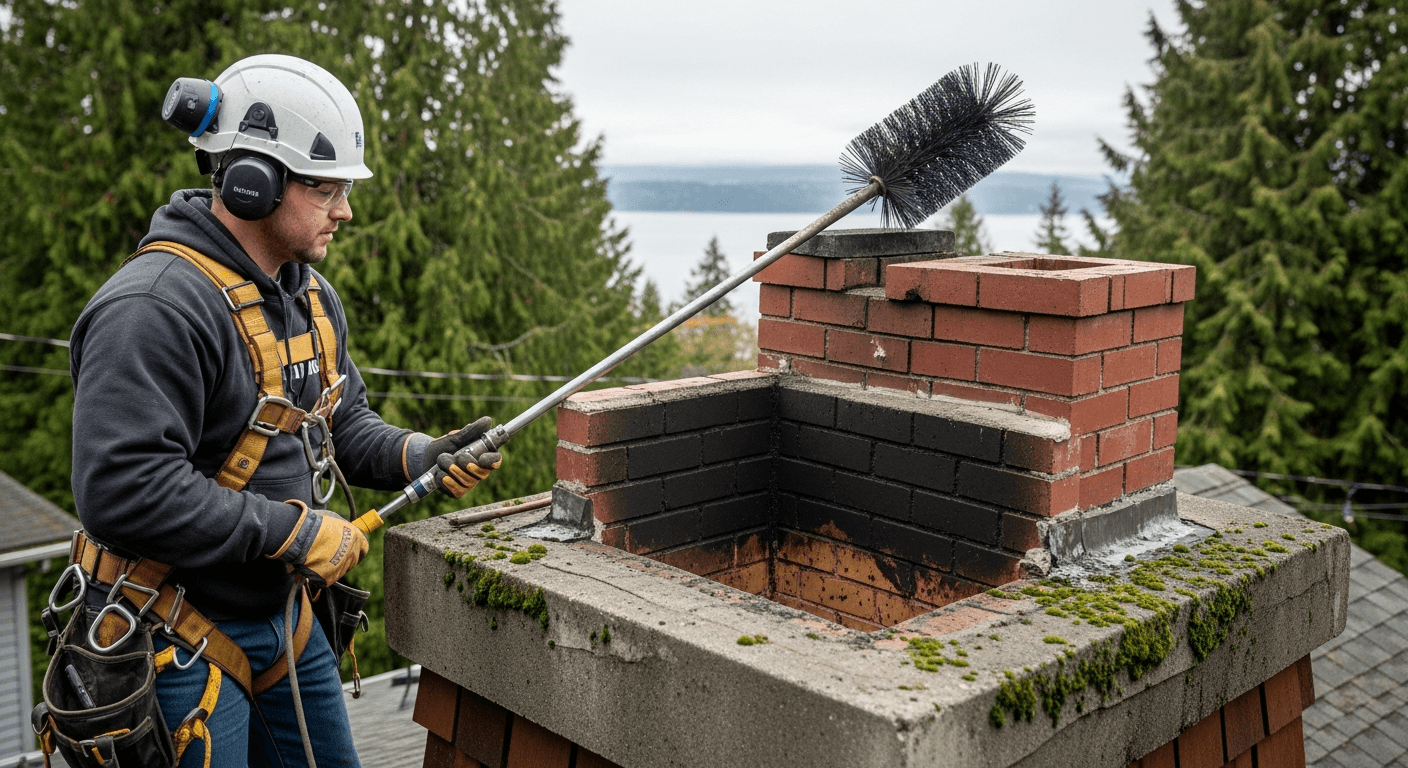
Kirkland's November-through-March rainy season — routinely 35 to 45 inches of precipitation across those months — creates conditions that drive up wood-burning maintenance costs faster than homeowners expect. Sustained moisture in the air means flue gases cool quickly inside the chimney, condensing into creosote deposits at a faster rate than in drier climates. In the older masonry chimneys common to Juanita, Lakeview, and the waterfront neighborhoods, we regularly find stage-two creosote buildup in systems used just two to three nights per week through a single season. Moss and algae growth on chimney crowns and brick is a separate but related problem — left unaddressed, it traps moisture against mortar joints and accelerates spalling.
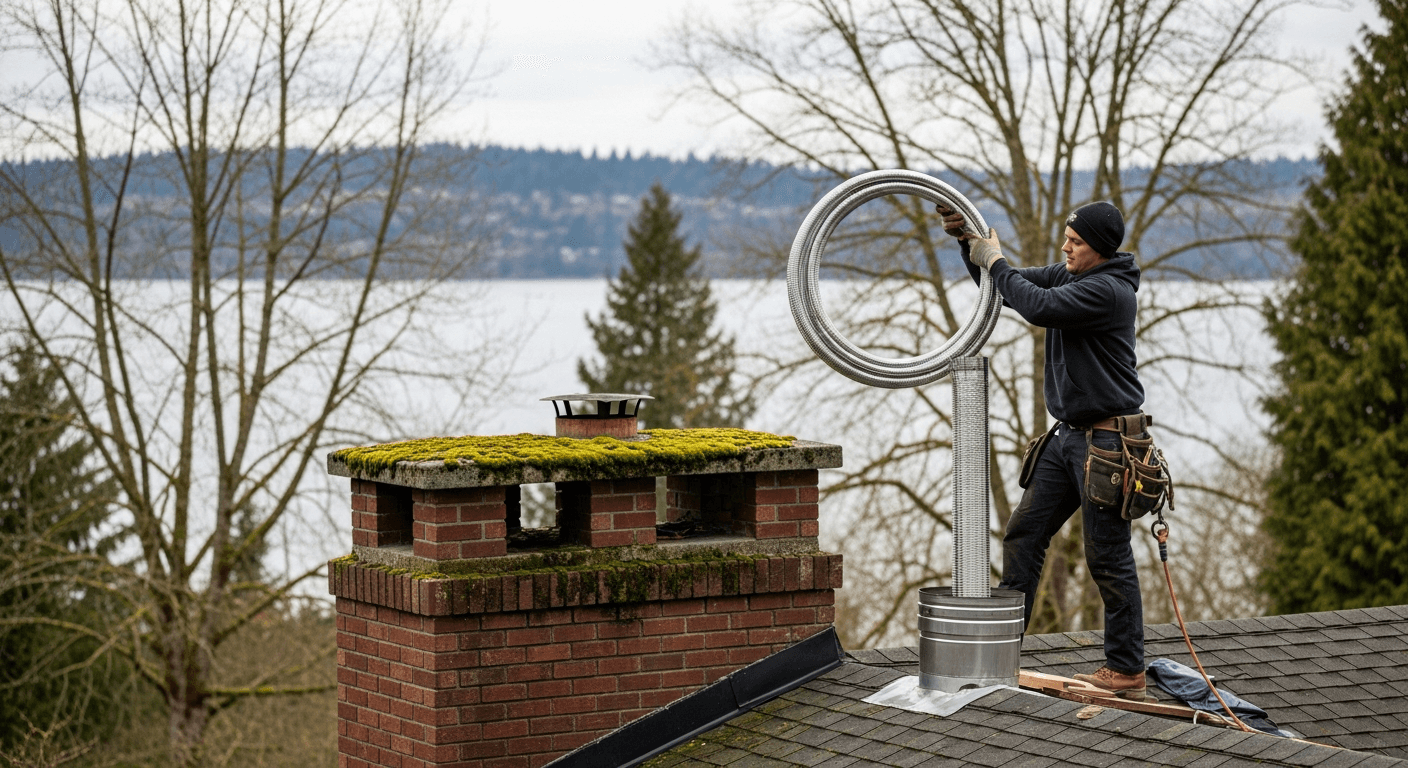
Gas inserts sidestep nearly all of these climate-driven costs. A direct-vent gas insert exhausts combustion gases through a sealed, co-axial liner that draws outside air for combustion and expels exhaust in a closed loop — moisture in the flue stays manageable with a single annual vent check. For homeowners in Kirkland's South Kirkland and Norkirk neighborhoods built in the 1990s and 2000s, natural gas lines are frequently already stubbed to the firebox, making an insert retrofit straightforward. For homes in the older Houghton and Forbes Creek corridors with original clay-tile flues, a wood-burning system can remain a good choice — but only if annual maintenance is treated as non-negotiable.
Annual Maintenance Costs Side by Side
The table below reflects realistic annual costs for Kirkland homeowners using their fireplace one to four nights per week during the heating season — roughly October through March. These figures do not include one-time installation or major repair costs. Wood-burning totals can climb sharply in any year that a Level 2 inspection reveals liner damage, a common finding in systems that burn frequently or have gone two or more years without professional service.
Burn bans enforced by the Puget Sound Clean Air Agency represent a real but often-overlooked cost for wood-burning households. Kirkland's Eastside location means the basin air-quality monitors that trigger Spare the Air alerts directly affect when residents can legally burn. In recent winters, ban days have clustered in January and February — exactly when homeowners most want a fire. Households that purchase a full cord of seasoned wood and then face eight to twelve ban days in a single month may need supplemental electric heat regardless, eroding any fuel-cost advantage of burning wood.
| Service or Cost Item | Wood-Burning Fireplace (annual) | Gas Insert (annual) |
|---|---|---|
| Chimney sweep / cleaning | $180–$300 | $100–$160 (vent & flue check) |
| Level 1 inspection | $100–$175 | $100–$150 |
| Creosote treatment (rotary or chemical, as needed) | $50–$150 | Not applicable |
| Firewood (1 cord, seasoned alder or Douglas fir, Eastside pricing) | $350–$500 | Not applicable |
| Natural gas fuel cost (avg. heating season, PSE rates) | Not applicable | $80–$180 |
| Minor repairs (damper, crown, cap — amortized annually) | $75–$150 | $50–$100 |
| Estimated annual total | $755–$1,275+ | $330–$590 |
A Kirkland Homeowner Who Did the Math
In late October, a homeowner near Juanita Beach called us after their neighbor mentioned our sweep pricing and they wanted a second opinion on a quote they'd received. They had a 1978 masonry fireplace they used heavily — three to four nights a week from November through March — and had skipped professional service for two consecutive years. When our technician arrived, the flue showed stage-two glazed creosote throughout the upper third of the liner. A standard sweep brush would not have removed it safely; we needed a rotary power-cleaning system before we could even complete the inspection. The visit totaled $490, which the homeowner had not budgeted for.
We reviewed their full annual spend on the spot: approximately $420 for a cord of seasoned fir delivered to Juanita, $280 for a sweep in a routine year, and now a $490 deep-clean charge instead. They asked directly about switching to a gas insert. We explained that a direct-vent gas insert fitted to their existing 36-inch firebox opening would run $2,800 to $4,500 installed — including a new stainless flexible liner, which their clay-tile flue would require — and that their ongoing annual costs would drop to approximately $300 to $350. They scheduled an estimate visit before they left. The point isn't that a gas insert is always the right answer; it's that the true annual cost of a wood-burning system used heavily in Kirkland looks very different once you account for every line item.
One-Time Installation and Conversion Costs
Upfront numbers matter when evaluating a conversion. A gas insert installed into an existing masonry firebox in Kirkland typically runs $2,500 to $5,500, depending on BTU output, whether a remote or wall-switch ignition system is included, and whether the existing flue requires a new stainless flexible liner — which it usually does, because gas inserts must vent through a correctly sized liner to exhaust safely and meet current code. If your wood-burning system has a fully sound liner and you burn only occasionally, keeping the wood fireplace may pencil out better for the first five to seven years before cumulative maintenance costs favor gas.
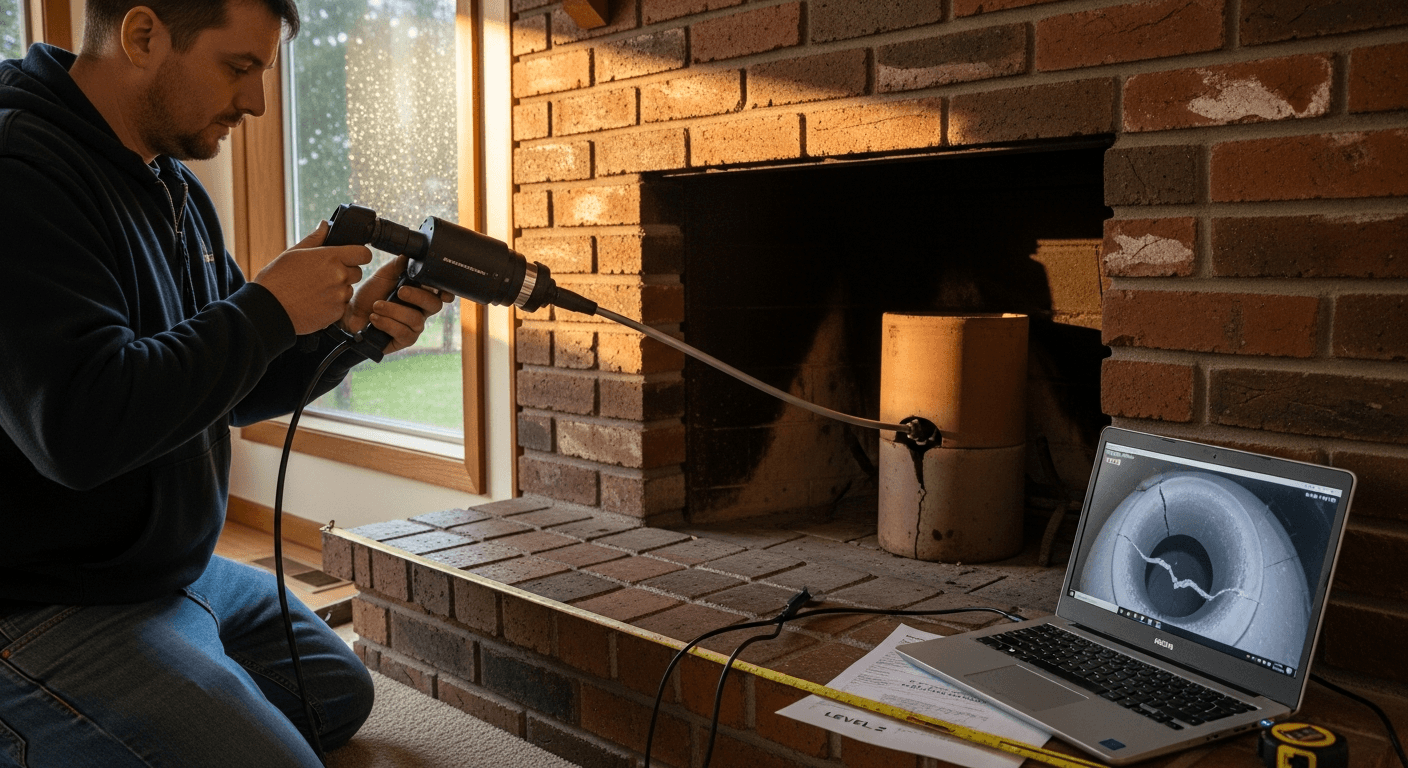
For full replacements rather than inserts, costs rise: a new gas fireplace unit with surround and liner installation runs $4,000 to $8,000 in Kirkland; a new masonry wood-burning fireplace with properly sized clay-tile or stainless liner runs $3,000 to $7,000 and up. Chimney relining alone — required when an existing flue is cracked, offset, or incorrectly sized — adds $1,500 to $4,000 to either project. These are not decisions to make without knowing the condition of your existing system, which is exactly why we recommend a Level 2 inspection before committing to any conversion path. Camera scanning of the full flue interior is the only way to know what you're working with.
Which Should You Choose? A Practical Framework
Choose a gas insert if: your annual fireplace use is casual to moderate, you're regularly frustrated by Puget Sound Clean Air Agency burn bans during the winter months you most want a fire, you don't want to source and stack seasoned firewood each fall, your home has a gas line within reach of the firebox, or anyone in your household has asthma or respiratory sensitivities that make wood smoke a concern indoors or out.
Stick with wood-burning if: you genuinely value the sensory experience of a real wood fire and use it as a meaningful heat source — not just ambiance — during Kirkland winters, your existing masonry system is in sound condition and you have committed to annual professional sweeps and inspections without fail, and you have a reliable, cost-effective source of seasoned cordwood. A properly maintained wood-burning fireplace in Kirkland is a legitimate long-term choice. The problems we see are almost always traced to deferred maintenance — skipping one season becomes two, and stage-two creosote or a cracked liner becomes an expensive emergency rather than a manageable annual cost.
Frequently asked questions
How often does a wood-burning chimney need to be swept in Kirkland, WA?
At minimum, once per year — ideally in September or early October before burn season starts. Kirkland's wet winters accelerate creosote accumulation, so homeowners burning three or more nights per week should schedule a mid-season check in January as well. The Chimney Safety Institute of America's standard is one inspection per year for any regularly used system; Kirkland's climate makes that a floor, not a ceiling.
Will homeowners insurance cover chimney repairs in Kirkland?
Standard Kirkland homeowners policies generally cover sudden, accidental damage — a storm-fractured flue tile or structural damage from a chimney fire, for example. They do not cover gradual deterioration, creosote buildup, or repairs resulting from deferred maintenance. A documented annual inspection report strengthens any claim you do need to file and demonstrates you were maintaining the system properly.
What should I pay for a chimney sweep in Kirkland, WA?
A standard sweep and Level 1 inspection for a wood-burning fireplace runs $180 to $300 in Kirkland. If stage-two creosote is present, a rotary or chemical treatment adds $50 to $150. A gas insert vent and flue check runs $100 to $160. Quotes significantly below these ranges typically exclude the inspection component — confirm in writing what is included before booking.
Is a gas insert worth the upfront cost if I already have a working wood fireplace?
For Kirkland homeowners using their fireplace two to four nights a week through winter, a gas insert typically recovers its installation cost through reduced maintenance and eliminated firewood expenses within seven to ten years. If your existing wood system needs near-term liner or masonry repairs — which a current inspection will tell you — that repair cost effectively shortens the gas insert payback period considerably.
What does a Level 2 chimney inspection cost in Kirkland, WA?
A Level 2 inspection in Kirkland runs $250 to $500 and includes video camera scanning of the entire flue interior. It is required before any fuel-type conversion, after a chimney fire, and when buying or selling a home. It is the only inspection level that can confirm whether your existing liner is structurally sound enough to support a gas insert without relining.
Related services