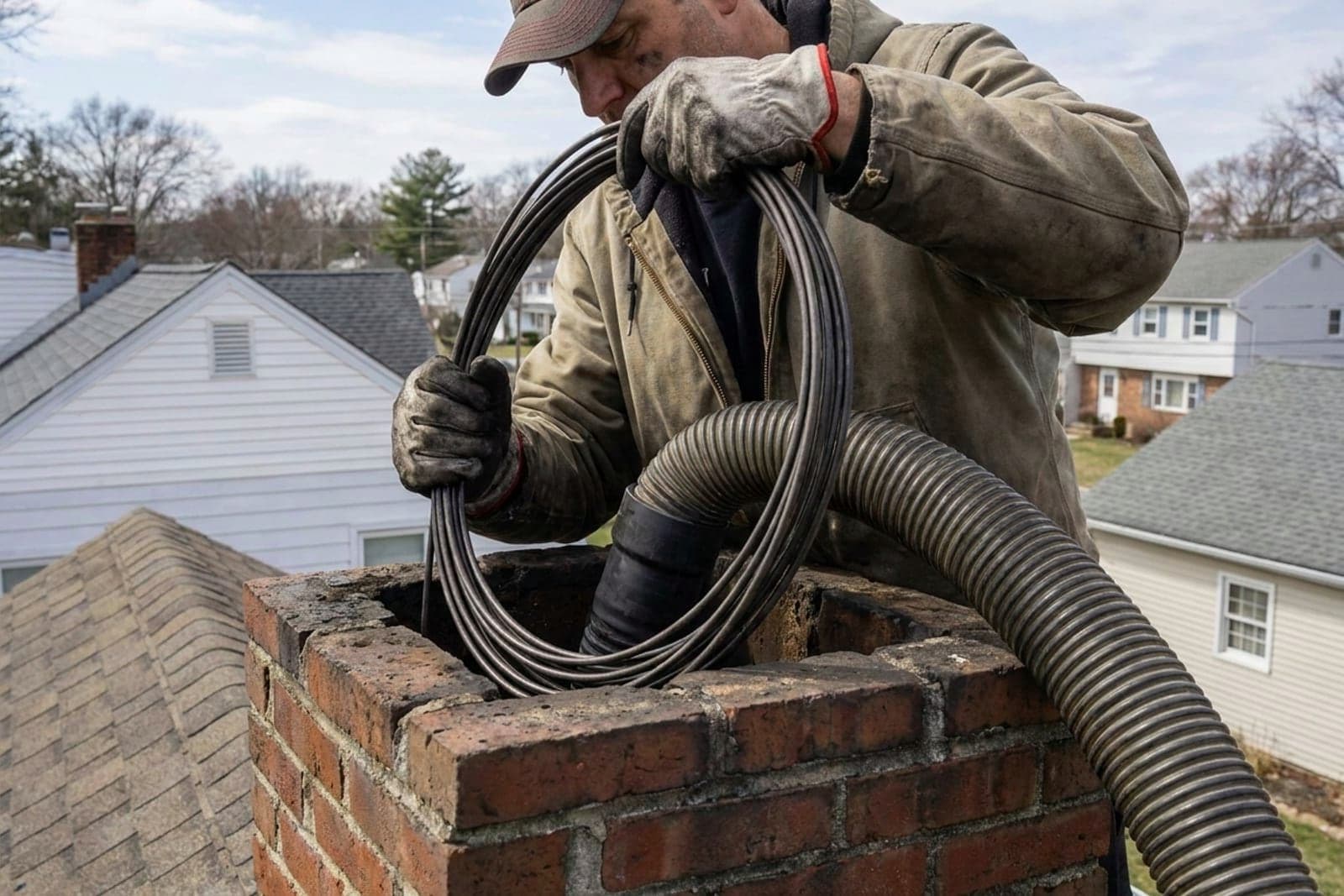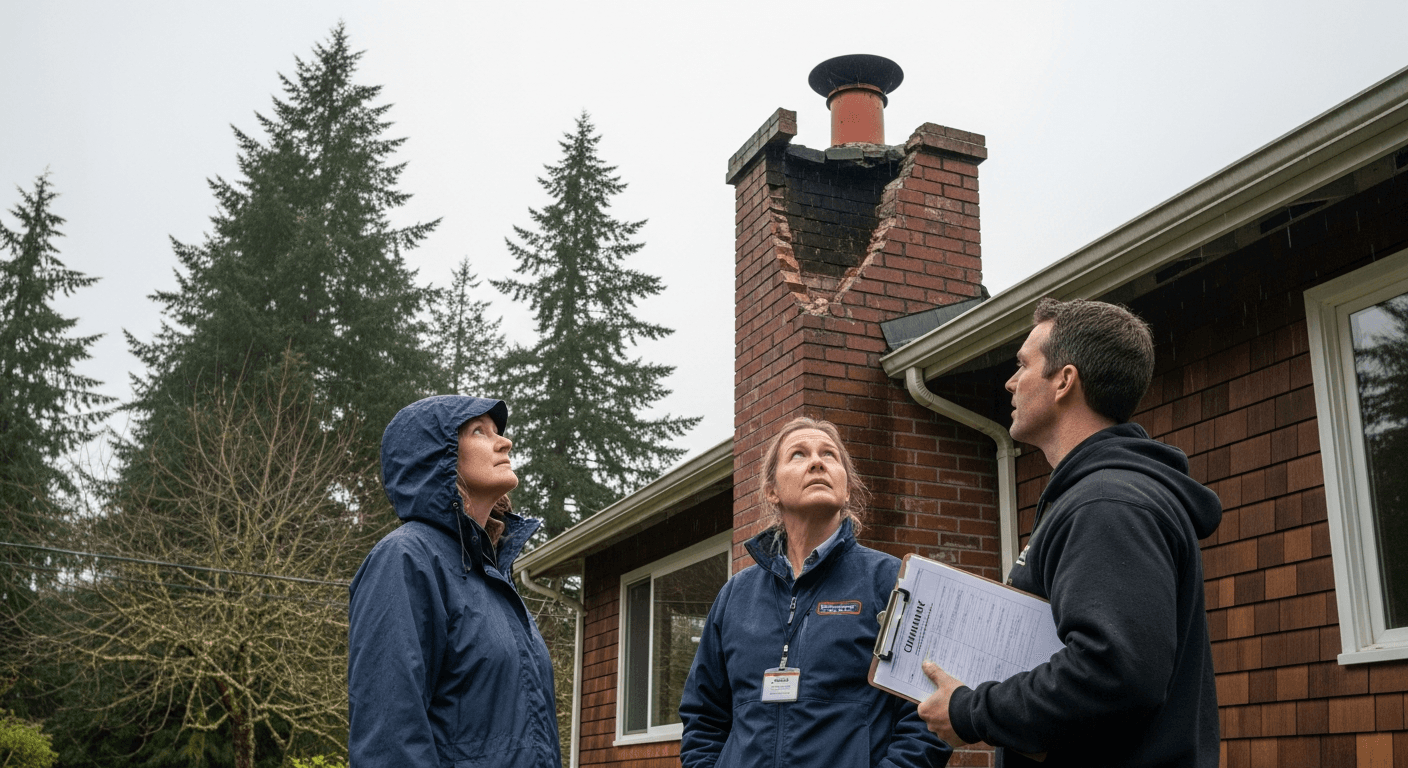
Yes, homeowners insurance can pay for chimney repair in Kirkland — but only if the damage was caused by a sudden, covered event such as a windstorm, lightning strike, or falling tree branch. Damage that developed gradually from Kirkland's persistent rainfall, moss growth, or skipped annual maintenance will almost certainly be denied under your policy's wear-and-tear exclusion. Knowing which category your damage falls into before you call your insurer is the difference between a smooth claim approval and a frustrating written denial.
What homeowners insurance actually covers for chimneys
Standard homeowners policies in Washington State cover chimneys under the dwelling portion of the policy, but only for 'sudden and accidental' damage from named perils. For Kirkland homeowners, covered events typically include: a windstorm that topples a chimney cap or tears flashing loose, a lightning strike that cracks the firebox or fractures the flue liner, a falling Douglas fir or big-leaf maple limb that crushes the chimney crown, fire damage that destroys the liner, and in limited cases, a vehicle impact. If any of these events affected your chimney, photograph every angle the same day, note the exact date, and report promptly — Washington's one-year statute of limitations on insurance claims gives you time, but delays hurt credibility with adjusters.
What is almost never covered: gradual mortar erosion from Kirkland's 37 inches of annual rainfall, moss and lichen colonies eating into brick joints on shaded north-facing chimneys, creosote buildup from incomplete combustion in wood-burning fireplaces, rusted dampers from condensation cycling, or a crumbling crown caused by repeated freeze-thaw cycles during Kirkland winters. Insurers categorize all of these as maintenance failures. Your policy almost certainly contains explicit exclusions for 'wear and tear,' 'deterioration,' and 'lack of maintenance' — and these are the exclusions cited on the majority of chimney claim denials on the Eastside.
The real cost of chimney repair in Kirkland — and what insurance typically reimburses
Understanding actual repair costs helps you decide whether filing a claim makes financial sense, particularly after accounting for your deductible. Most Kirkland homeowners carry deductibles of $1,000 to $2,500. For smaller repairs — a cracked crown or a missing cap — you may come out ahead paying directly rather than absorbing a premium surcharge at renewal.
The table below reflects realistic price ranges for common chimney work in the Kirkland area. Costs vary depending on chimney height, roofline access, and the full scope of damage discovered during inspection.
| Service | Typical Cost Range (Kirkland area) | Usually Insurance-Covered? |
|---|---|---|
| Chimney sweep (standard cleaning) | $150 – $280 | No — maintenance item |
| Level 1 inspection | $100 – $200 | No — maintenance item |
| Level 2 inspection (camera scan) | $250 – $450 | Sometimes — typically required by insurer after fire or storm claim |
| Chimney crown repair | $300 – $800 | Only if damage is attributable to a covered event |
| Flue relining (stainless steel) | $2,500 – $5,500 | Yes, if liner was destroyed by fire or lightning |
| Firebox rebuild (partial) | $1,000 – $2,500 | Yes, if caused by fire or sudden impact |
| Full chimney rebuild | $4,000 – $12,000+ | Yes, if a covered peril is the proximate cause |
| Tuckpointing / mortar repair | $400 – $1,500 | Rarely — typically classified as wear and tear |
| Storm damage repairs (cap, flashing) | $300 – $900 | Yes, when wind or a named storm event is documented as the cause |
How quickly Kirkland chimney problems escalate by situation
One of the most practical questions Kirkland homeowners ask is how urgently they need to act after discovering chimney damage. The answer depends heavily on the type of damage and the season. Kirkland's wet winters mean that any breach in the crown, cap, or flashing can allow water intrusion that accelerates deterioration week by week. The table below shows typical escalation timelines for common chimney situations in the Kirkland climate, and why prompt inspection matters both for safety and for preserving insurance claim eligibility.
Delays between a covered event and a professional inspection give adjusters grounds to argue that subsequent deterioration was pre-existing or maintenance-related. Acting within the timeframes below protects both your home and your claim.
| Situation | Recommended Inspection Timeline | Risk if Delayed |
|---|---|---|
| Storm impact (wind, falling limb) — Kirkland | Within 48–72 hours of the event | Water enters cracked crown; adjuster may dispute cause of moisture damage |
| Visible chimney lean or structural shift — Kirkland | Same day — do not use fireplace | Progressive failure; carbon monoxide or collapse risk rises rapidly |
| Post-house-fire — Kirkland | Before fireplace is used again; ideally within 1 week | Cracked liner may cause house fire on next use; insurer requires Level 2 before claim approval |
| Lightning strike — Kirkland | Within 48 hours | Invisible liner fractures worsen with heat cycling; insurer may deny if delay suggests pre-existing damage |
| Smoky fireplace with no known event — Kirkland | Within 2–4 weeks | Could indicate blockage, liner failure, or creosote buildup; all worsen with continued use |
| Annual maintenance check — Kirkland (no known incident) | Once per year, ideally before the rainy season (September–October) | Minor moss, mortar, or cap issues become major repairs after a wet winter if uncorrected |
A Kirkland homeowner's experience filing a chimney claim
Consider a hypothetical but realistic scenario: a homeowner in the Juanita neighborhood calls after a strong windstorm sends a large Douglas fir branch directly onto their chimney. The crown is cracked through, the cap has been knocked completely off, and water has already entered the firebox. A common concern in situations like this is that the chimney's age — say, a home built in 1987 — might be used to deny the claim.
The correct sequence in such a case is: photograph every damaged component before touching anything, record the storm date and cross-reference it against the publicly available NOAA weather records for Kirkland, and schedule a Level 2 inspection immediately so that cause and scope are documented professionally before any cleanup. A written inspection report that clearly attributes the crown fracture and liner displacement to impact force rather than pre-existing deterioration is typically the single document an adjuster needs to approve the claim. Repairs above the deductible can then be covered in full. The outcome turns on having a report that cleanly separates sudden storm damage from the routine tuckpointing the chimney was also due for — a distinction that must be explicit and itemized to survive adjuster review.
How a Level 2 chimney inspection supports your insurance claim
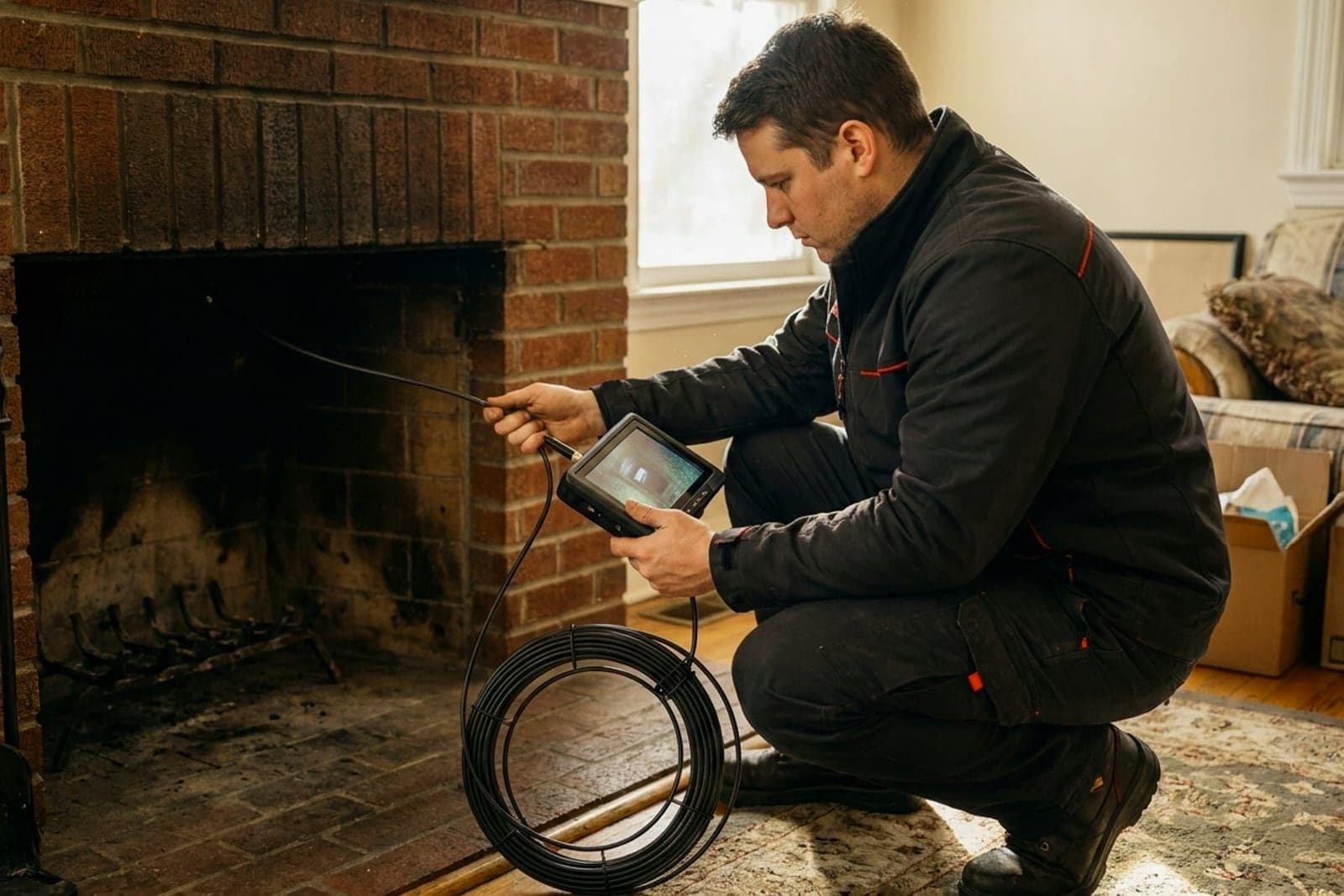
A Level 2 inspection is the standard recognized by Washington State insurers and fire marshals as authoritative for any chimney claim. It includes a full video camera scan of the flue, a close examination of the firebox and accessible exterior components, and a written report documenting the condition and cause of damage for every inspected element. For claims involving fire, storm, or structural impact, most Kirkland-area adjusters will require one before issuing any approval.
At $250 to $450 in the Kirkland market, the Level 2 fee is often reimbursable as part of an approved claim or can be incorporated into your documented repair estimate. Even when a claim is ultimately denied, the inspection gives you a precise picture of what needs repair and prevents you from making cosmetic fixes that obscure deeper damage — a mistake that can void coverage for any subsequent claim on the same chimney.
One detail specific to Kirkland's housing stock: gas fireplace inserts are extremely common here, both in newer construction near the lake and in retrofitted mid-century homes throughout the Highlands and North Rose Hill neighborhoods. A Level 2 inspection is the only method that can confirm whether a gas insert liner is properly sized, sealed, and undamaged after any incident. A cracked or ill-fitted liner in a gas system is a carbon monoxide hazard — one that an adjuster cannot assess from outside the flue and one that your insurer will ask for documented proof of before authorizing liner replacement.
What to do before and after you file a chimney insurance claim
Before you file: Photograph all visible damage from multiple angles in natural light. Record the exact date and tie it explicitly to any weather event. Do not clean, cap, or repair anything until you have complete documentation — disturbing the scene can give an adjuster grounds to question the timeline of damage. Pull the NOAA or Weather Underground station records for Kirkland on the date in question; adjusters routinely cross-reference these, and having them ready strengthens your position.
When you call your insurer: Confirm that the claim is being filed under the dwelling portion of your policy, and ask your agent to read you the named perils listed. Request a claim number in writing before the call ends. Ask directly whether a professional inspection report is required before they dispatch an adjuster — in nearly all Kirkland-area cases, it is, and scheduling that inspection immediately shortens your total claim timeline.
After you file: Obtain a written, itemized estimate from a qualified chimney professional that separates sudden storm or fire damage from any pre-existing maintenance needs. Adjusters are trained to discount estimates that blend the two categories, and a mixed estimate is the second most common reason partial claims are reduced or denied. If your claim is denied, demand the denial in writing citing the specific policy exclusion invoked. Washington State's Office of the Insurance Commissioner accepts formal complaints and can require your insurer to re-examine a denial that misapplied your policy language.
Frequently asked questions
Will homeowners insurance pay for chimney repair in Kirkland, WA?
Yes, but only for sudden, accidental damage from a covered peril — windstorm, lightning, falling tree, or fire. Damage from Kirkland's persistent rainfall, moss accumulation, or deferred maintenance is excluded under standard wear-and-tear provisions.
What does a Level 2 chimney inspection cost in Kirkland?
A Level 2 chimney inspection in the Kirkland area typically runs $250 to $450. It includes a camera scan of the full flue length and a written report documenting cause and condition — the two elements insurers require before approving most chimney claims in Kirkland.
Is a chimney inspection worth it if I'm not filing a claim?
Yes, an annual chimney inspection in Kirkland is worth it even without a pending claim. Kirkland averages 37 inches of rain annually, and moisture-driven damage — liner cracks, eroded mortar joints, deteriorating crowns — advances faster here than in drier climates. An annual inspection catches these issues while repairs are still modest; the same problems left two or three years typically cost two to four times more to correct.
How much does chimney sweeping cost in Kirkland?
Standard chimney sweeping in Kirkland runs $150 to $280. Fireplaces with heavy creosote buildup — common in Kirkland homes where wood is burned frequently through the wet season — may cost more due to additional cleaning time and safe disposal requirements.
Can I claim chimney cleaning on my homeowners insurance?
No. Routine chimney cleaning and maintenance in Kirkland are explicitly excluded from standard homeowners policies as preventive upkeep. Only damage from sudden, covered events qualifies for reimbursement under a Kirkland homeowners policy.
Related services