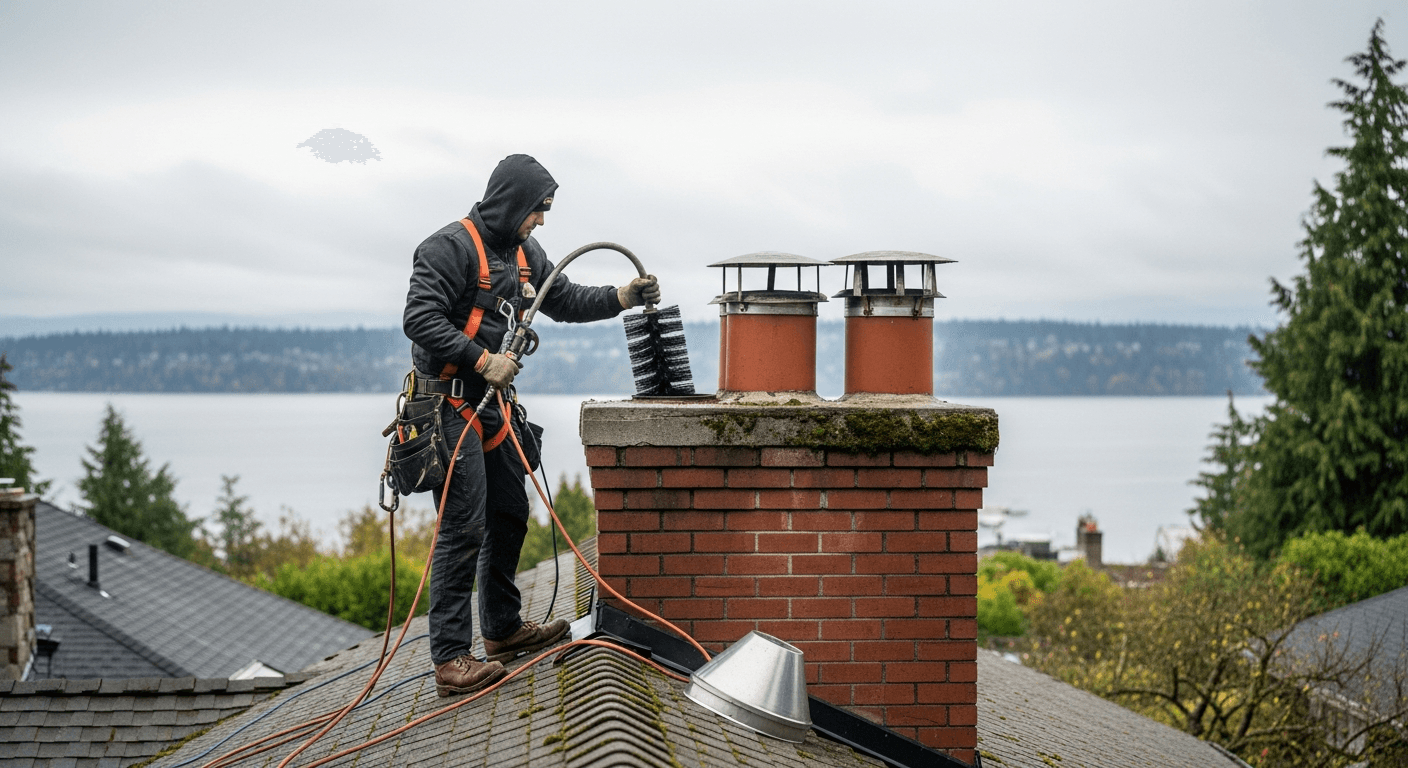
Yes, your Kirkland insert needs professional service every year — even if you barely used it. Moisture off Lake Washington and the Eastside's prolonged wet season from October through March accelerate liner corrosion on gas inserts and creosote buildup on wood-burning units faster than in drier inland climates. Understanding what drives the cost and when to book means you stay safe, keep your warranty intact, and never scramble for an appointment in October when every Eastside technician's schedule is full.
Gas Insert vs. Wood-Burning Insert: Why the Service Needs Are Different
A gas insert looks clean because there is no ash, but combustion still deposits moisture, carbon, and trace sulfur compounds on the liner, burner ports, and venting connector every season. Skipping a year does not mean nothing happened — it means those deposits had twice as long to corrode the flexible stainless liner that runs from the insert collar up through your masonry flue. In Kirkland's climate, where ambient humidity rarely drops below 70 percent from November through February, that corrosion timeline moves faster than manufacturers' maintenance schedules assume.
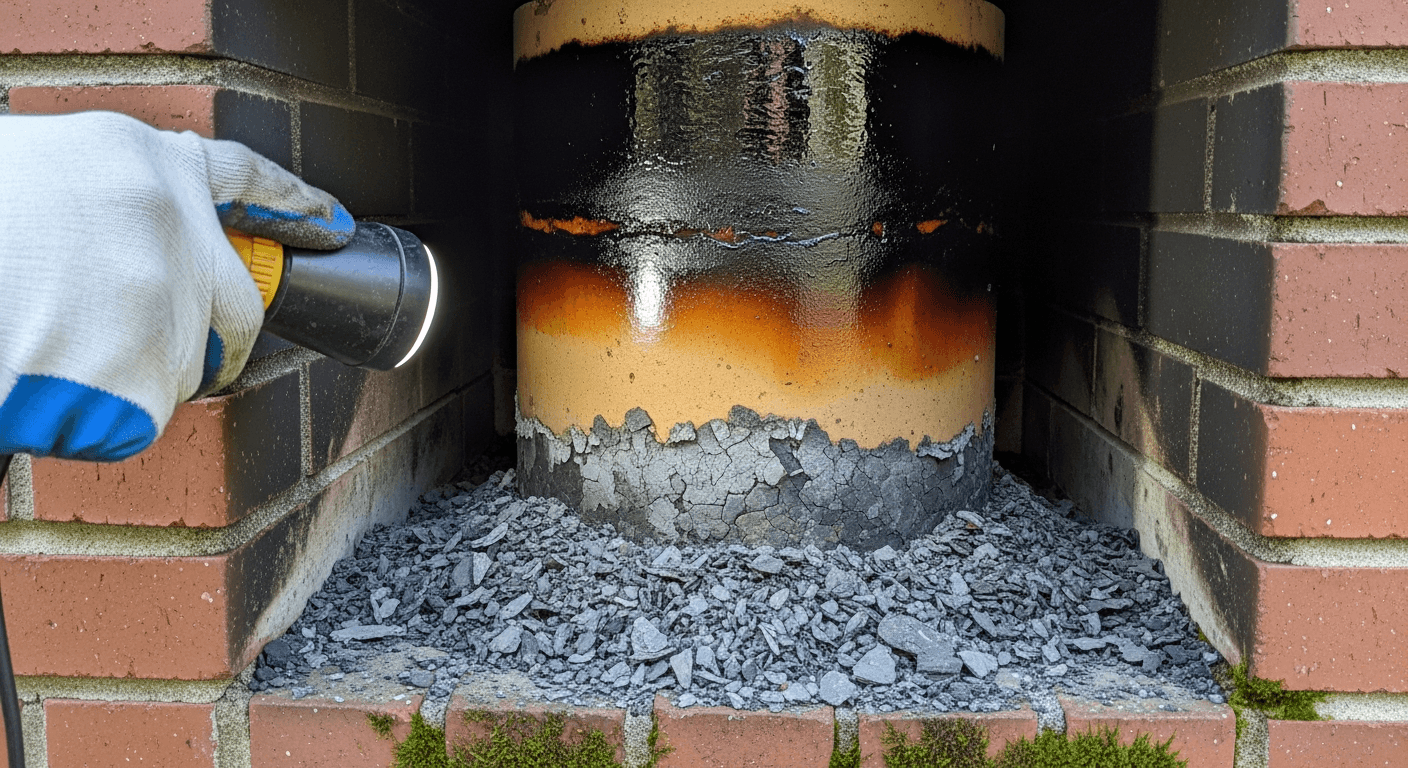
A wood-burning insert faces the classic creosote problem, made worse by its sealed format. The insert sits tightly inside the original masonry opening, restricting combustion airflow and keeping flue temperatures lower than an open fireplace would produce. Lower flue temperatures accelerate creosote condensation on the liner walls. Kirkland homeowners burning primarily during the wet October-through-March season compound this because cold outside air chills the liner from the exterior, dropping stack temperatures further on every fire.
The practical takeaway: gas insert owners need a burner inspection, liner check, and venting cleaning annually. Wood-burning insert owners need the same annual chimney inspection plus a professional sweep every cord of wood burned — or every season, whichever comes first. Neither type gets a pass because Puget Sound Clean Air Agency burn bans shortened your season last winter — partial-season deposits and dormancy moisture are both genuine hazards.
What Does Insert Service Actually Cost in Kirkland?
Pricing in the Kirkland and Eastside market reflects three real variables: insert type, inspection level, and whether cleaning beyond routine sweeping is required. The table below shows ranges you should see from a qualified local technician. If a quote falls well below the low end, ask specifically which items are included — discounted prices often omit the liner check or substitute a visual-only inspection that cannot detect separation inside the flue.
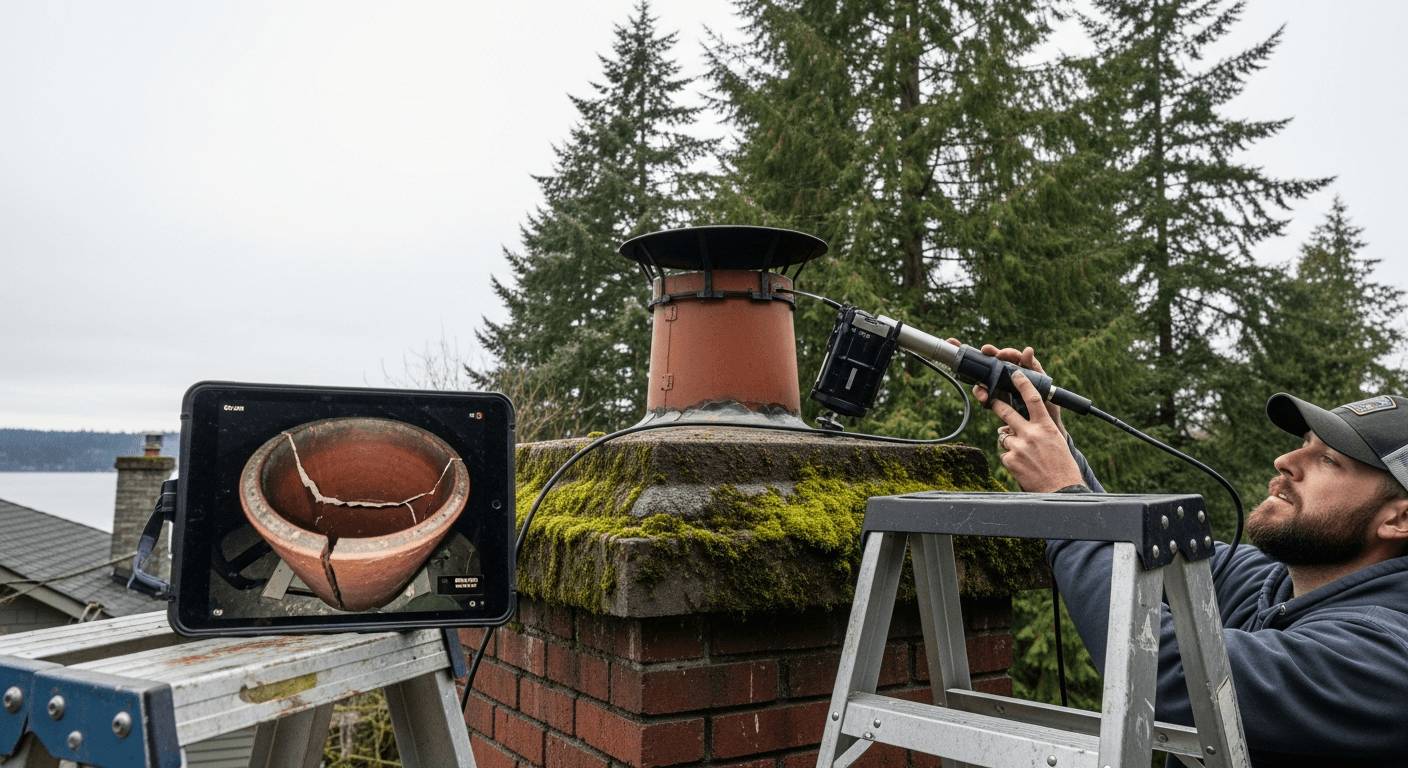
A Level 2 inspection is required any time a home changes hands, after a chimney fire, or whenever a technician cannot fully assess liner condition with a standard visual check. For gas inserts, Level 2 almost always means pulling the unit partially out to camera-scan the liner behind it — work that adds 45 to 60 minutes of careful labor. For wood-burning inserts in Kirkland homes built in the 1980s and 1990s — particularly in the established neighborhoods west of downtown and along the Lake Washington shoreline — the original masonry flue may have been retrofitted with a flexible liner rather than built with one, making a camera inspection especially important for confirming that retrofit liner's current condition.
| Service | What's Included | Typical Kirkland Price Range |
|---|---|---|
| Gas Insert Annual Service | Burner and pilot inspection, ignition and thermocouple test, venting connector cleaning, visual liner check, carbon monoxide test at the firebox | $150 – $225 |
| Wood-Burning Insert Sweep + Level 1 Inspection | Creosote removal from liner and connector, firebox and damper inspection, cap and crown visual check from ground level | $185 – $275 |
| Level 2 Inspection (either insert type) | All Level 1 items plus camera scan of full liner length, insert pulled as needed, written condition report | $275 – $450 |
| Creosote Treatment (Stage 2 glazed buildup) | Chemical conversion agent applied to glazed creosote before sweep; added to standard sweep visit | $75 – $150 add-on |
| Gas Insert Repair (igniter, burner, valve) | Parts plus labor; cost varies by component and parts availability | $125 – $400+ |
A Kirkland Homeowner Situation: When 'We Barely Used It' Still Led to a Problem
A homeowner in the Norkirk neighborhood called us in early November after purchasing a 1994 craftsman-style home near Lake Washington. The previous owners had installed a gas insert roughly eight years earlier, and the disclosure documents showed no record of any service visits. The new owner assumed everything was fine — the insert lit on the first try and the flame pattern looked normal.
When our technician pulled the insert for a Level 2 inspection, the flexible stainless liner had a separated coupling near the top of the flue where condensation had pooled and corroded the joint over multiple wet seasons. Carbon monoxide had not yet escaped into the living space, but the degraded seal would have failed within weeks once daily use began. Re-seating and re-sealing the liner coupling cost a fraction of a full liner replacement — and catching it before the family started running the insert through a Kirkland winter prevented a genuine health emergency.
This scenario is not unusual for Kirkland homes that transferred ownership without a chimney-specific inspection. A standard home inspection will not identify liner separation on a gas insert — detecting it requires pulling the unit and running a camera. That is the single most important reason we recommend a Level 2 inspection any time you move into a home with an existing insert, regardless of its apparent age or condition.
When to Book Insert Service in Kirkland: Timing That Works for Eastside Winters
The Kirkland heating season runs hard from mid-October through March, driven by Eastside cold snaps and the damp chill that arrives earlier along Lake Washington than it does further inland. That same window is when local chimney schedules fill fastest. Book annual service in August or September for wood-burning inserts, and in April or May for gas inserts.
Late spring for gas makes sense because your insert just finished its hardest-working months. Scheduling in April or May captures the season's deposits while they are fresh and easy to document, and any needed repairs are completed months before you need the unit again. Waiting until October puts you in direct competition with every other Eastside homeowner who procrastinated, and you may run an unserviced appliance for weeks waiting for an opening.
Puget Sound Clean Air Agency burn ban timing is another Kirkland-specific reason to stay ahead of service. Stage 1 and Stage 2 bans affect wood-burning appliances on high-particulate days, typically November through February. If a fall inspection reveals a creosote problem requiring chemical treatment before sweeping, you lose scheduling flexibility during ban periods when technicians are already overbooked. Completing service in September keeps your options open before bans begin.
Homeowners in Kirkland's newer construction corridors — developments built in the last 15 years with direct-vent gas inserts — should also check their paperwork. Many manufacturers require documented annual service to maintain the warranty on a $3,000-plus appliance. A missed visit in year three can void that coverage entirely.
Why Insert Service Costs More Than a Standard Fireplace Sweep
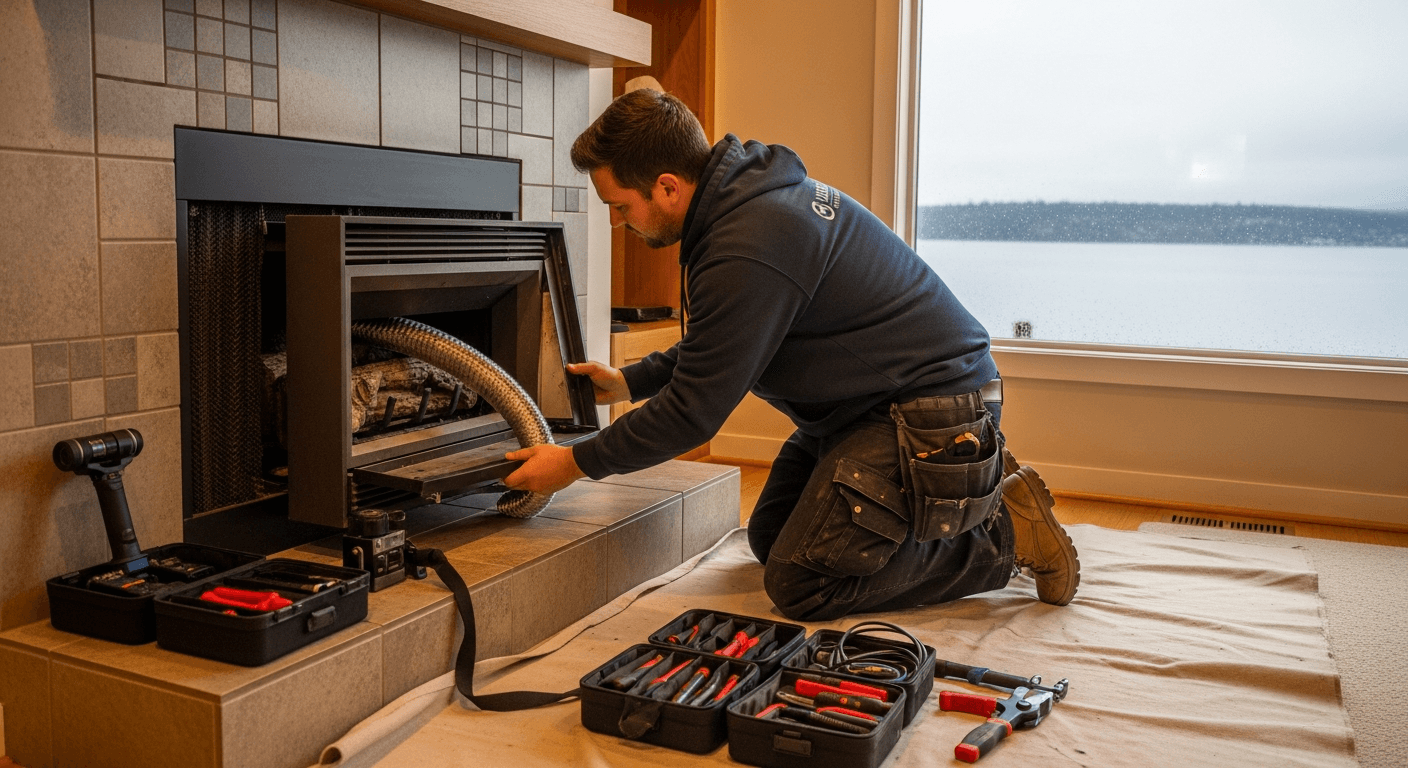
The most common question from Kirkland homeowners who switch from an open fireplace to an insert is why the service price is higher. The answer is labor. A straightforward open fireplace sweep takes 45 to 60 minutes. An insert sweep — particularly a wood-burning unit with a liner connector — requires partially or fully removing the insert to access the junction between the unit collar and the flue liner. That removal and reinstallation adds 30 to 60 minutes of careful work to every visit, and the confined space inside Kirkland's older masonry fireplaces makes it slower than a new-construction install would be.
For gas inserts, the added cost comes from the inspection side rather than creosote removal: testing the thermocouple or thermopile, checking burner orifice condition, verifying gas pressure at the valve, and confirming the venting connector is properly seated all require time and instruments that a flue sweep alone does not. A technician who quotes you the same rate as a standard fireplace sweep without mentioning those steps is almost certainly skipping them.
At the end of a proper insert service visit you should receive written documentation noting liner condition, combustion component status, cap and crown condition from a ground-level visual, and any recommended follow-up with a specific reason. That written record is what your homeowner's insurance carrier and any future buyer of your Kirkland home will ask to see — and it is your evidence that service was performed if a warranty dispute ever arises.
Frequently asked questions
How often does a gas insert need to be serviced in Kirkland?
Once a year, every year. Kirkland's sustained fall and winter humidity causes condensation inside the venting system even during light use, and a single skipped season is long enough for liner corrosion or a failed coupling to develop without any visible warning signs inside the home.
What does a Level 2 chimney inspection cost for an insert in Kirkland?
Expect $275 to $450. The higher cost compared to a Level 1 inspection reflects the camera scan of the full liner length and the labor to pull the insert away from the firebox opening to access the liner connection point behind it.
Why does insert sweeping cost more than sweeping an open fireplace?
Because the insert must be partially or fully removed to clean the connector pipe and inspect the liner junction. That removal and reinstallation adds 30 to 60 minutes of skilled labor to every visit — time that an open fireplace sweep simply does not require.
How much should a wood-burning insert sweep cost in Kirkland?
A standard sweep plus Level 1 inspection runs $185 to $275 in the Kirkland market. If the sweep uncovers Stage 2 glazed creosote that requires chemical treatment before cleaning, budget an additional $75 to $150 on top of the base price.
Can I still get my insert serviced during a Puget Sound Clean Air Agency burn ban?
Yes. Burn bans restrict operating a wood-burning appliance but do not prevent professional inspection or sweeping. That said, ban periods from November through February create real scheduling pressure across the Eastside. Booking service in August or September avoids the crunch entirely.
Does a new gas insert in a Kirkland home still need annual service if we rarely use it?
Yes, for two reasons. First, most manufacturers require documented annual service to keep the warranty valid — check your paperwork. Second, even minimal use in Kirkland's damp climate leaves moisture deposits in the venting system that corrode components over time regardless of burn frequency.
Related services