Creosote becomes a chimney fire hazard at Stage 2 and a near-certain one at Stage 3 — and Kirkland's wet, mild winters create the exact flue conditions that push buildup from Stage 1 to Stage 3 faster than homeowners expect. If you have a wood-burning fireplace on the Eastside and haven't had a professional cleaning in the past 12 months, there's a real chance you're already burning through unsafe deposits. Here's what each stage actually looks like inside the flue, what removal costs in Kirkland right now, and the five warning signs visible from your living room.
The Three Stages of Creosote — and Why Kirkland's Climate Pushes Homeowners Toward Stage 3
Stage 1 creosote is the loose, flaky gray-black soot that a standard chimney sweep removes in a single visit with a brush and vacuum. It forms when wood burns hot and the flue stays warm throughout the fire. Homeowners who consistently burn dry, seasoned cordwood — split and stacked for at least 12 months — and who light full, sustained fires rather than smoldering ones generally stay at Stage 1.
Stage 2 creosote is a harder, tar-like coating that adheres to flue walls when fires burn cooler or smolder for extended periods. Loading the firebox with wood that was cut and split last fall, or damping down the air supply to stretch evening heat, are the two most common causes in this area. Removing Stage 2 requires rotary power-brush tools rather than a hand brush, which is why it costs more than a basic annual sweep.
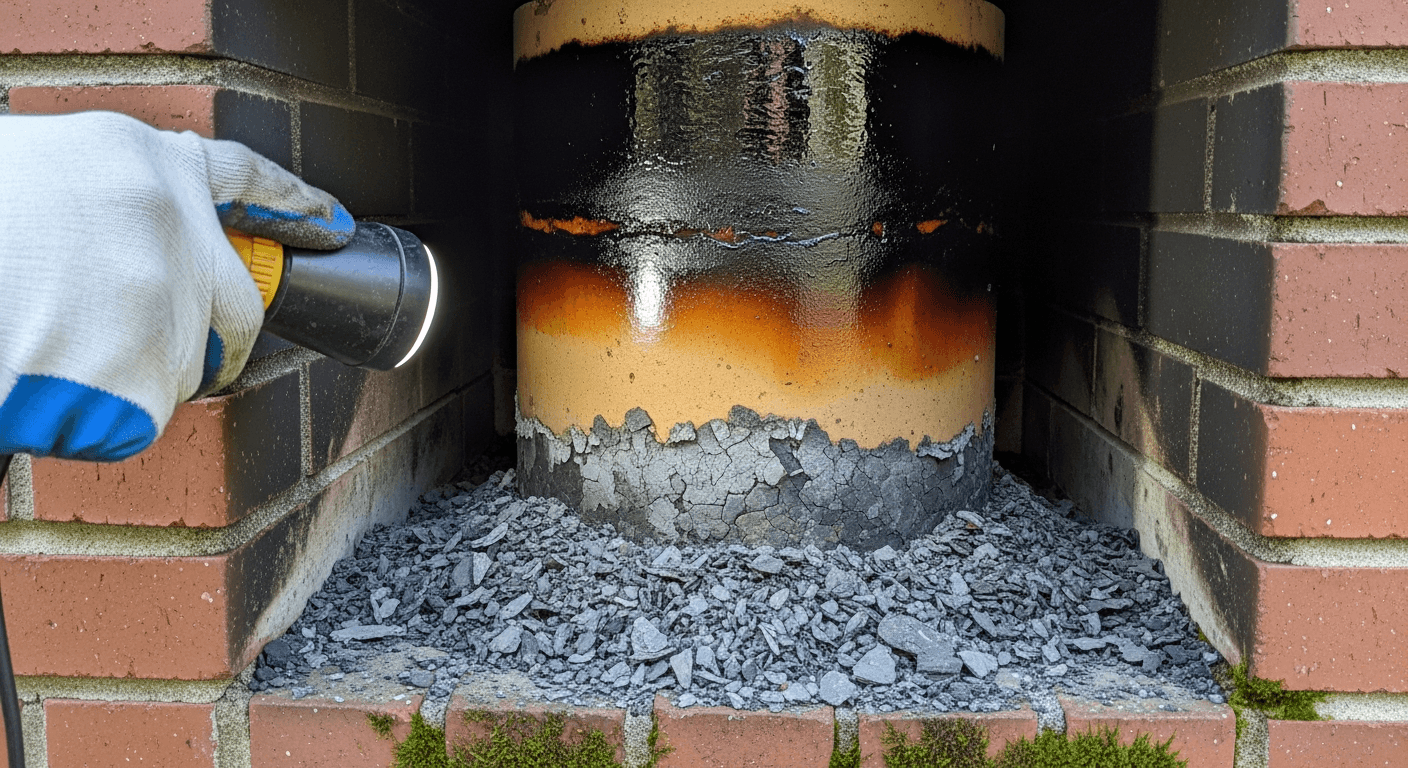
Stage 3 creosote is the glazed, shiny, or thick dripping deposit fused directly to the flue liner. It ignites at approximately 451°F — a temperature the interior of a Kirkland flue reaches easily during any normal wood fire. Removing Stage 3 requires a chemical treatment applied during a first visit, a waiting period of 10 to 14 days while the product breaks down the glaze, and a second mechanical cleaning to clear the loosened residue. A Level 2 camera inspection must follow to confirm the liner is intact.
Kirkland's climate is a genuine accelerant for all three stages. From October through March, outdoor temperatures on the Eastside consistently sit in the low-to-mid 40s°F. A flue that hasn't fully warmed before a fire is lit stays cool enough for unburned combustion gases to condense and deposit on the tile surface before they exhaust — the precise mechanism that produces creosote. Homes in the Juanita, Holmes Point, and Finn Hill areas closest to Lake Washington deal with higher ambient moisture year-round, compounding the effect. Add the common pattern of short evening fires rather than sustained all-day burns, and progressing from Stage 1 to Stage 2 within a single burning season is not unusual here.
A Juanita Homeowner Called Us After Smoke Started Rolling Back Into the Room
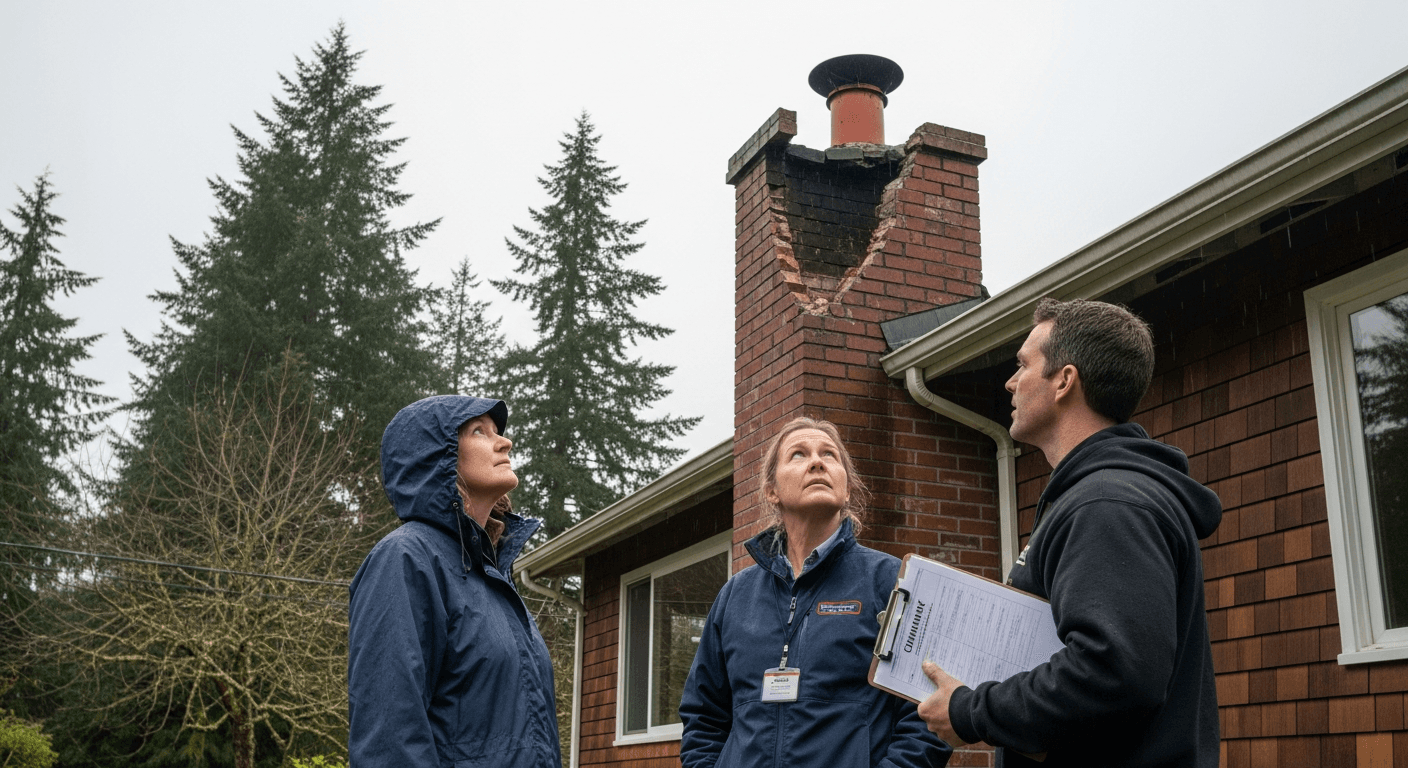
A homeowner in the Juanita neighborhood contacted us in early November after noticing smoke backing into the living room every time they lit the fireplace. The house was built in 1993, had its original clay-tile liner, and the family had been burning fires most weekends across three consecutive winters without a professional cleaning.
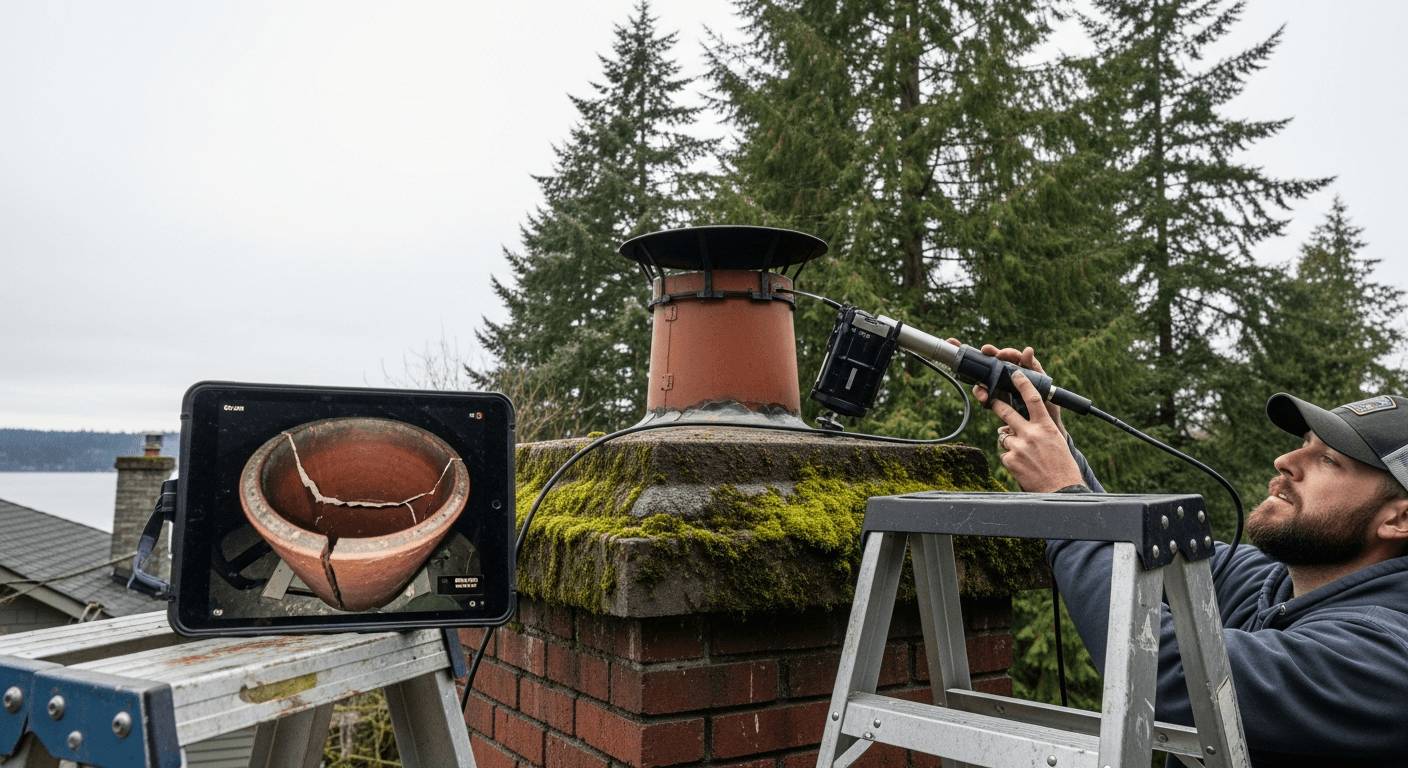
During the inspection, our technician found Stage 2 creosote throughout the upper third of the flue and a band of Stage 3 glazed buildup just below the smoke chamber — the location where combustion gases slow down and cool first, making it the most common site for advanced deposits. The smoke rollback was not a draft or damper issue; the creosote layer had physically narrowed the flue opening enough to restrict airflow at startup.
We completed a rotary power sweep on the Stage 2 sections during the first visit and applied a chemical creosote modifier to the Stage 3 zone. A follow-up appointment two weeks later cleared the loosened residue, and a Level 2 camera inspection confirmed the clay liner tiles were intact with no cracks or open joints. Total cost for both visits, the chemical treatment, and the camera inspection came to $490. The fireplace has burned cleanly every weekend since. The homeowner's biggest surprise: they had assumed the smoke problem was a design flaw in the fireplace, not a maintenance issue.
What Creosote Removal Costs in Kirkland, WA — A Realistic Breakdown by Stage
The figures below reflect current pricing for certified chimney sweep services in Kirkland and the broader Eastside. Costs vary based on flue height, liner type, and whether a camera inspection is included. They do not reflect handyman or unlicensed brush-only services.
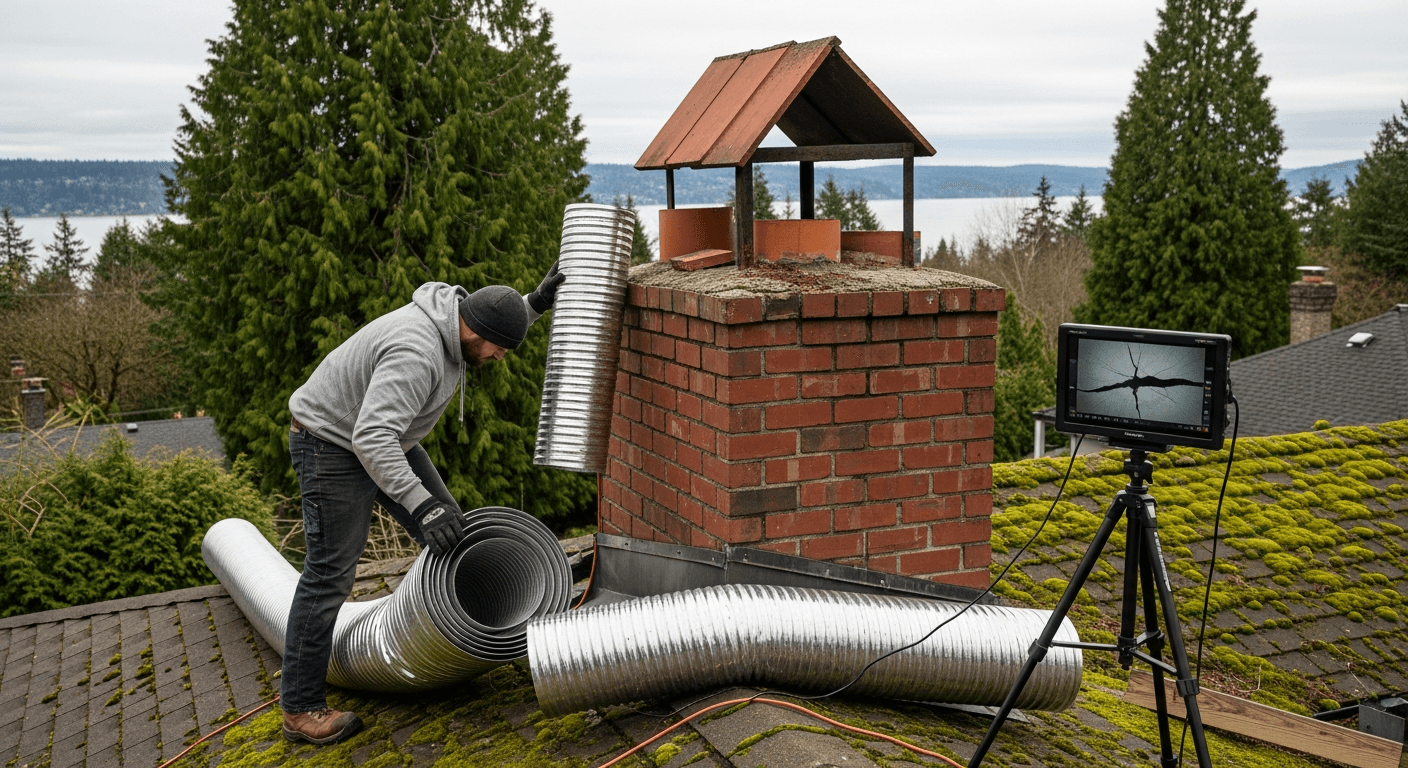
Stage 3 removal requires two visits plus a chemical treatment product, which is why the cost runs three to four times a standard annual sweep. If the glazed creosote concealed liner damage — cracked clay tiles and deteriorated mortar joints are the most common findings after a chimney fire — relining is an additional and separate cost. A camera inspection is not optional at Stage 3; it's the only way to confirm the liner is safe to use.
One cost Kirkland homeowners often overlook: burning wood on a Puget Sound Clean Air Agency wood-burning action day without an EPA-certified insert as your sole heat source can result in a fine. A clean, documented flue is also one of the conditions that supports legal burning on permitted days — and your sweep records are the documentation that matters if you ever need to substantiate a claim.
| Creosote Stage | What It Looks Like | Removal Method | Typical Kirkland Cost |
|---|---|---|---|
| Stage 1 | Loose, flaky gray-black soot | Standard chimney sweep — brush and vacuum | $150 – $250 |
| Stage 2 | Hard, tar-like coating on flue walls | Rotary power sweep | $250 – $375 |
| Stage 3 (glazed) | Shiny, fused glaze or dripping black tar deposits | Chemical modifier + two-visit mechanical cleaning | $400 – $700+ |
| Stage 3 with liner damage | Glazed buildup with cracked tiles or open mortar joints | Chemical removal + Level 2 inspection + relining if required | $600 – $2,500+ |
| Add-on: Level 2 camera inspection | Required after Stage 3 or any suspected chimney fire | Full video scan of flue interior | $150 – $250 additional |
Five Signs You Have Stage 2 or Stage 3 Creosote — Without Getting on the Roof
You smell a sharp asphalt or tar-campfire odor inside the house when the fireplace is cold and the damper is closed. Stage 2 and Stage 3 deposits off-gas continuously through minor flue gaps, and the smell intensifies on humid days — which in Kirkland means most of October through April.
Fires produce noticeably more smoke than they did in previous seasons, or smoke rolls back into the room during the first few minutes after lighting. Thick creosote physically narrows the flue's interior diameter, reducing the draft that pulls combustion gases up and out. If your fireplace worked cleanly for years and recently became smoky, creosote restriction is the first thing to rule out.
You hear a low crackling, hissing, or roaring sound coming from the flue during a fire that doesn't correspond to the wood burning in the firebox. This can indicate an active creosote fire in the flue itself. Close the damper, let the firebox fire die, evacuate the area near the chimney, and do not light another fire until a sweep has inspected the liner.
A flashlight aimed up through the firebox from below shows a thick, uneven black coating above the smoke shelf. Fresh Stage 1 deposits are dusty and fall when disturbed. Material that is sticky, shiny, or deeply layered and doesn't move when tapped is Stage 2 or Stage 3.
You burned more than a cord of wood in the past 12 months without a professional cleaning, or you regularly burned slow, low-oxygen fires that smoldered for hours. Both conditions generate disproportionate creosote relative to the number of fires — particularly in Kirkland's cooler, damper climate.
The Right Time to Schedule Creosote Removal in Kirkland
The ideal scheduling window is late summer through mid-October — before the rainy season and before burning-season demand fills local sweep calendars. In a typical Kirkland year, a two-to-three-week booking lead time becomes standard by late October, and some schedules fill further than that by mid-November.
If you missed fall scheduling and are already burning, don't defer to spring. Every fire in an uncleaned flue adds more creosote on top of what's already there. A mid-season cleaning in January or February costs the same as a fall cleaning and is far better than burning through a second half of the season on a compromised flue.
Spring cleaning — March through April — is also appropriate for homeowners who burned heavily through winter. Creosote left in a clay-tile flue over Kirkland's wet spring and summer absorbs moisture, which accelerates acidic corrosion of the mortar joints and tile surfaces. Cleaning in early spring protects the liner through the off-season and makes a fall inspection faster and cheaper.
Regardless of timing, any Stage 2 or Stage 3 removal should include a Level 2 camera inspection. The inspection is the only definitive way to confirm the liner is structurally sound — and that answer is what determines whether it's safe to light the next fire.
Frequently asked questions
How can I tell what stage of creosote I have without getting on the roof?
Shine a bright flashlight up through the firebox opening toward the smoke shelf. Stage 1 looks dusty and gray-black and falls when disturbed. Stage 2 is a harder, brownish-black tar-like coating that doesn't move. Stage 3 is shiny or glazed, sometimes with dripping formations, and looks fused to the tile surface. A certified sweep can confirm the stage in a few minutes with an inspection mirror — or definitively with a camera on a Level 2 inspection.
Do store-bought creosote logs or powders actually work?
Anti-creosote logs and powder additives can slow Stage 1 accumulation between annual cleanings, but they do not remove Stage 2 or Stage 3 deposits. At Stage 3, the chemical modifier required is a specific professional-grade product applied directly to the glaze, not something added to a fire. Using a consumer product in place of a professional sweep at Stage 2 or beyond is not a safe substitute.
How often should a Kirkland homeowner have their chimney swept to stay at Stage 1?
The NFPA recommends a minimum of one cleaning per year for any actively used wood-burning fireplace. In Kirkland, homeowners who burn more than two or three fires per week from October through March — or who regularly burn slow evening fires rather than full hot burns — benefit from a mid-season cleaning in January or February in addition to the annual fall sweep.
Can Stage 3 creosote develop without a chimney fire?
Yes. Stage 3 most often forms when Stage 2 deposits are repeatedly exposed to high flue temperatures over multiple seasons — enough heat to harden and glaze them without triggering full ignition. It can also be the aftermath of a small chimney fire the homeowner didn't realize had occurred. In either case, a Level 2 camera inspection is required before the fireplace is used again.
Will homeowners insurance cover chimney fire damage in Kirkland?
Routine creosote removal is a maintenance cost and is not covered. Structural damage from a chimney fire — liner replacement, firebox damage, or fire spread to wood framing — is typically covered under standard homeowners policies, subject to your deductible. Coverage can be denied if the insurer determines the fire resulted from failure to maintain the chimney. Annual sweep invoices and inspection reports are the documentation that supports a claim.
Related services