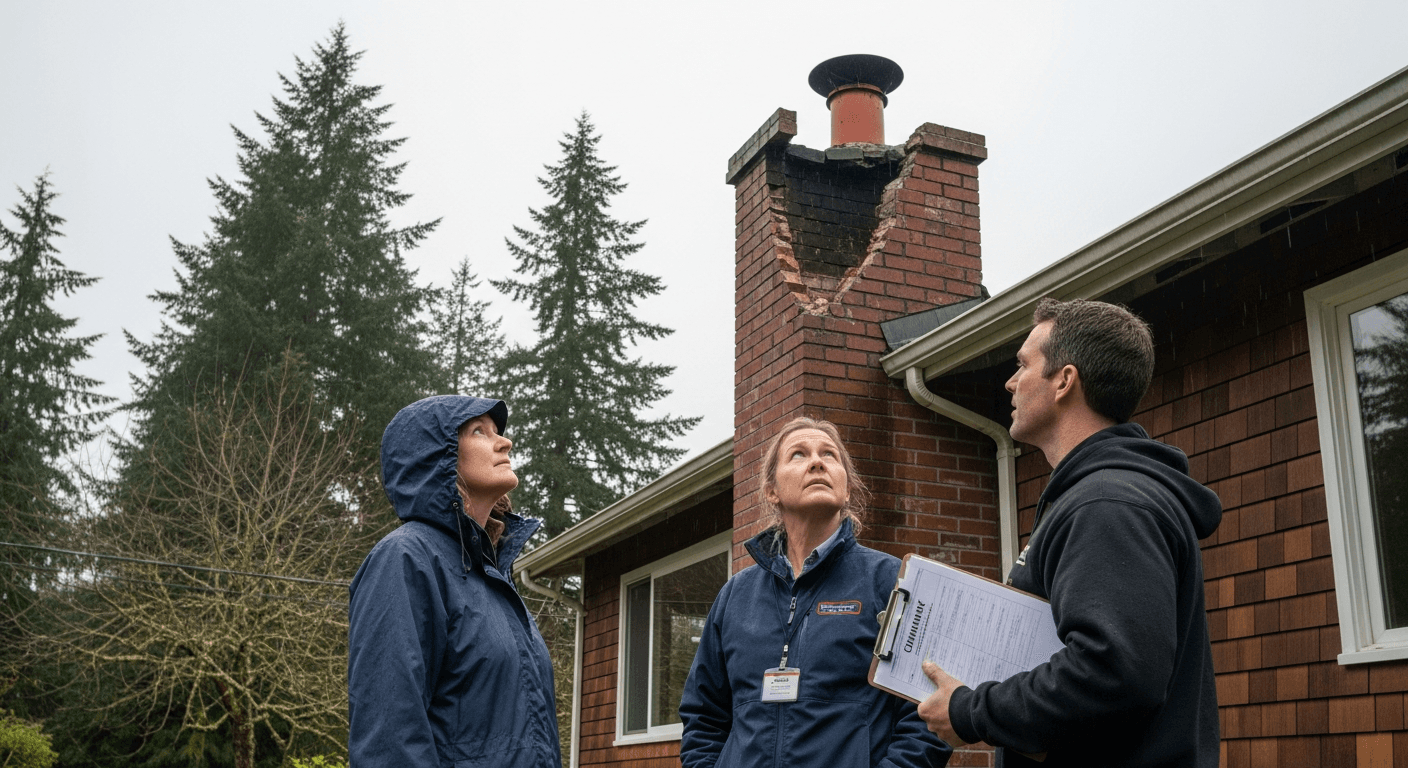
Yes — if your chimney liner is cracked, deteriorated, or missing, you need to stop using the fireplace immediately. A failing liner allows combustion gases, carbon monoxide, and heat exceeding 1,000°F to reach the wood framing inside your walls — one of the most dangerous conditions a Kirkland homeowner can have and one that a visual inspection from the firebox floor will not catch. The fix is more straightforward than most people expect: a stainless-steel flexible liner can be installed in a single day and is rated for 20–30 years, even under the wet freeze-thaw conditions of a Kirkland winter.
What a Chimney Liner Does — and Why Kirkland's Climate Is Hard on Them
The liner is the continuous channel running from your firebox or appliance connection all the way to the flue opening at the top of your chimney. It does three things: it contains combustion gases so they vent safely outside, it protects surrounding brick and mortar from corrosive byproducts, and it keeps heat from transferring to the combustible framing inside your walls and attic.
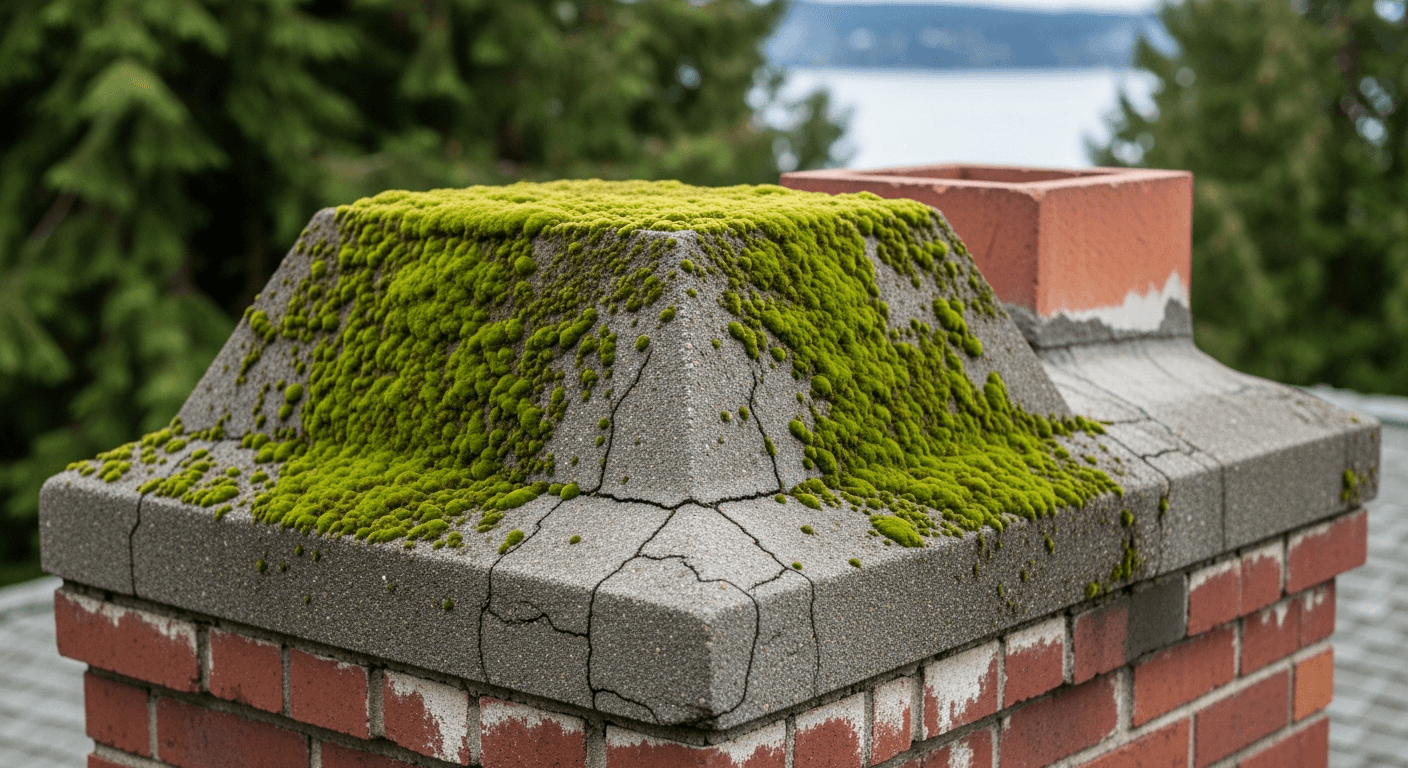
Kirkland's climate attacks liners in two specific ways. We average over 37 inches of rain per year, and the freeze-thaw cycles that arrive in January and February drive moisture that has seeped into clay tile liners to expand inside the tiles, cracking them from within. Equally damaging is the persistent humidity: in damp air, flue gases condense earlier than in drier climates, depositing acidic condensate on liner walls that eats through mortar joints. This accelerates sharply in homes where a fireplace sits unused for months — common in Kirkland properties that switched to gas inserts and left the original clay flue unlined and idle.
Clay tile liners in homes built before the 1990s carry the most risk. Many of the established neighborhoods near Juanita Beach, Moss Bay, and the Bridle Trails corridor have original tile liners that are now 30 to 45 years old — well past their reliable service life under Pacific Northwest conditions.
Warning Signs Kirkland Homeowners Notice First
The clearest sign is smoke backing into the room with the damper fully open and the flue unobstructed. If your fireplace draws cleanly in summer but poorly in cold, damp weather, liner cracks may be disrupting airflow by allowing cold outside air to infiltrate the flue column. A persistent sulfur or musty smell when the fireplace is not in use means combustion gases are leaking through cracks into the house rather than exhausting.
Physical debris is another cue. Shining a flashlight up from the firebox and finding chunks of tile or mortar on the smoke shelf or the firebox floor tells you material has broken away from the liner above. White staining — efflorescence — on the chimney breast inside the room means moisture is migrating through liner gaps into the surrounding masonry.
For gas inserts, which are extremely common in Kirkland homes built in the 1970s and 1980s, a cracked liner carries higher stakes because the byproduct is colorless, odorless carbon monoxide rather than visible smoke. If a CO detector in your home has alarmed without a clear explanation, a compromised flue liner is among the first things to rule out.
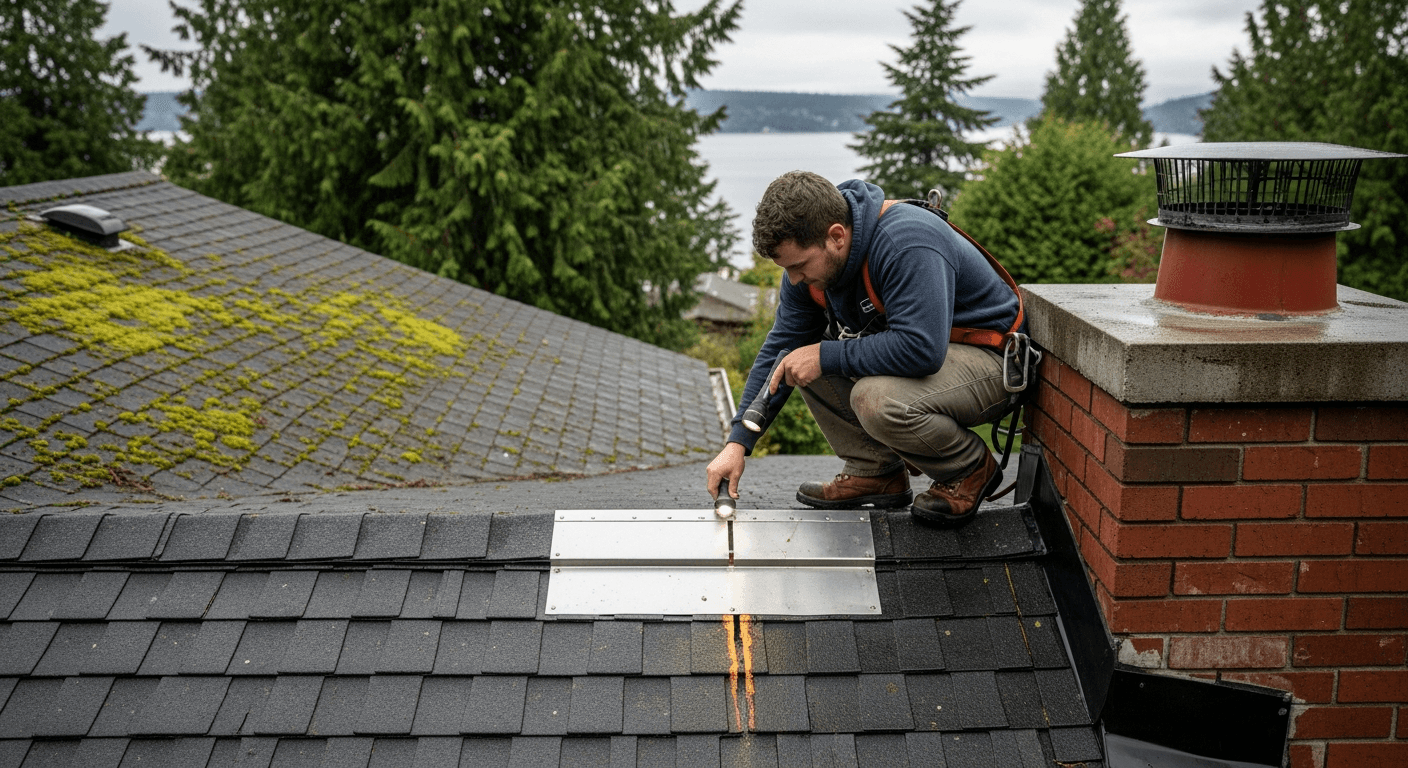
The only way to confirm liner condition with certainty is a Level 2 inspection with a camera scan of the full flue interior. This is the same inspection required during a real estate transaction in Washington State. It produces video documentation of exactly where cracks, separations, or missing sections exist, which is what any reputable contractor needs before ordering materials.
Repair vs. Full Replacement: Which Does Your Chimney Actually Need?
Not every liner problem requires a full replacement, but the threshold is narrower than many homeowners hope. Isolated mortar joint failures between structurally intact clay tiles can be sealed with a high-temperature resurfacing compound — HeatShield is the most widely used product — which is pumped into the flue and spread onto the liner interior to fill voids and restore a smooth surface. This is a legitimate repair when the tiles themselves are sound and damage is confirmed by video to be limited to the joints.
Full replacement is the right call when tiles are shattered or missing entirely, when sections have shifted or separated, or when you are adding or replacing a gas insert. Gas appliances require a correctly sized liner to maintain draft and prevent condensate from pooling — an oversized original clay flue will cause condensation problems from the first season of use and is a code violation under Washington State mechanical requirements.
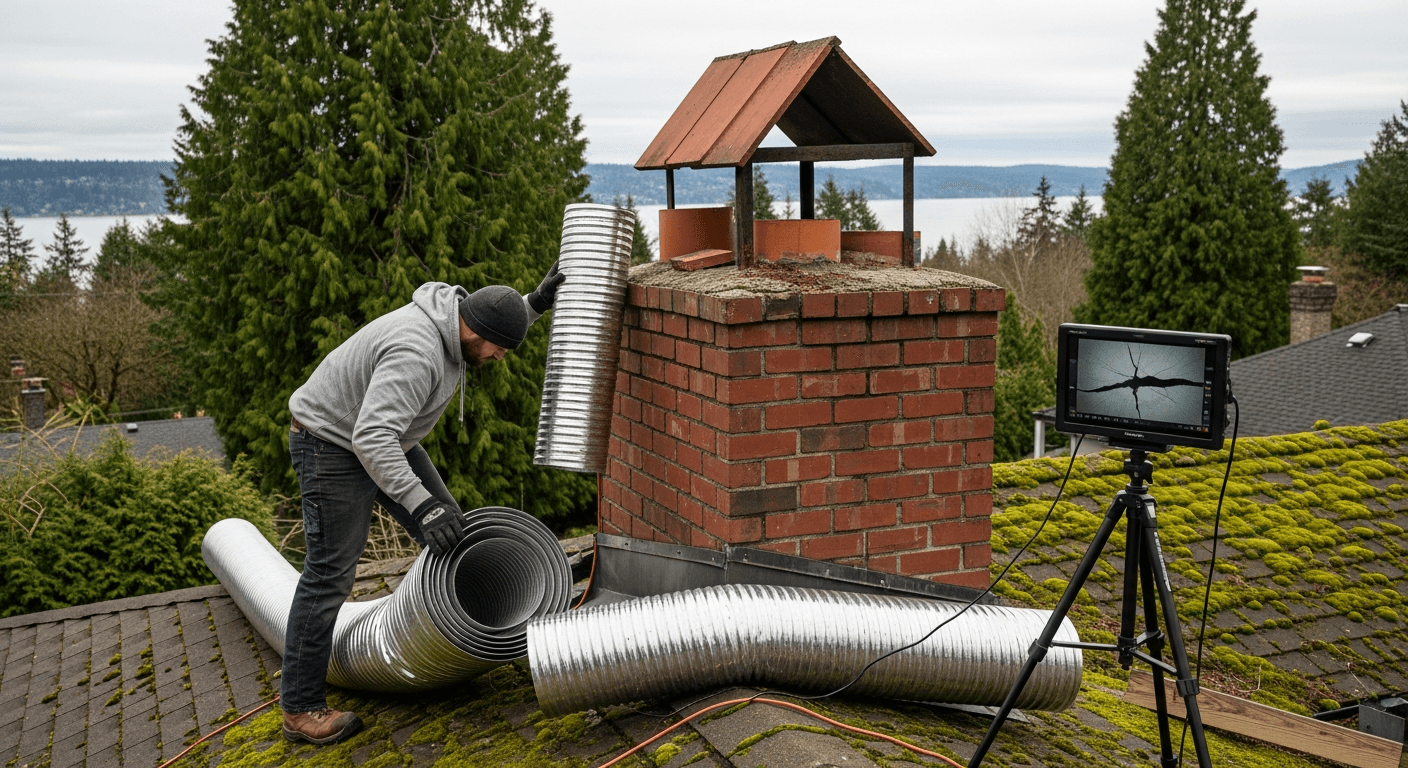
The most common full replacement in Kirkland is a stainless-steel flexible liner: a corrugated stainless tube snaked down through the existing flue. A rigid stainless liner is appropriate only when the flue runs perfectly straight with no offsets — less common in the varied rooflines of older Kirkland homes. Both types are wrapped in a foil-faced insulation blanket before installation to maintain draft velocity and meet Washington State energy code requirements for vented gas appliances.
Cast-in-place lining — where a pumpable refractory cement is formed around an inflatable bladder inside the flue — is the right solution for chimneys with very irregular or structurally compromised masonry that cannot accept a flexible liner. It also adds meaningful structural reinforcement. This method is worth considering for the older brick chimneys along the Kirkland waterfront corridor that show significant tuck-point deterioration.
What Kirkland Homeowners Pay for Liner Repair and Replacement
Costs depend on liner type, flue height, number of flues, and whether masonry prep work is needed first. The table below reflects realistic price ranges for single-flue chimneys in Kirkland. Two-story homes — prevalent in the Norkirk and Houghton neighborhoods — and multi-flue systems fall at the higher end. A Level 2 inspection and video scan is required before liner work is quoted, because liner scope and materials cannot be determined without confirming what the camera shows.
Standard homeowners insurance policies treat liner replacement as routine maintenance and do not cover it. However, if the liner was damaged by a sudden covered event — a chimney fire, a lightning strike, or a storm — your policy may reimburse part of the cost. Photograph the damage, obtain a written inspection report before you file, and call your agent to review the specific language in your policy.
| Service | Typical Cost Range | Timeline | Notes |
|---|---|---|---|
| Level 2 inspection with video scan | $150 – $250 | 2–3 hours | Required before liner work; produces video documentation of damage |
| HeatShield resurfacing (repair) | $1,500 – $3,000 | 1 day | Only appropriate when tiles are structurally intact; joint damage only |
| Stainless flexible liner (full replacement) | $2,000 – $4,500 | 1 day | Most common Kirkland choice; rated 20–30 years with insulation wrap |
| Rigid stainless liner (full replacement) | $2,500 – $5,000 | 1 day | Straight flues only; slightly higher durability than flexible |
| Cast-in-place liner (full replacement) | $4,000 – $7,500 | 2–3 days | Best for irregular or structurally weakened masonry |
| Multi-flue or tall chimney surcharge | $500 – $1,500 added | Varies | Applies to two-story homes and chimneys above 20 feet |
A Kirkland Scenario: The Gas Insert Venting Into the Wall
A homeowner in the Bridle Trails neighborhood contacted us after noticing a faint smell and recurring mild headaches in their living room every time they ran their gas insert. They had owned the home for four years and had never had the chimney inspected after purchase, assuming gas inserts were low-maintenance once installed.
A Level 2 video inspection revealed that the original clay tile liner — installed when the home was built in 1978 — had three cracked tile sections and a fully separated joint approximately 12 feet up the flue. A previous owner had installed the gas insert without relining: the flue was both the wrong diameter for the appliance's venting requirements and actively failing at multiple points.
We installed a correctly sized stainless flexible liner with a foil-faced insulation wrap, connected it directly to the insert collar with a sealed transition, and capped the top with a new stainless liner cap. The homeowner reported noticeably stronger draft, no recurrence of the smell, and no CO detector alarms since completion. The job took one day. Their only regret was not scheduling the inspection during the home purchase.
When to Schedule a Liner Inspection in Kirkland
The best window is late summer through early October, before Puget Sound Clean Air Agency wood-burning curtailment days begin and before the November cold snaps that send every homeowner scrambling to get their fireplace ready at once. Scheduling in August or September puts you ahead of that backlog and ensures any repair or replacement work is complete before you need the appliance.
If you are purchasing a home in Kirkland, insist on a Level 2 chimney inspection as a separate line item in your due diligence — not as part of the general home inspection. General inspectors examine the visible exterior and firebox but do not scope the flue interior, which is where liner failures occur.
After any chimney fire, even one that self-extinguished quickly, the liner must be re-inspected before the fireplace is used again. Chimney fires reach temperatures above 2,000°F and can crack a structurally sound clay tile liner in under a minute.
Frequently asked questions
How long does a chimney liner last in Kirkland's climate?
Clay tile liners typically last 20–50 years under ideal conditions, but Kirkland's 37-plus inches of annual rainfall and winter freeze-thaw cycles shorten that significantly. Stainless steel flexible liners with insulation wrap are rated for 20–30 years and perform more predictably in our damp conditions. Annual inspections let you catch deterioration before it becomes a safety issue regardless of liner type.
Do I need to reline my chimney when I add or replace a gas insert?
Yes, in nearly every case. Gas inserts require a correctly sized liner — typically a 4-inch or 5-inch stainless flex liner — to maintain proper draft and prevent acidic condensate from pooling in an oversized flue. Venting a gas appliance through an unlined or oversized clay flue violates Washington State mechanical code and creates a carbon monoxide risk.
Can I use my fireplace while waiting for liner repairs?
No. A confirmed cracked or missing liner is both a fire hazard and a carbon monoxide risk, and the appliance should not be used until the repair or replacement is complete. This applies to wood-burning fireplaces and gas inserts alike.
Will my homeowners insurance cover liner replacement?
Standard policies treat liner replacement as maintenance and exclude it. If the damage resulted from a sudden covered event — a chimney fire, lightning strike, or major storm — your insurer may cover part of the cost. Before filing, photograph the damage thoroughly and obtain a written Level 2 inspection report. Review your policy's specific language with your agent.
How is the correct liner diameter determined for my gas insert?
Liner diameter is set by the BTU output and venting requirements listed in your appliance's installation manual. A certified chimney technician will cross-reference those specs and measure the existing flue during a pre-installation assessment to confirm the right size before any material is ordered.
Related services