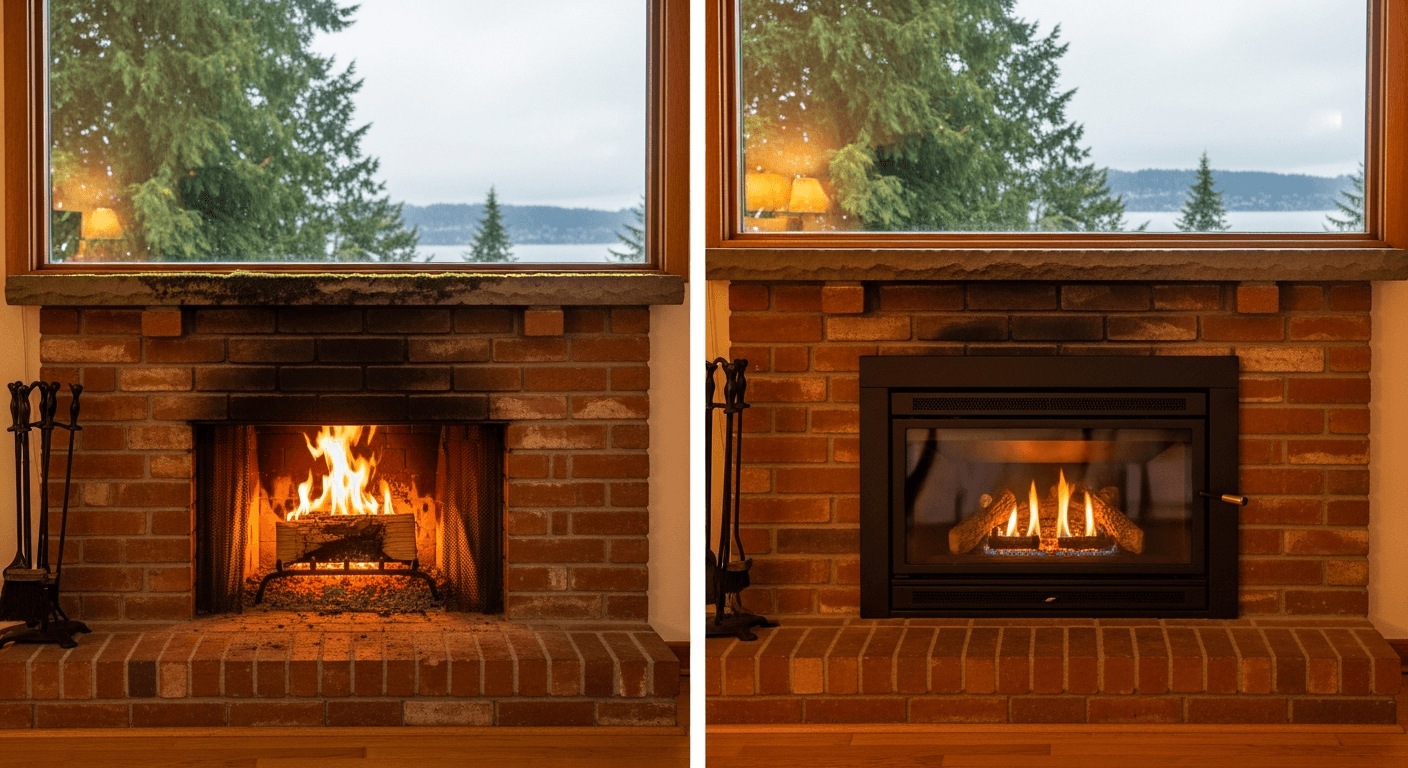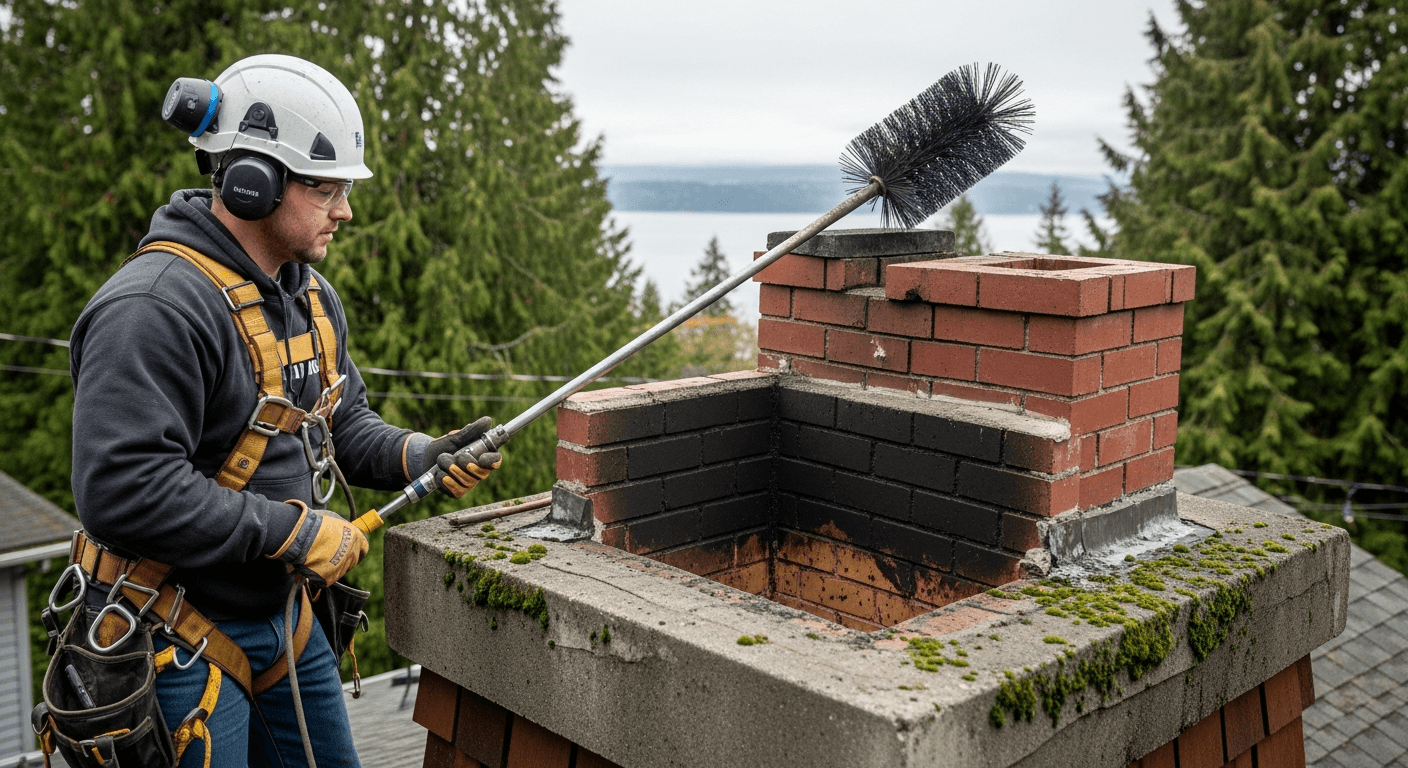
Most Kirkland chimneys need professional cleaning once a year—and that single rule holds because our wet Eastside climate accelerates creosote hardening and masonry decay faster than national averages assume. Wood-burning fireplaces and stoves used regularly need a sweep every cord burned or every season, whichever comes first; gas fireplaces need an annual inspection but far less frequent physical cleaning; and the combination of green cordwood, moss-covered crowns, and Puget Sound Clean Air Agency burn bans creates deposit patterns specific to homes in Kirkland's hillside and waterfront neighborhoods that make late summer the only sensible window to get ahead of the heating season.
The real cleaning schedule by fuel type and usage
NFPA Standard 211 requires chimney inspection at least once a year and cleaning whenever deposits warrant it. In Kirkland, 'whenever deposits warrant it' means annually for active wood burners—and twice a year if you burn more than two cords per heating season, which is common in the Finn Hill and Juanita neighborhoods where wood heat supplements radiant systems in older split-level homes.
Wood fireplaces and inserts: If you light fires three or more times a week from October through March, schedule one sweep before the season opens and a mid-season check in January if you burn heavily. Creosote builds fastest when fires smolder at low draw—and the cool, moisture-laden air pulled in from the Lake Washington corridor drops flue-gas temperatures quickly, compressing the zone where vapor condenses into sticky Stage 1 deposits.
Gas inserts and fireplaces: Gas combustion leaves no creosote, but the flue still collects dust, debris, nesting material from birds that exploit deteriorated cap screens during spring, and moisture damage to the liner. An inspection every one to two years is appropriate; physical cleaning is typically needed only every two to three years unless a blockage is found.
Pellet stoves: Pellet appliances produce fine ash and clinker that clogs exhaust venting and catalyst pads. Schedule a thorough cleaning in April or May so residue does not sit in a wet, uncirculated flue through Kirkland's six-month rainy season—wet ash accelerates steel liner corrosion measurably.
Rarely used fireplaces: A fireplace lit only a handful of times per year still needs an annual inspection. One off-season with a cracked or missing cap screen is enough for a bird or squirrel to build a nest that blocks the flue entirely—a fire and carbon-monoxide hazard the moment you light the first fire of fall.
Why Kirkland's damp winters change the math
Homeowners in drier climates can sometimes stretch light-use chimneys to every other year. In Kirkland, we see three specific moisture-driven problems that make annual service the minimum responsible standard.
Accelerated creosote stage-advancement: Cordwood sold in Kirkland and the broader Eastside market frequently arrives green or is stored outdoors under tarps, where it reabsorbs rain-season moisture. Wet wood burns cooler, producing more creosote per fire. That creosote then absorbs additional ambient moisture inside the flue during cool, rainy stretches, which causes it to harden into stubborn Stage 2 and Stage 3 deposits faster than the same wood would in a dry climate. Stage 3 glaze requires chemical treatment and rotary tooling—a significantly more expensive visit than a standard sweep.
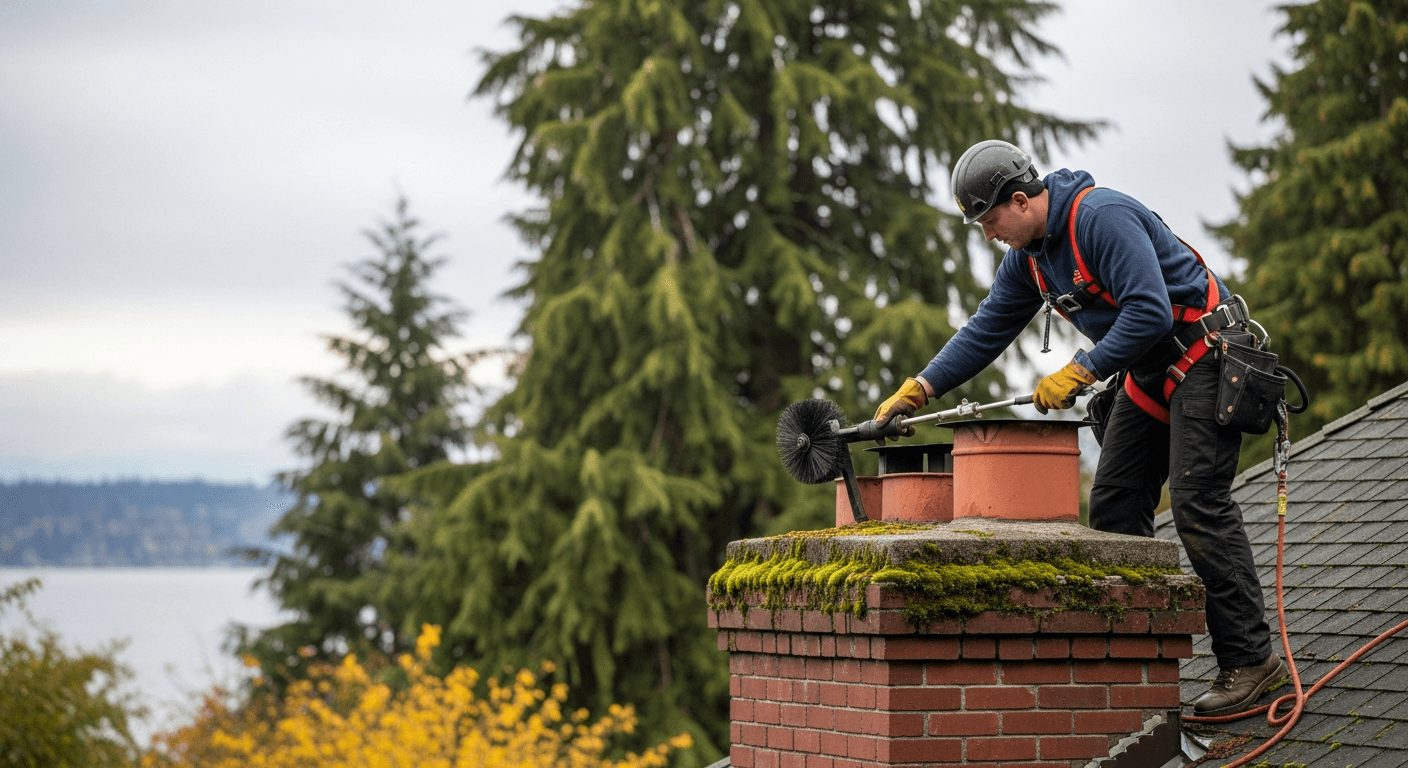
Moss and organic growth on the crown: North-facing chimney crowns on many of Kirkland's 1970s and 1980s craftsman and split-level homes develop visible moss by February. Moss acts as a moisture reservoir against the mortar cap, widening hairline cracks through freeze-thaw cycles and accelerating spalling of the brick courses just below the crown. An annual maintenance visit catches this at the moss-treatment stage—a $75–$150 service—before it becomes a full crown replacement at $600 or more.
Burn-ban disruptions: The Puget Sound Clean Air Agency issues Stage 1 and Stage 2 burn bans on poor air-quality days, typically scattered across November through February. Homeowners who rely on their fireplace for supplemental heat sometimes compensate by burning longer and hotter when bans lift. That pattern—cold firebox, aggressive restart, extended burns—deposits creosote unevenly along the flue and increases the likelihood of a mid-season blockage that a single annual sweep at the wrong time would miss.
What chimney cleaning actually costs in Kirkland: a service-by-service breakdown
Pricing in Kirkland reflects the service type, the condition of the chimney, and roof access. Homes on the hillside above Lake Washington, in Rose Hill, or in the steeper sections of Totem Lake often carry a modest access surcharge due to roof pitch and height.
The table below shows real-world price ranges for common chimney maintenance services in Kirkland as of 2025. The higher end of each range applies to heavily soiled systems, multi-story access, or chimneys that have gone two or more seasons without service.
| Service | Typical Kirkland Price Range | How Often Needed |
|---|---|---|
| Wood-burning chimney sweep (Level 1 inspection included) | $180 – $280 | Annually; every cord burned for heavy users |
| Gas fireplace inspection and minor cleaning | $120 – $200 | Every 1–2 years |
| Pellet stove flue cleaning | $160 – $250 | Annually (end of season, April–May) |
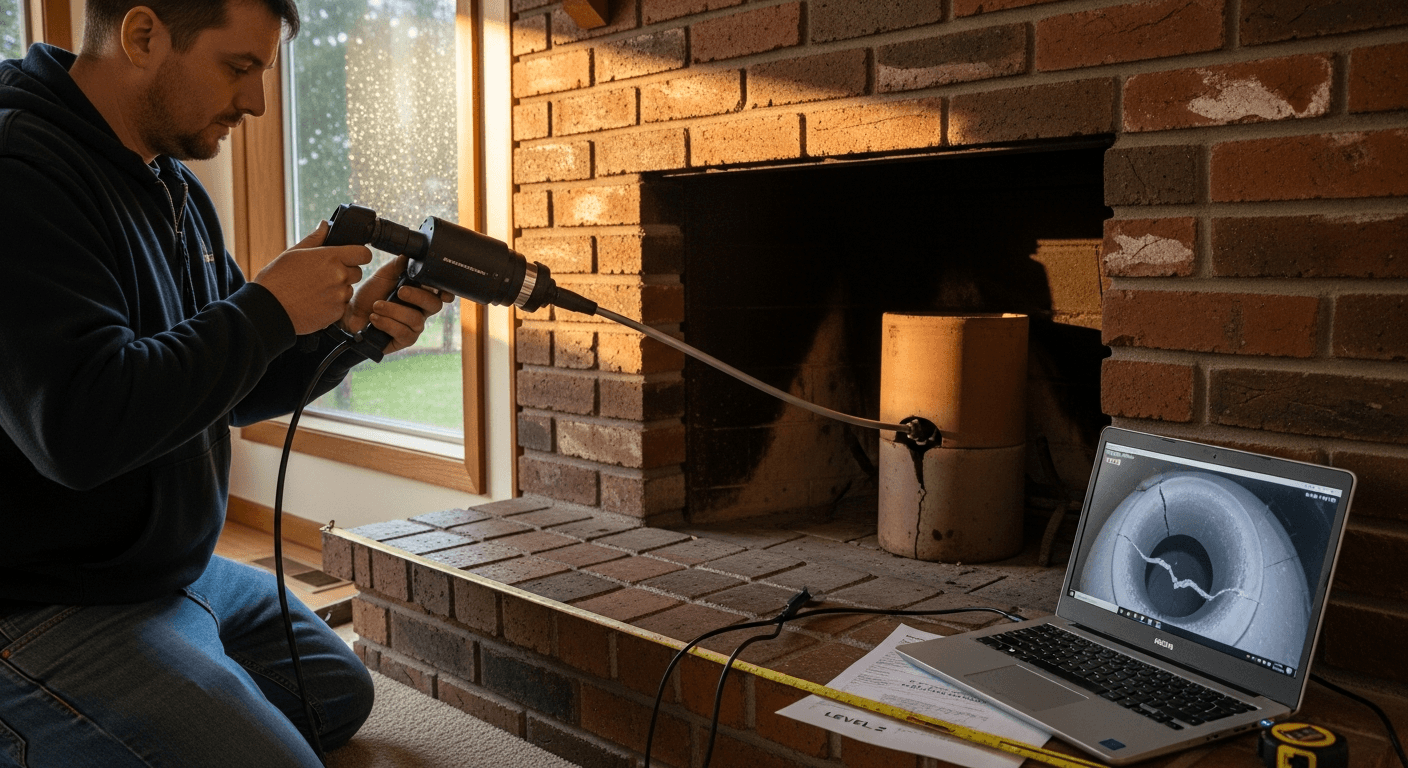
| Level 2 inspection (video camera scan of liner) | $300 – $450 | Home purchase/sale, after chimney fire, or every 5 years |
| Creosote Stage 2/3 chemical treatment + sweep | $300 – $500+ | As needed when heavy buildup is found |
| Dryer vent cleaning (add-on service) | $80 – $130 | Annually |
| Crown inspection and moss treatment | $75 – $150 | Annually or when moss is visible |
A real Kirkland homeowner situation: when 'it's probably fine' wasn't fine
A homeowner in the Juanita neighborhood called us in November after noticing a faint smoky smell in their living room even with the damper fully closed. They had a gas insert installed four years earlier and had skipped all maintenance, assuming gas meant no upkeep. When we ran a camera through the flue, we found a robin's nest lodged just above the smoke shelf—built the previous spring through a deteriorated cap screen while the fireplace sat unused for seven months.
The nest was blocking roughly 60 percent of the flue opening. Had they lit the insert without calling first, carbon monoxide and combustion gases would have backed directly into the living space. We removed the nest, replaced the cap screen, and completed a full liner inspection to confirm no heat damage from the partial blockage. Total cost: just under $300—a fraction of what an emergency after-hours call plus potential CO-related medical response would have cost.
The takeaway: annual maintenance visits catch what you cannot see from the living room—nesting animals, cracked liner sections, failing damper seals—before they become emergencies during the first cold snap of November.
The best time of year to schedule chimney cleaning in Kirkland
Late August through early October is the right window for Kirkland homeowners, and our September calendar fills within days of Labor Day. Scheduling before the heating season means you have time to address any repairs—crown repointing, a new damper, a cracked liner section—before you need the fireplace, and you avoid the November rush when the first sustained cold week sends every call at once.
If you missed the fall window and are already burning, do not wait until spring. A mid-season sweep in January or February is far better than pushing through a full season on heavy Stage 2 deposits. Creosote does not announce itself before it ignites.
Spring cleanings in April through June are ideal for pellet stove owners and for any wood burner who wants to close out the season with a clean flue. Wet creosote left in a flue from March through September accelerates steel liner corrosion and makes the following fall's sweep harder and more expensive.
Call immediately, regardless of season, if you hear a low roar, rushing sound, or feel a rumbling vibration through the firebox—these are chimney-fire indicators. Shut all air inlets, stop adding fuel, call 911 if the sound continues, and do not use the fireplace again until a Level 2 inspection confirms the liner is intact.
Frequently asked questions
How often does a wood-burning chimney in Kirkland need to be cleaned?
Once a year for most Kirkland households, or after every cord of wood burned for heavy users. Our damp climate and frequent use of wet cordwood accelerate creosote buildup, so stretching to every other year is not advisable here even with light use.
Do gas fireplaces in Kirkland need annual chimney service?
They need an annual inspection—gas flues still collect debris, moisture damage, and nesting material through deteriorated caps. Physical cleaning is typically needed only every one to two years unless a blockage is discovered during the inspection.
How much does a chimney sweep cost in Kirkland, WA?
A standard wood-burning sweep with a Level 1 inspection runs $180 to $280. Gas insert inspections run $120 to $200. If Stage 2 or Stage 3 creosote is found, chemical treatment plus cleaning adds roughly $100 to $250 to the base price. Steeper roofs in hillside neighborhoods may carry a small access surcharge.
What is a Level 2 chimney inspection and when do I need one?
A Level 2 inspection uses a video camera to examine the full length of the flue liner and accessible portions of the chimney structure. It costs $300 to $450 in Kirkland and is required when buying or selling a home, after any chimney fire, after significant storm or seismic activity, or when switching fuel types.
Can I skip cleaning if I only use my fireplace a few times a year?
You can skip the physical cleaning if very little residue has accumulated, but you should never skip the annual inspection. Low use does not prevent animals from nesting in an uncapped flue, mortar from cracking over a wet Kirkland winter, or a damper seal from failing—any of which can create a carbon monoxide or fire hazard the next time you light a fire.
Will my homeowners insurance cover chimney cleaning or repairs?
Standard homeowners insurance does not cover routine cleaning or maintenance—these are considered wear and tear. It may cover sudden damage such as a chimney fire that cracks the liner or storm damage. Keeping annual sweep records from a licensed technician helps document proper maintenance if you ever file a related claim.
Related services