Homeowners insurance will pay for chimney repair in Kirkland when a sudden, specific event — a windstorm, a lightning strike, a chimney fire — causes the damage. It will not pay when damage accumulated gradually, which is the far more common situation here: mortar joints spalled by repeated freeze-thaw cycles from November through April, chimney crowns cracked by moisture off Lake Washington, or flue liners coated by creosote from a winter's worth of wood fires. That single distinction — sudden versus gradual — determines whether your insurer writes a check or denies the claim.
The Covered vs. Not-Covered Line Every Kirkland Homeowner Needs to Know
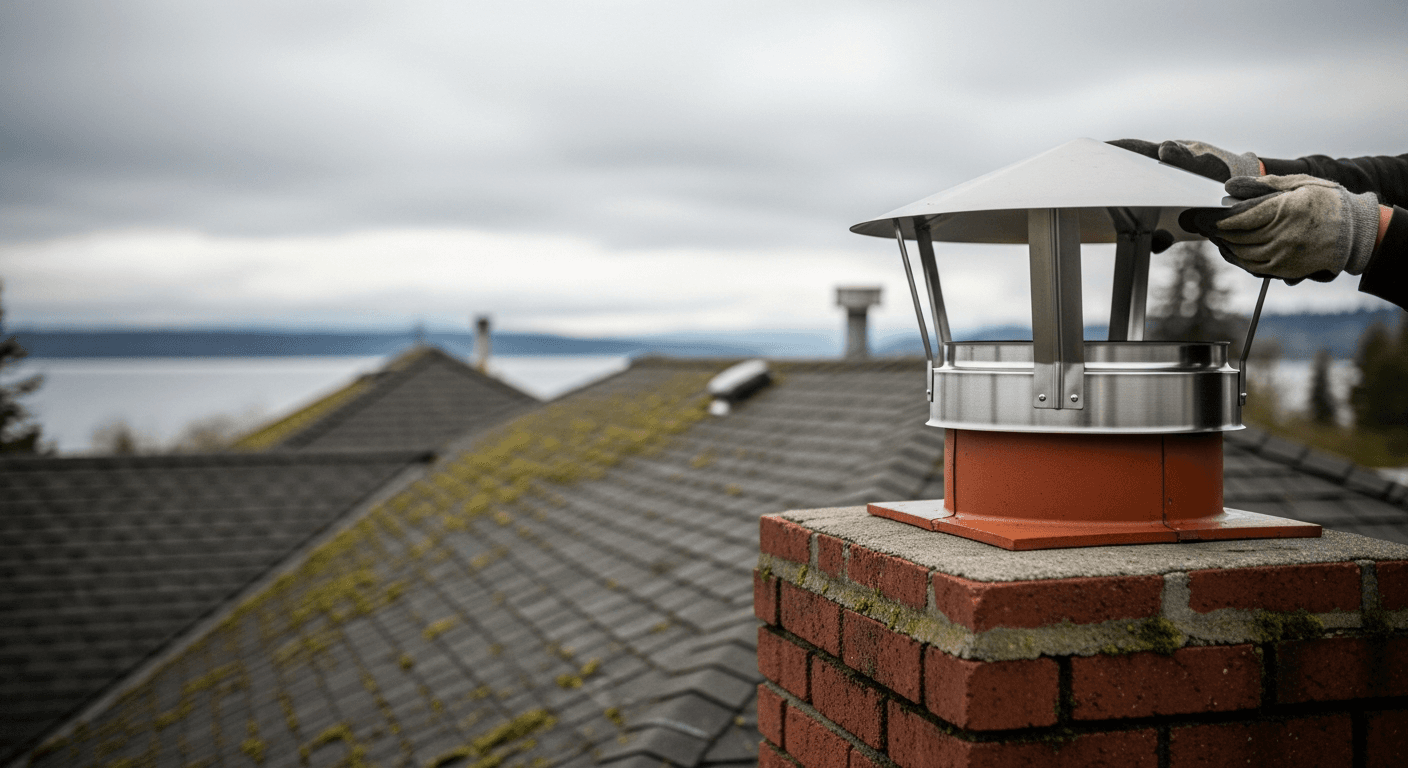
The most common policy in Washington State, the HO-3, protects your chimney under dwelling coverage but only against named perils: fire, lightning, windstorm, hail, falling objects, vandalism, and similarly sudden events. If a winter windstorm — the kind that routinely knocks out power on the Eastside — snaps a Douglas fir branch onto your chimney cap, or if a chimney fire cracks your clay flue liner, your insurer should pay minus your deductible.
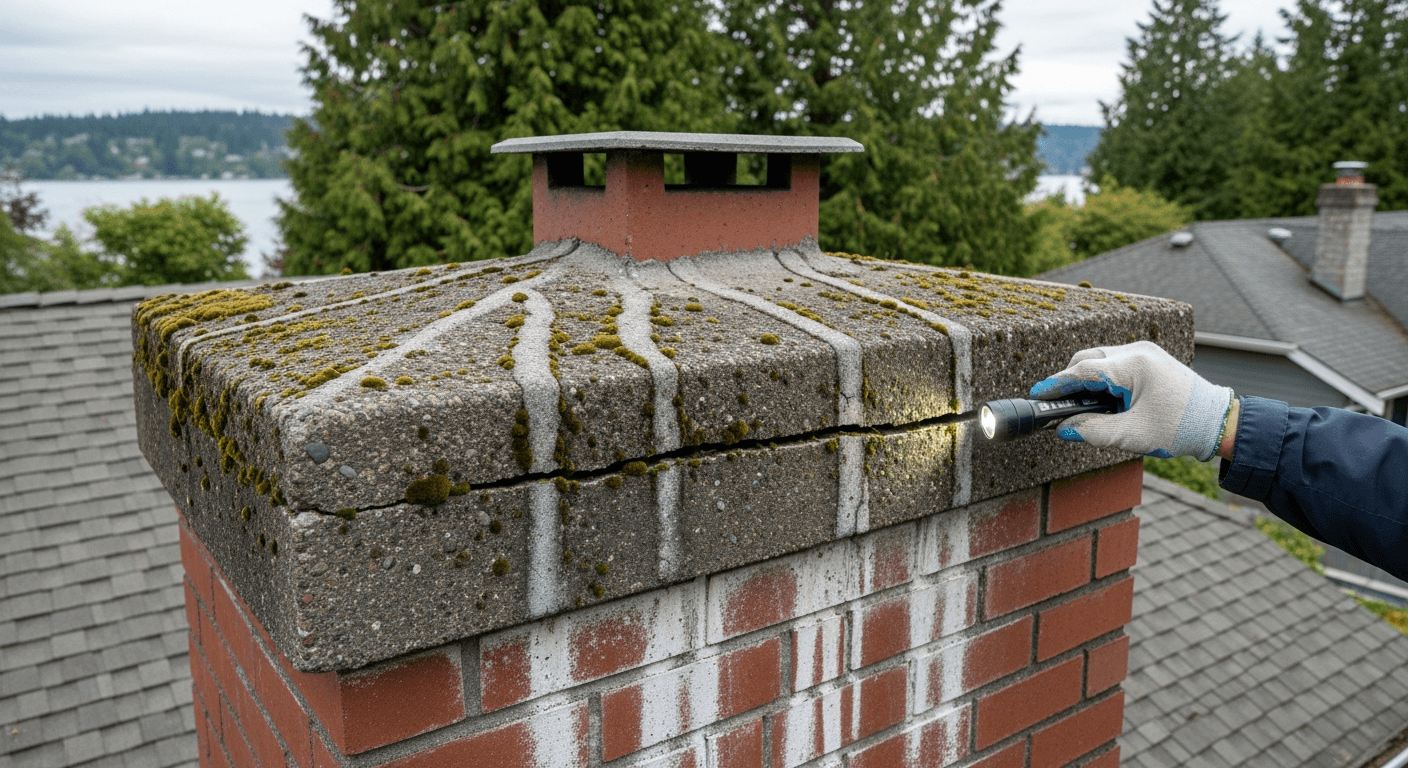
What HO-3 policies explicitly exclude is wear-and-tear, settling, deterioration, and faulty maintenance. In Kirkland, that exclusion covers a wide range of damage. The persistent moisture that moves in off Lake Washington from late October through early April saturates masonry, works into mortar joints, and causes spalling over multiple seasons. Insurers classify that as maintenance neglect, not a covered peril — and the same logic applies to creosote-damaged liners, rusted dampers, and moss-colonized crowns, all of which are routine findings on Eastside homes.
One critical nuance adjusters are trained to exploit: if deferred maintenance enabled a sudden-looking event, the claim can still be denied. A classic Kirkland example — a deteriorated chimney crown lets water in each winter, the trapped moisture freezes, and by February the firebox face has blown apart. The damage looks sudden, but the root cause is years of crown neglect. An adjuster who finds that deterioration history can deny the claim entirely. A documented annual inspection on file — showing the chimney was in sound condition twelve months earlier — is your primary defense against that argument.
What Chimney Repairs Actually Cost in Kirkland — and What Insurance Might Cover
Knowing realistic local costs helps you decide whether filing a claim makes financial sense against your deductible. The figures below reflect current pricing for chimney work in Kirkland and the surrounding Eastside market.
Notice the pattern: the repairs most likely to be covered by insurance — liner replacement after a chimney fire, storm-torn caps and flashing, fire-damaged fireboxes — are also the most expensive. Routine cleaning and inspection fees fall below most deductibles, so those are nearly always out-of-pocket costs regardless of policy language.
| Repair or Service | Typical Kirkland Cost Range | Usually Covered by Insurance? | Common Local Cause |
|---|---|---|---|
| Level 1 chimney inspection | $100 – $175 | No (maintenance) | Annual safety check before burn season |
| Level 2 inspection (video camera) | $225 – $375 | Sometimes (required after chimney fire) | Post-event damage assessment |
| Chimney sweep / cleaning | $150 – $275 | No (maintenance) | Creosote from Eastside wood fires |
| Chimney crown repair or seal | $200 – $500 | Rarely (gradual cracking) | Kirkland freeze-thaw moisture cycling |
| Mortar repointing | $400 – $1,200+ | No (wear and tear) | Years of moisture infiltration |
| Chimney cap replacement | $175 – $400 | Yes, if storm-caused | Windstorm, falling branches |
| Flashing repair or replacement | $300 – $750 | Yes, if wind- or storm-caused | Storm uplift, ice damming |
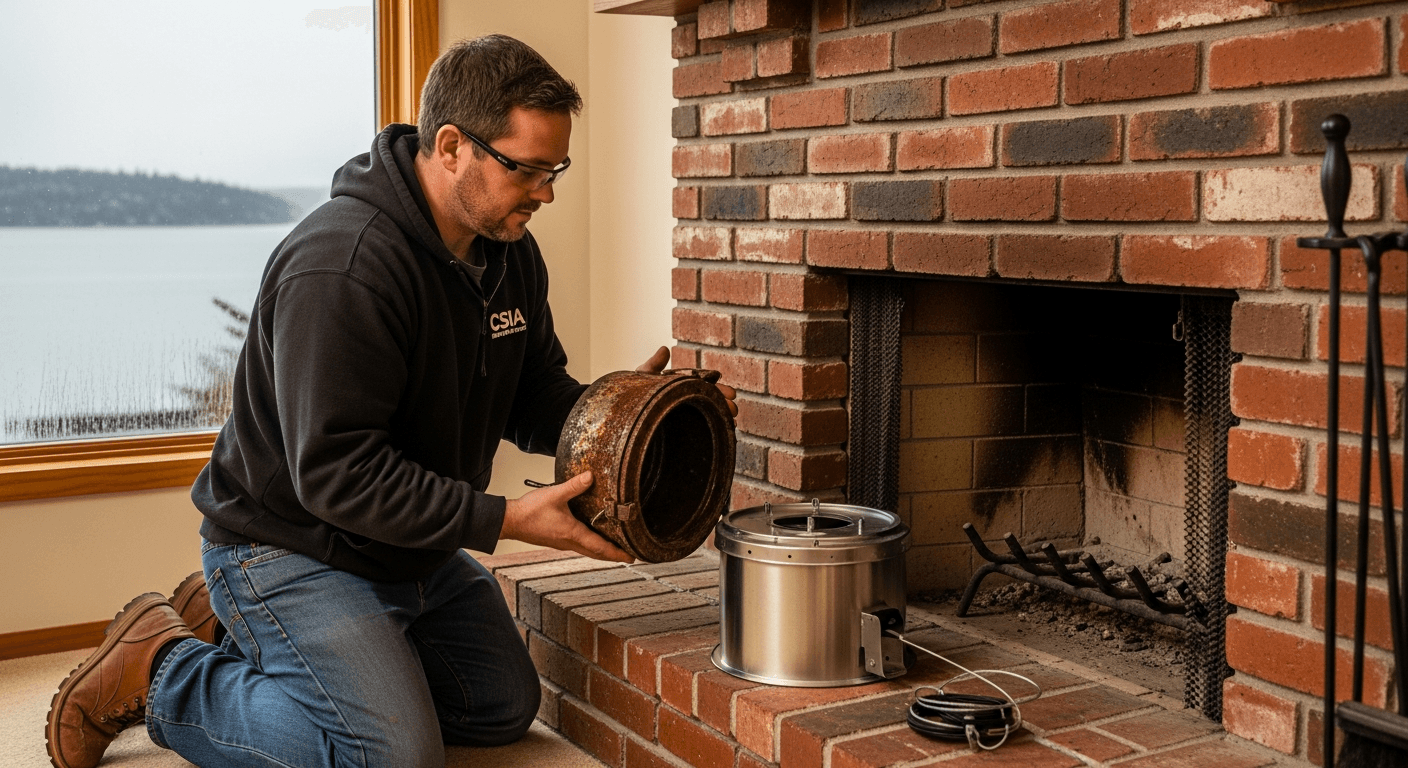
| Clay liner repair or resurfacing | $800 – $2,000 | Yes, if caused by chimney fire | Heat fracture from chimney fire |
| Full stainless steel relining | $2,500 – $5,000 | Yes, if caused by chimney fire | Total liner failure after chimney fire |
| Firebox rebuild (partial) | $1,500 – $4,000 | Yes, if fire- or impact-caused | Chimney fire, falling structural object |
A Kirkland Homeowner's Real-World Scenario: When the Claim Actually Worked
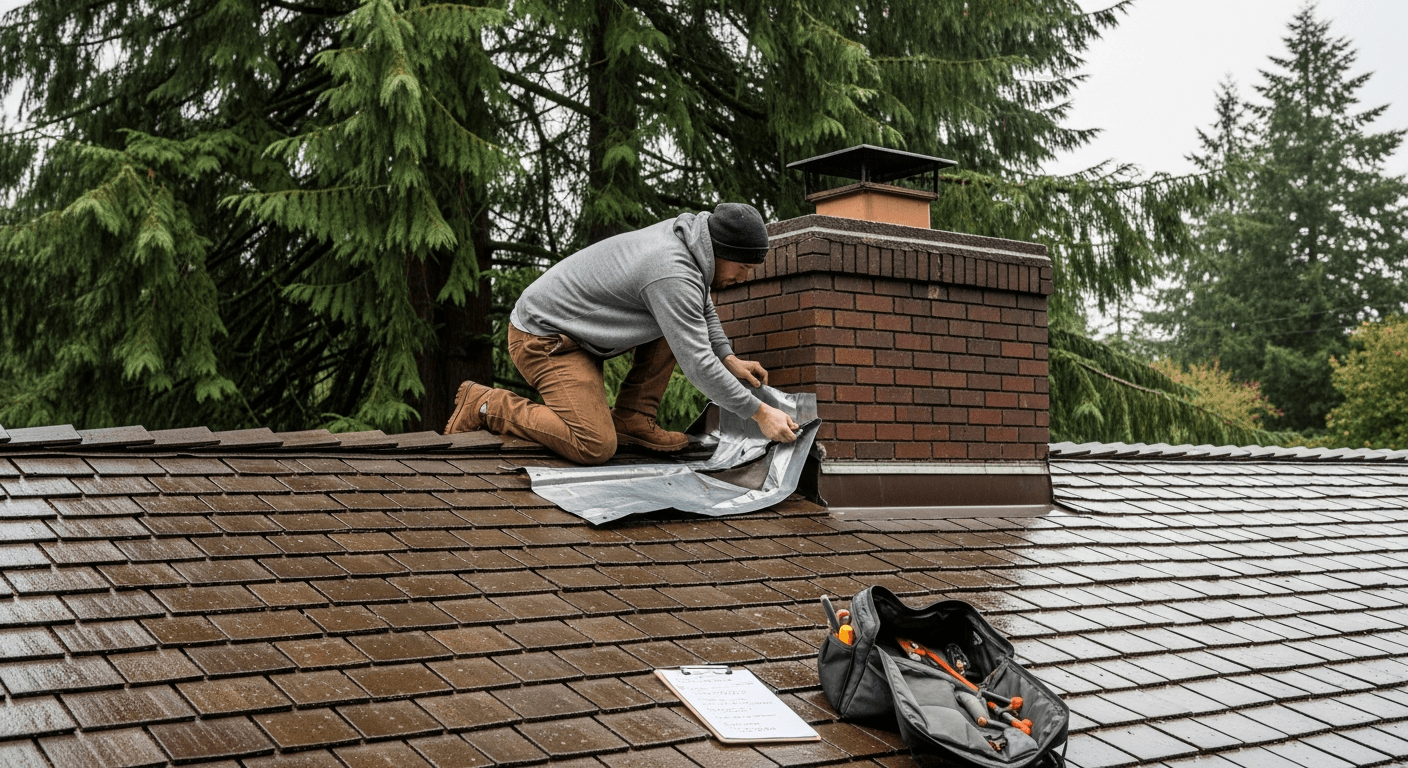
A homeowner in the Bridle Trails neighborhood called us in late January after noticing a gap had opened between their chimney and the roofline. They assumed it was age-related and were ready to pay out of pocket. When our technician accessed the roof, the flashing had been partially peeled back in a pattern fully consistent with the Eastside windstorm that had moved through two weeks earlier — not gradual separation.
We documented everything with timestamped photographs: the bent and lifted flashing tabs, water staining on the attic sheathing directly underneath, and the intact condition of the surrounding mortar bed, which ruled out long-term deterioration as the primary cause. We provided a written scope of repairs with itemized line costs and a clear statement attributing cause to wind uplift.
The homeowner submitted our report alongside National Weather Service records confirming wind gusts in the Kirkland area on the storm date. The claim was approved. Their $1,000 deductible applied, and the insurer covered the remaining $1,850 for flashing replacement and interior water-damage remediation. The outcome turned on one factor: a qualified third party documented cause and condition before rain and time degraded the physical evidence.
How to Build a Paper Trail That Protects Your Claim
Insurance adjusters are specifically trained to find evidence of pre-existing neglect. The most effective protection is a consistent annual inspection record. If your chimney was documented as structurally sound twelve months before a storm event, you have a clean baseline that is very difficult for an adjuster to argue around. No inspection history means an adjuster can reasonably claim the damage was already developing before the event.
After any windstorm, fallen-tree impact, or chimney fire, contact a chimney professional before or simultaneously with calling your insurer. You need an expert on-site while the physical evidence is fresh and unambiguous. Request a written report that states the probable cause explicitly, distinguishes storm damage from pre-existing wear, and includes timestamped photographs. Vague language in an inspection report is almost as unhelpful as no report at all.
Check whether your policy includes Ordinance or Law coverage. Many Kirkland homes built in the 1960s through 1980s — the split-levels and ranch homes on the hillsides above the lake — may require upgraded liner materials or updated firebox dimensions to meet current Washington State building code when a repair is triggered by a covered loss. Standard dwelling coverage only restores the structure to its prior condition; Ordinance or Law coverage pays the difference for required code upgrades. A five-minute call with your insurance agent before you need a claim is worth more than learning this detail afterward.
Be aware of Puget Sound Clean Air Agency burn restrictions. If a Stage 1 or Stage 2 burn-ban day was in effect when you used your fireplace and a chimney fire resulted, some insurers have cited violation of a local air-quality regulation as grounds to complicate or reduce the claim. This is a specific, recurring issue for Eastside wood-burners every winter and one more reason to check PSCA burn status before lighting a fire.
Why Skipping Annual Cleaning Puts Your Insurance Coverage at Risk
Washington State does not mandate annual chimney inspections by law, but your HO-3 policy likely does by contract. Read the maintenance obligations section carefully. Most policies contain language allowing the insurer to reduce or deny a claim if the homeowner failed to perform 'reasonable maintenance,' and courts have consistently interpreted annual cleaning of a regularly used wood-burning fireplace as meeting that standard.
One Kirkland burn season — three or four fires per week from October through March — is sufficient to deposit meaningful creosote in an older masonry chimney where draft efficiency may be lower than in a modern factory-built unit. That creosote layer is both a fire hazard and a piece of physical evidence an adjuster can photograph to argue the chimney was poorly maintained before the event being claimed.
The practical solution is to schedule a chimney sweep and Level 1 inspection in late August or September, before the burn season begins and before the Puget Sound Clean Air Agency's first Stage 1 advisories arrive. The NFPA 211 standard — which is explicitly referenced in many Washington homeowners policy documents — requires at minimum an annual inspection for every chimney in use. Staying on that schedule keeps you ahead of both fire risk and claim-denial risk at the same time.
Frequently asked questions
Will homeowners insurance pay for chimney repair in Kirkland, WA?
Yes, when a sudden named peril — windstorm, lightning, or chimney fire — caused the damage. It will not pay for gradual deterioration, moisture-related mortar spalling, creosote buildup, or any damage rooted in deferred maintenance, all of which are common findings on Kirkland chimneys.
What is the single most important thing I can do to protect a future chimney insurance claim?
Keep a continuous annual inspection record. A written report showing your chimney was in sound condition twelve months before a storm event removes the adjuster's primary argument — that the damage was already developing before the covered peril occurred.
How much does a chimney sweep cost in Kirkland, WA?
A standard sweep combined with a Level 1 inspection runs $150 to $275 from a qualified Kirkland contractor. Quotes well below that range often signal a low-price entry followed by upsell pressure; quotes significantly above it warrant a clear explanation of what additional work is included.
When is a Level 2 chimney inspection required, and what does it cost?
A Level 2 inspection — which includes a video camera scan of the full flue — is required after any chimney fire, significant storm impact, or real estate transaction. It runs $225 to $375 in Kirkland. The written report is essential documentation if you intend to file an insurance claim, because it establishes cause and pre-existing condition on record.
Does Ordinance or Law coverage matter for chimney repairs on older Kirkland homes?
It can matter significantly. Kirkland homes built before the 1990s may have clay liners, damper configurations, or firebox dimensions that no longer meet current Washington State building code. If a covered loss triggers a repair, standard dwelling coverage only restores the original condition; Ordinance or Law coverage pays the additional cost to bring the chimney up to current code. Ask your insurance agent whether your policy includes it.
Related services