Yes — if your chimney crown shows any cracking, spalling, or moss growth, it needs attention before Kirkland's next rain season drives water deeper into your masonry. A sealant patch runs $150–$450; a full rebuild costs $500–$1,200; adding a vapor-permeable waterproofing treatment at the same visit adds $100–$250 and is the single highest-return investment you can make in your chimney's lifespan. Kirkland averages roughly 37 inches of rain per year, and homes near Lake Washington carry above-average humidity on top of that — a hairline crown crack that's minor in September becomes a firebox water problem by February if left alone.
What exactly is a chimney crown, and why does it fail so quickly in Kirkland?
The chimney crown is the concrete slab that seals the top of your chimney's masonry shell. It surrounds the flue tile, slopes outward past the brick face, and sheds rainwater away from the structure. Remove it from the equation — through cracking, delamination, or a missing drip edge — and every rainstorm soaks directly into the brickwork below.
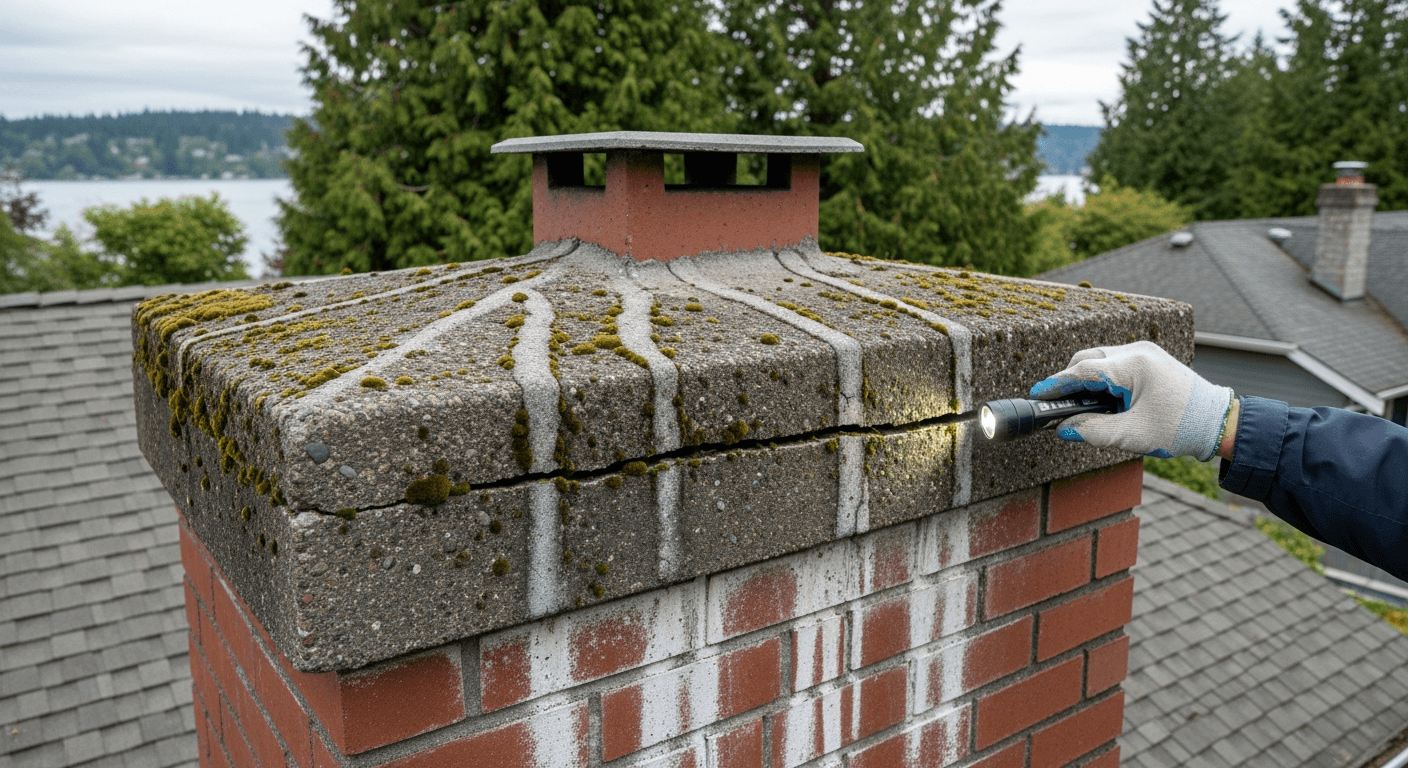
Kirkland's climate is unforgiving to masonry. Roughly 150 rain days per year means freeze-thaw cycling works on any existing crack from October through March. Homes on the north-facing slopes off Juanita Drive and in the older Rose Hill and Finn Hill neighborhoods are particularly prone because mature tree canopy keeps crowns shaded and damp well into spring, feeding the moss colonies that accelerate cracking. Moss roots physically pry crack edges apart across successive winters — what starts as a hairline becomes a quarter-inch gap in two or three seasons.
Newer construction on the Eastside isn't immune. Crowns poured with a sand-heavy mortar mix or finished too thin — both common shortcuts — begin showing surface spalling within five years. A Level 1 inspection flags crown condition every visit, but most homeowners first learn about crown failure when they see white efflorescence staining inside the firebox or a water mark spreading across the ceiling beside the chimney chase.
How much does chimney crown repair and waterproofing cost in Kirkland?
Cost depends on what the crown looks like when a technician gets eyes on it from the roof — not from the ground. A structurally sound crown with surface cracking can be sealed with a flexible elastomeric crown coat that bridges gaps up to about a quarter inch and bonds directly to existing concrete. Once cracks are wider, edges are delaminating from the flue tile, or sections are missing entirely, a full rebuild with a proper portland-cement mix and a formed drip edge is required.
Waterproofing is almost always worth adding at the same visit. Vapor-permeable chimney sealants — not masonry paint, which traps moisture — let the brick breathe while blocking liquid water penetration. Applied to a freshly repaired or sound crown and the chimney shaft below it, a quality sealant adds $100–$250 to the invoice and routinely extends the next repair interval by eight to twelve years in Kirkland's climate. Skipping it after paying for a crown repair is like replacing a roof and not flashing the valleys.
The table below reflects realistic pricing for crown and waterproofing work on a standard single-flue residential chimney in Kirkland.
| Service | Typical Cost Range | When It's Needed | Average Time on Site |
|---|---|---|---|
| Crown sealant / elastomeric patch | $150 – $450 | Hairline to ¼-inch cracks, surface spalling, sound structure | 1 – 2 hours |
| Full crown rebuild (portland-cement pour) | $500 – $1,200 | Structural cracking, delamination from flue tile, missing sections | 2 – 4 hours |
| Chimney waterproofing (vapor-permeable sealer) | $100 – $250 add-on | Any time crown is repaired or exterior masonry is exposed | 30 – 60 minutes |
| Crown repair + waterproofing (combined visit) | $250 – $700 | Best value — avoids a second mobilization fee | 1.5 – 3 hours |
| Level 1 inspection to assess crown condition | $100 – $175 | Annual check, post-storm assessment, or pre-purchase review | 45 – 75 minutes |
A Kirkland homeowner scenario: when moss is the first warning sign
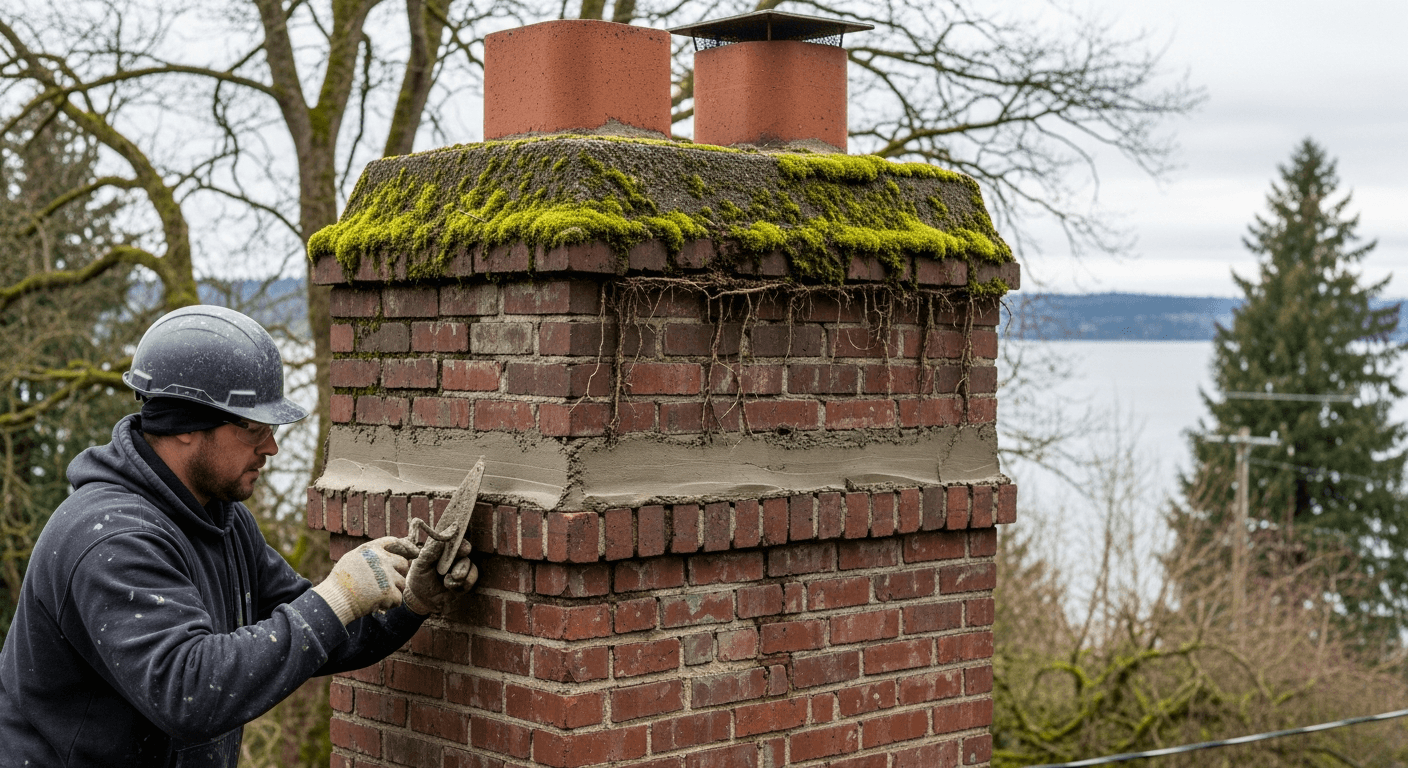
A Finn Hill homeowner called us after a neighbor pointed out a thick mat of moss blanketing the top of their brick chimney. The house was built in 1991 and had never had crown work done. There was no obvious interior leak yet — just the moss.
On the roof, our technician found two longitudinal cracks running nearly the full width of the crown, and the front edge had begun to separate from the brick course below. The moss had been wicking rainwater directly into those cracks through every storm, keeping them saturated rather than allowing them to dry between rain events. Inside the firebox, we found early efflorescence on the upper brick courses — white mineral deposits left by water that had already been tracking down through the masonry for at least one full season.
We removed the moss with a biocide wash, allowed the surface to dry, rebuilt the crown with a portland-cement mix and a cast drip edge that extends past the brick face, then applied a vapor-permeable waterproofing sealer to the full chimney shaft once the crown had cured for 48 hours. Total invoice: $780. Had the homeowner waited another winter, the water would have reached the smoke chamber and upper firebox courses, and we'd have been quoting $2,500 or more once interior masonry repair and possible damper replacement entered the picture.
The takeaway: moss on your crown is not a cosmetic issue. It signals that moisture is being held against the masonry continuously rather than draining away — exactly the condition that turns a $780 repair into a multi-thousand-dollar masonry restoration.
How do you know if your chimney crown needs repair right now?
You don't need to climb on the roof to spot early warning signs. From the ground with binoculars, look for visible cracking or dark discoloration across the flat crown surface, chunks of gray or white concrete material collecting in the gutters directly below the chimney, moss or lichen growing on the crown or upper brick courses, and water staining streaking down the brick face below the crown line.
Inside, check the back wall of the firebox for water staining or efflorescence — white chalky mineral deposits that indicate water has passed through the masonry. A persistent musty smell when the fireplace is closed and not in use often points to moisture intrusion through the crown rather than a flashing or liner issue.
The most reliable method is a Level 1 inspection every fall before fireplace season begins. In Kirkland, the Puget Sound Clean Air Agency's burn-ban schedule means wood-burning days are limited — you want your fireplace confirmed ready before the first permitted burn day rather than discovering a crown problem mid-winter.
If you have a gas insert rather than a wood-burning appliance, crown condition still matters. Water entering through a failed crown travels down the liner, into the smoke chamber, and into the insert's venting components. The fuel type does not protect the masonry from water damage.
DIY crown sealant versus professional repair: where the line is
Elastomeric crown coat products sold at hardware stores work — on the right crown, applied correctly. If your crown has only hairline surface cracks, is structurally bonded to the flue tile and brick below, and has an adequate drip edge overhang, a careful homeowner comfortable on a roof can achieve a legitimate repair. The surface must be free of moss, loose material, and dirt before application, and the crack should be no wider than roughly a quarter inch.
Where DIY creates problems: if the crown has structural cracking, if it has separated from the flue tile collar, or if it was originally poured without a drip edge overhang, a surface sealant coat is a cosmetic fix over a structural failure. Worse, sealing over a compromised crown can trap moisture beneath the coated surface, accelerating the interior masonry damage the repair was meant to prevent. A $100 inspection before purchasing a tube of sealant is almost always money well spent.
There is also a practical safety consideration specific to this area. From October through March, Kirkland roofs are genuinely hazardous — wet moss on composite shingles, steeper Eastside lot pitches, and overhanging tree debris create fall-risk conditions that require proper fall-arrest equipment. Our technicians work with harnesses and roof anchors rated for these conditions, and we schedule sealant work within dry-weather windows that allow proper product curing. Neither of those is easily replicated by a homeowner on a six-foot ladder.
Frequently asked questions
How often should a chimney crown be inspected in Kirkland?
Annually. Crown condition should be assessed at every yearly inspection — Kirkland's 150-plus rain days per year mean even a sound crown can develop significant cracking within five to ten years, and moss growth in shaded yards can accelerate that to three to five years. Annual checks catch problems at the $150–$450 sealant stage rather than the $500–$1,200 rebuild stage.
Will homeowners insurance cover chimney crown repair?
Almost never for the crown itself. Insurance covers sudden, accidental events — a wind-toppled tree, a lightning strike — not gradual weather deterioration, which is classified as a maintenance issue under standard policy language. If a failed crown causes documented sudden water damage inside the home, that interior damage may be covered under your dwelling protection, but the crown repair remains out-of-pocket. Review your policy's 'wear and tear' exclusions before filing a claim.
What does a chimney sweep cost in Kirkland?
A standard wood-burning flue sweep in Kirkland runs $150–$275 depending on flue length and creosote level; gas fireplace cleaning typically runs $100–$175. Prices that are substantially below $100 for a full sweep-and-inspect should raise questions about what is actually included.
What does a Level 2 inspection cost, and when is it required?
A Level 2 inspection costs $250–$500 in the Kirkland area. It is required when buying or selling a home, after any chimney fire, or when changing fuel types or appliances. It includes interior camera scanning of the full flue liner — detail that a standard Level 1 visual inspection cannot provide.
Can I seal my chimney crown myself?
For minor surface cracks on a structurally sound crown with a proper drip edge, yes — a flexible elastomeric crown coat applied to a clean, dry surface is an effective DIY repair. For anything involving structural cracking, delamination from the flue tile, or a missing drip edge, professional repair is necessary. Sealing over structural damage traps moisture and accelerates the underlying problem. If you are unsure which category your crown falls into, schedule an inspection before buying materials.
Related services