Yes — every Kirkland chimney needs a cap, and if yours is missing or rusted through, the damage may already be underway. Kirkland averages roughly 37 inches of rain per year, most of it falling in slow, persistent drizzle from October through April; an uncapped flue funnels that moisture directly onto the liner, damper, and mortar joints during every storm. A properly fitted stainless-steel chimney cap costs $150 to $600 installed and routinely prevents repair bills that run $800 to $2,000 or more — making it the highest-return maintenance investment on most Kirkland chimneys.
What a chimney cap actually does — and why Kirkland's climate makes it non-negotiable
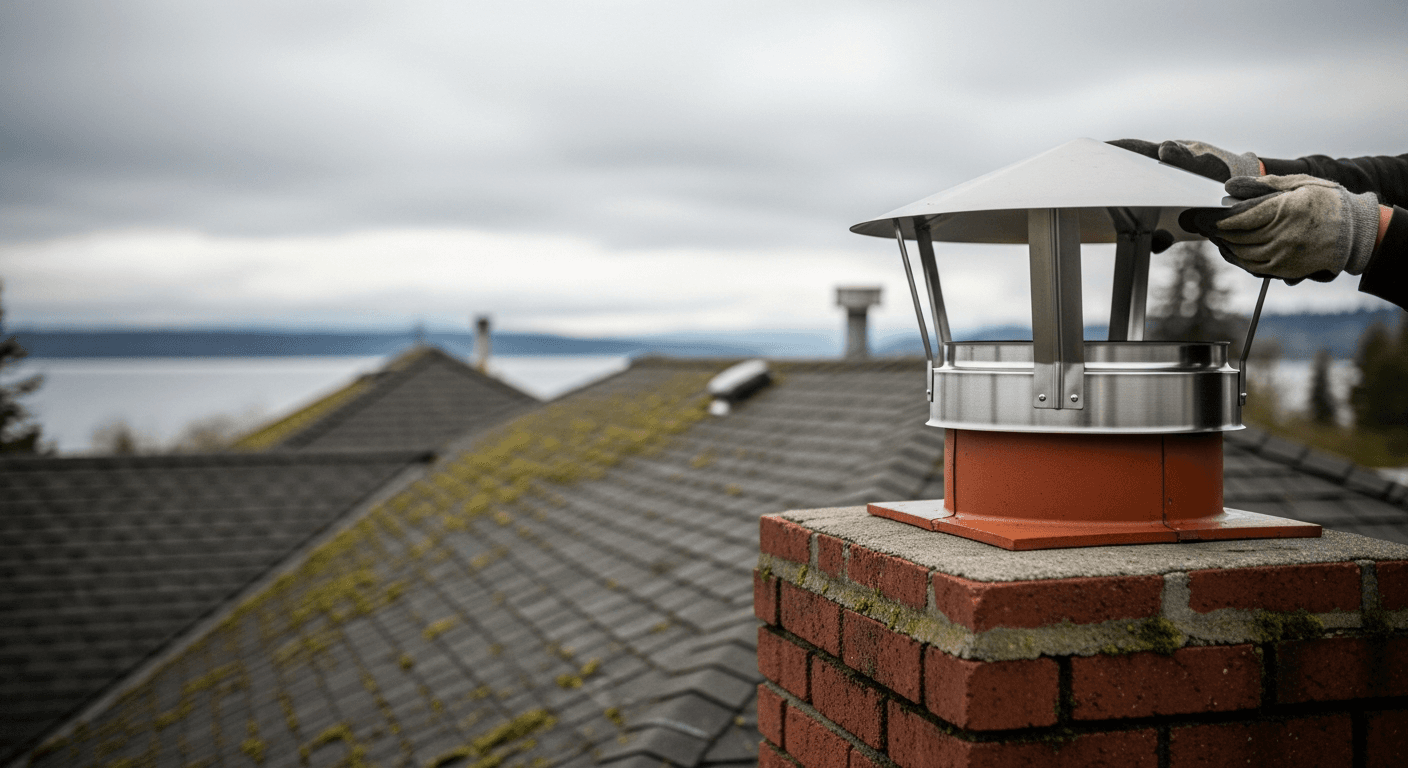
A chimney cap sits at the top of the flue tile, covering the opening with a solid rain shield and surrounding it with mesh screening. It does three jobs simultaneously: it blocks rain from entering the flue, it keeps birds and mammals out, and the mesh stops windblown embers from landing on your roof or yard — a meaningful concern on wood-burning evenings when the Puget Sound Clean Air Agency has lifted seasonal burn restrictions and multiple fireplaces in a neighborhood are running at once.
Kirkland's specific geography intensifies the problem. Lake Washington's surface moisture adds a layer of humidity to the already-wet marine climate rolling in off the Puget Sound lowlands, and neighborhoods west of I-405 — including Juanita, Bridle Trails, and the older sections of downtown Kirkland — sit in a rain shadow that still logs significant annual precipitation while also seeing the freeze-thaw cycles that crack mortar joints fastest. An uncapped chimney on a 1960s or 1970s Kirkland brick home can absorb several gallons of water during a single heavy rain event. That water saturates mortar, corrodes the damper plate, and combines with ash residue to form a dilute acid that progressively attacks the flue liner.
Gas-insert and gas-fireplace owners face the same risk through a different mechanism. Gas combustion produces water vapor as a byproduct; that vapor condenses inside a cool, unlined, or improperly capped flue. Add rainwater intrusion and you accelerate liner deterioration significantly. A cap sized to the liner diameter is just as critical on a gas flue as on a wood-burning one — and the liner replacement cost if neglected is the same either way.
How much does chimney cap installation cost in Kirkland?
Cost depends on three variables: cap material, flue size and shape, and roof accessibility. The table below reflects realistic installed prices for Kirkland-area homes in 2024. Many Kirkland homes have two or more flues — one for a wood fireplace and a separate one for a furnace or gas appliance — so some properties need multiple caps, and pricing should be confirmed per flue.
Galvanized steel caps are the entry-level option and the single most common cause of repeat service calls on the Eastside. They rust through in five to seven years in Kirkland's wet climate, often failing silently while the cap still appears intact from the ground. Stainless steel (304 grade) costs more upfront but carries a lifetime warranty from most reputable manufacturers and is the only material we recommend for Kirkland chimneys as a long-term solution. Copper is a premium choice for historic or architecturally prominent properties; it develops a natural patina and effectively never corrodes.
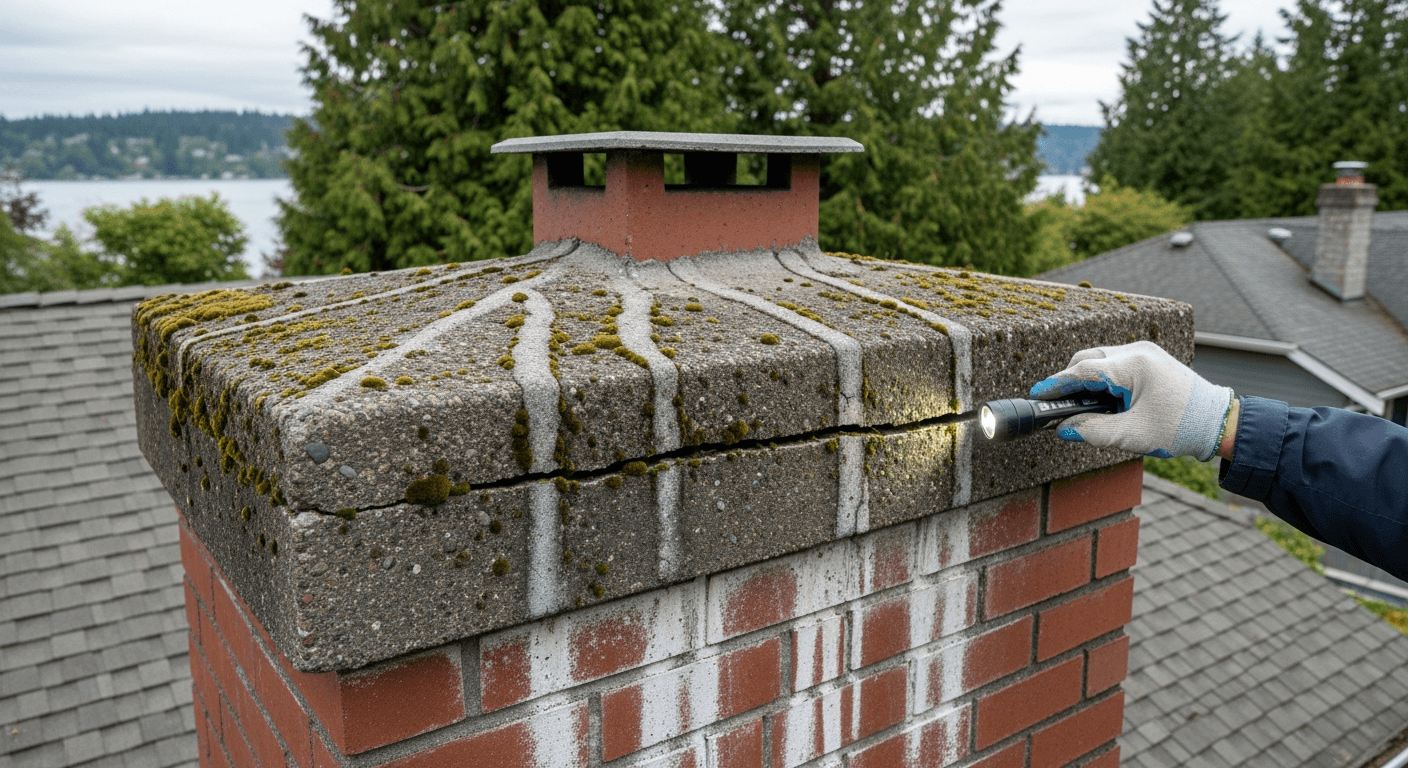
If the chimney crown — the concrete collar at the top of the masonry — is cracked or shows moss infiltration, the cap installation visit is the right time to address it. The technician is already on the roof, and combining crown repair with cap installation eliminates a second trip charge and reduces total labor cost.
| Cap Type | Material | Estimated Lifespan | Installed Cost (Single Flue) | Notes |
|---|---|---|---|---|
| Standard single-flue cap | Galvanized steel | 5–7 years | $150–$250 | Budget option; rusts through quickly in Kirkland's wet climate — not recommended as a long-term solution |
| Standard single-flue cap | Stainless steel (304 grade) | Lifetime | $200–$350 | Recommended for Kirkland; most include a lifetime manufacturer warranty |
| Standard single-flue cap | Copper | Lifetime | $350–$550 | Premium aesthetic; ideal for historic or high-visibility chimneys in older Kirkland neighborhoods |
| Outside-mount / multi-flue cap | Stainless steel | Lifetime | $300–$600 | Covers entire chimney top; best for chimneys with 2+ flues or a deteriorated crown |
| Custom / oversized cap | Stainless steel or copper | Lifetime | $400–$700+ | Required for non-standard flue shapes; common on pre-1980 Kirkland masonry chimneys |
A Kirkland homeowner's experience: what a missing cap cost one family in the Juanita neighborhood
A homeowner on a residential street near Juanita Bay called us in late October after noticing a persistent musty smell from the fireplace every time it rained. They had purchased the home two years earlier and believed the chimney had been serviced as part of the pre-closing inspection. When our technician reached the roof, he found the original galvanized cap had rusted through at the seams — leaving a gap wide enough that a family of European starlings had nested inside the flue over the summer.
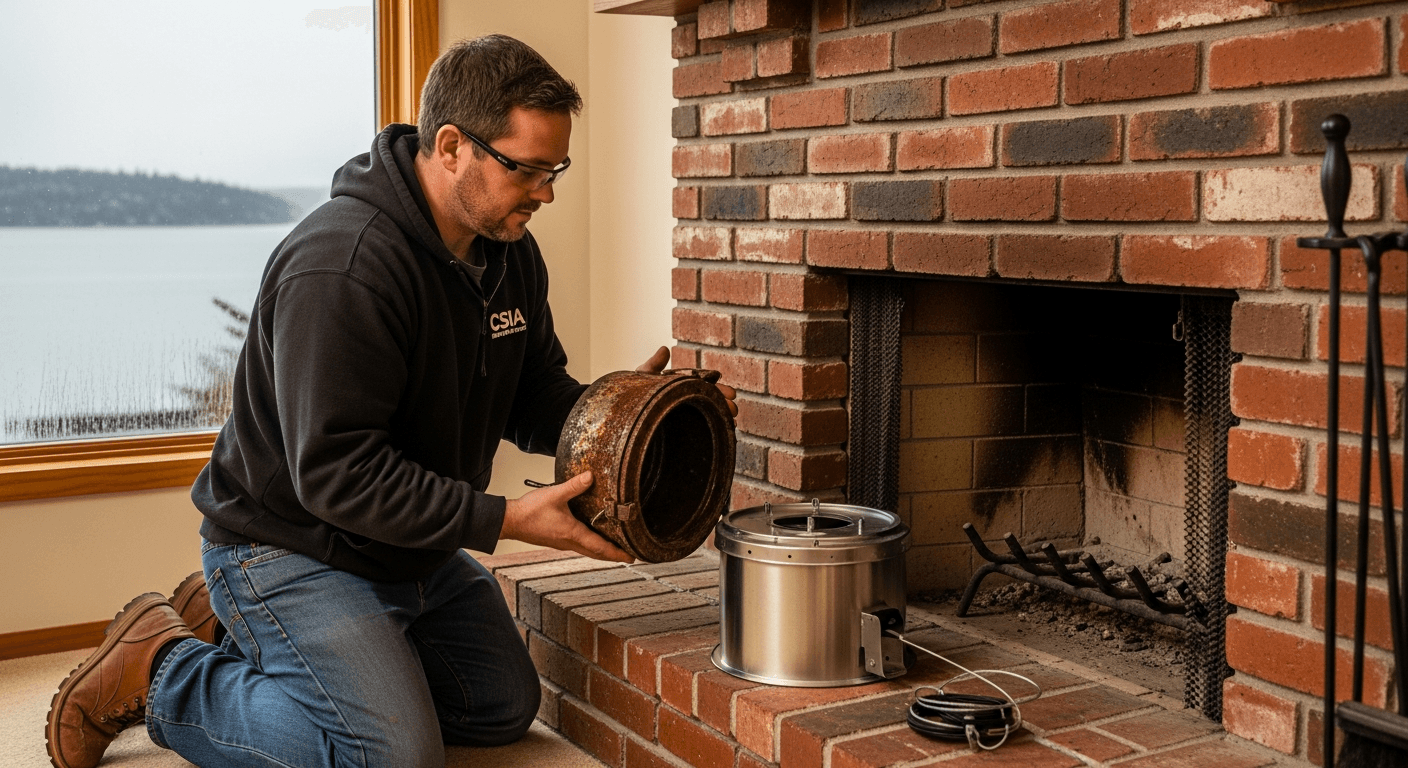
The nest, packed with dry grass and debris, was an active fire hazard. Below it, the terracotta liner tiles showed widespread efflorescence — the white chalky mineral staining that signals sustained water intrusion — and the damper plate had rusted firmly shut. Total repair cost, including nest removal, a Level 2 video inspection, damper replacement, and a new stainless-steel outside-mount cap, came to just over $1,100.
The homeowner's response was the one we hear most often: 'If I had known a $250 cap could have prevented all of this, I would have installed it on move-in day.' The cap is almost never the expensive part of the story — it is everything that accumulates inside the flue during the years the cap is absent or failing.
Choosing the right cap: single-flue vs. outside-mount, and sizing for Kirkland chimneys
Single-flue caps attach directly to the top of one liner tile and are the correct choice when the liner is in good condition and the crown is structurally sound. They come in standard dimensions measured across the flue opening — most Kirkland homes with rectangular or square clay tile flues fit a standard size without custom fabrication. Measure the outer dimensions of the liner tile, not the interior opening, and add at least two inches on each side to ensure the cap seats securely.
Outside-mount caps — sometimes called top-mount or full-coverage caps — attach to the masonry on the sides of the chimney and cover the entire top surface including the crown. These are the better choice for Kirkland homes where the crown shows cracking or moss infiltration, for chimneys with multiple flues sharing one chase, or where the liner tiles at the very top of the chimney are chipped or deteriorated and cannot support the weight of a single-flue cap without risk of breakage.
Sizing affects both draft performance and animal exclusion. An undersized cap creates airflow restriction — you will notice smoke backing into the room on calm or cold days when draft is weakest. An oversized single-flue cap reduces the effectiveness of the mesh screening. Per NFPA 211, mesh openings must be no smaller than three-eighths of an inch and no larger than one-half inch — large enough to sustain proper draft, small enough to exclude sparrows, starlings, and squirrels, all of which are active in Kirkland's residential tree canopy.
When to replace your chimney cap — and what to look for from the ground
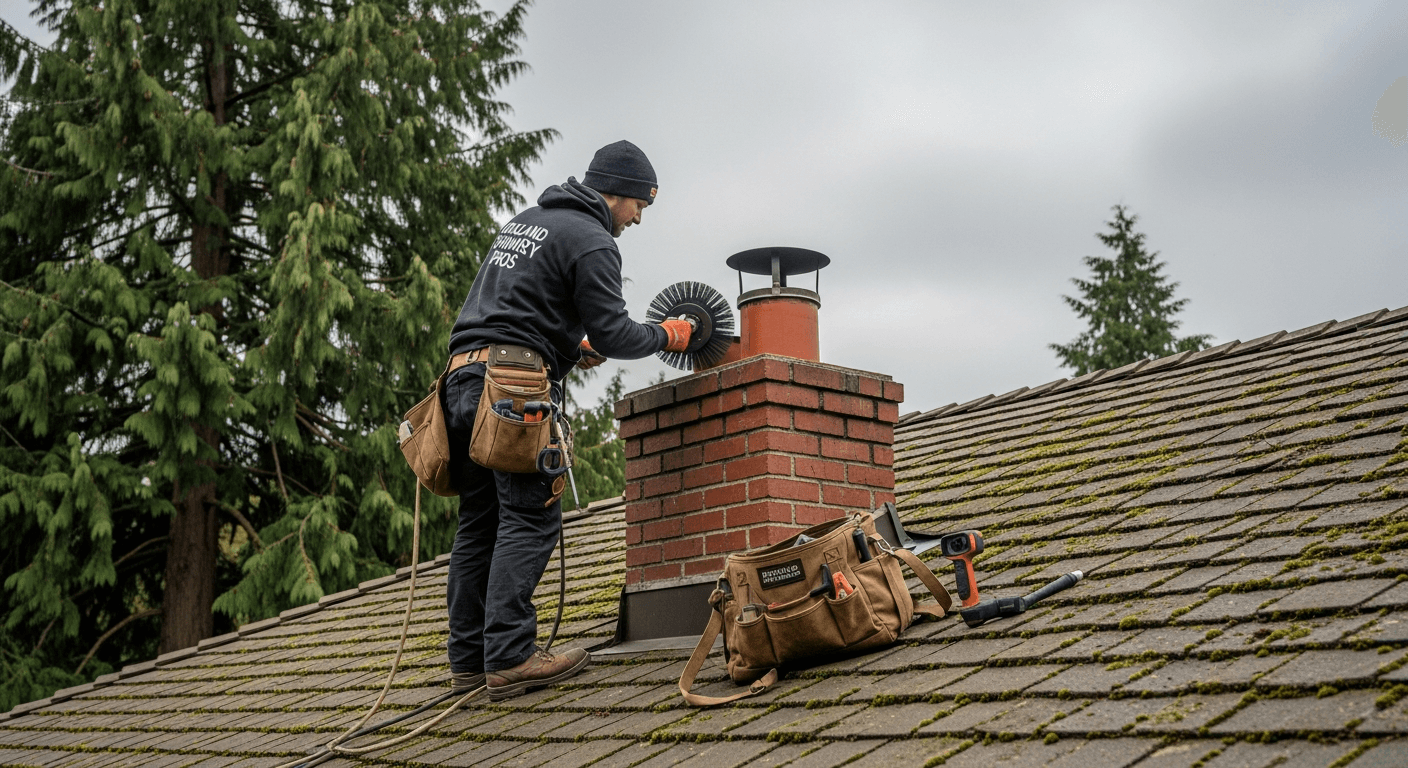
If your Kirkland home is more than ten years old and the cap has not been inspected, treat it as overdue. Galvanized caps installed during original construction in Kirkland subdivisions built through the 1980s are almost certainly at or past the end of their functional life. A pair of binoculars from the yard is often enough to spot trouble: rust streaking down the exterior masonry, a cap that sits visibly tilted or partially dislodged, or a flue opening with no cap at all are all grounds for an immediate service call before the rainy season begins.
From inside the house, a failing or missing cap announces itself through several consistent warning signs: water stains on the firebox walls or the smoke shelf, a damp or musty odor when the fireplace is not in use, audible sounds of birds or small animals inside the flue during nesting season (April through July in Kirkland), white efflorescence staining on the exterior masonry below the chimney crown, or a damper handle that has become stiff and difficult to operate due to rust.
The best window for cap replacement in Kirkland is late August through early October — after the dry season has allowed any existing moisture in the chimney to dissipate and before the November rains arrive in force. Scheduling cap replacement alongside the annual sweep and inspection in a single visit is both more cost-effective and more convenient than two separate appointments.
Frequently asked questions
How often does a Kirkland chimney need to be cleaned?
NFPA 211 requires an annual inspection for all chimneys, with cleaning whenever meaningful buildup is present — typically every one to three years depending on burn frequency and wood type. In Kirkland's climate, even low-use fireplaces warrant annual inspection because moisture causes liner and mortar deterioration regardless of how little you burn.
Will homeowners insurance cover chimney cap replacement?
Typically no. Homeowners insurance covers sudden, documented damage — such as a cap knocked off by a falling limb during a windstorm — but not gradual deterioration from rust or prolonged weather exposure. If you can document a specific storm event as the cause, file a claim and provide photos. Otherwise, cap replacement is a standard out-of-pocket maintenance cost.
What does a chimney sweep and inspection cost in Kirkland?
A standard Level 1 sweep and inspection for a single fireplace in Kirkland typically runs $150 to $250, depending on flue height, roof accessibility, and creosote accumulation. Be cautious of quotes below $99 — that price point rarely covers a thorough inspection and often leads to pressure for add-on services.
What does a Level 2 chimney inspection cost, and when is it required?
A Level 2 inspection in Kirkland generally costs $250 to $450 and includes a video camera scan of the full flue interior. NFPA 211 requires a Level 2 inspection whenever you buy or sell a home, after any chimney fire, or when changing fuel types — for example, converting from a wood-burning fireplace to a gas insert.
Can I install a chimney cap myself?
Some standard single-flue caps can be slid onto a liner tile from a tall ladder, but a correct installation also requires measuring the flue precisely, confirming the crown is stable enough to support an outside-mount cap, and working safely on a pitched, often moss-slick Kirkland roof. Professional installation typically adds only $50 to $100 in labor to the cost of the cap itself — a modest premium against the fall risk and the cost of an improperly fitted cap that fails within a season.
Related services