If you heat your home with a wood-burning fireplace, a gas insert, or a pellet stove, a yearly chimney inspection isn't optional — it's the single most important thing you can do to keep your family safe and your system running efficiently. The problem is that most Kirkland homeowners aren't sure when to schedule one, or what a chimney professional is actually doing for the hour they spend on the roof and inside the firebox. This article answers both questions plainly. We'll walk through the ideal inspection window for our part of the Pacific Northwest, explain what a certified inspector examines from cap to hearth, and share a few red flags specific to homes in Kirkland and the surrounding neighborhoods that we see come up repeatedly in our own inspections.
The Best Time of Year to Schedule in the Kirkland Area
Late August through mid-October is the sweet spot for chimney inspections in Kirkland. By that point, most homeowners have gone three to four months without lighting a fire, so the firebox is cool, dry, and easy to access. More importantly, you still have time to schedule any necessary repairs before the rainy season sets in and you need the fireplace in earnest.
Kirkland's climate matters here. We average around 37 inches of rain annually, and a significant portion of that falls between November and February — exactly when you want your fireplace working reliably. Scheduling in September means that if our inspector finds a cracked flue liner or a deteriorating damper, you have several weeks to get the repair done before the first cold snap rolls off Lake Washington.
Spring inspections, typically April through June, are the second-best option. After a full heating season, creosote and moisture damage are at their worst, and catching problems early gives you the entire summer to budget and repair. What we recommend against is waiting until November, when our schedule is at its busiest and contractors across the area are booked out. That's the scenario that leads to homeowners burning fires in systems that really should be shut down until repaired.
The Three Levels of Chimney Inspection Explained
The Chimney Safety Institute of America defines three levels of inspection, and knowing which one you need helps you have a productive conversation with your technician before we arrive.
A Level 1 inspection is the standard annual checkup. It covers all readily accessible portions of the chimney interior and exterior, the firebox, and the basic connections. No special equipment is required. This is what most Kirkland homeowners need each year if they use their fireplace regularly and haven't made any changes to the system.
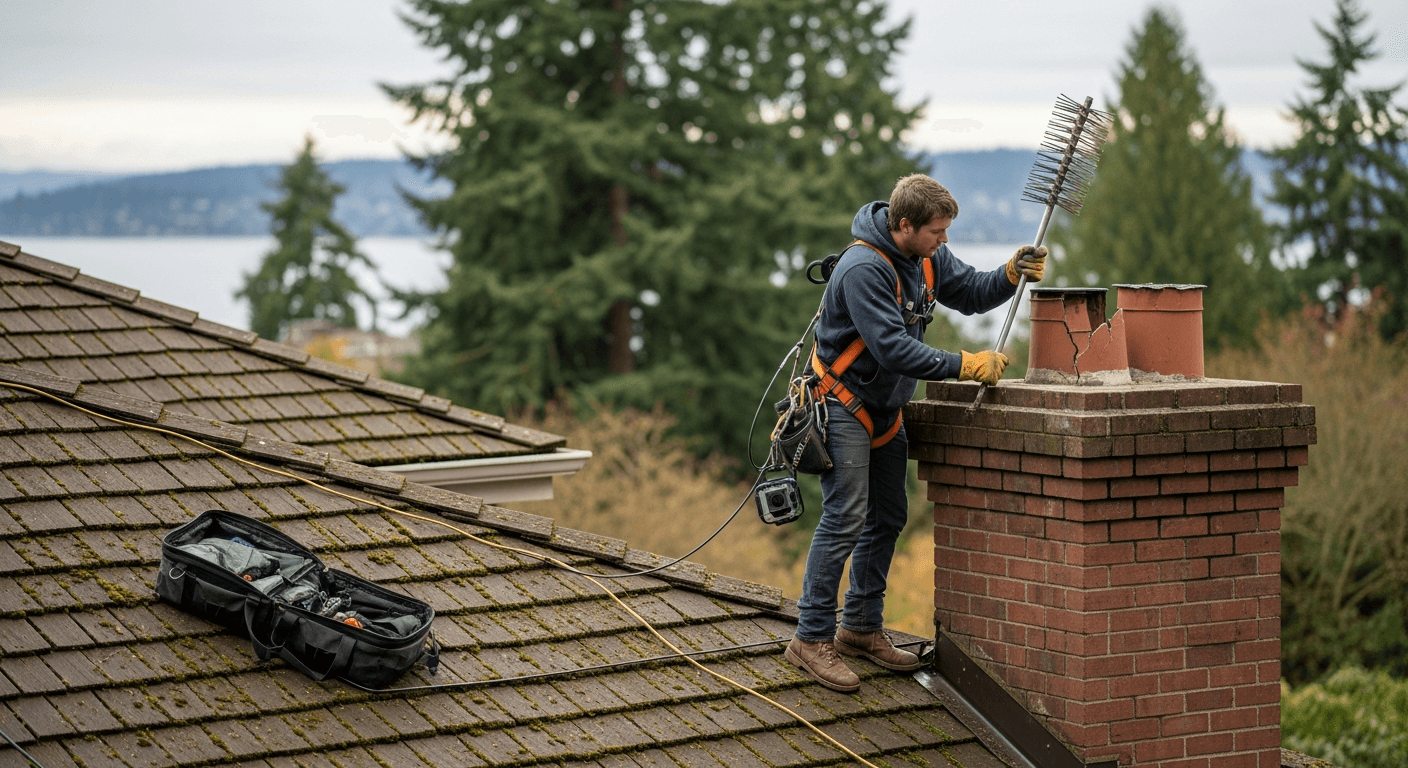
A Level 2 inspection goes further and is required whenever you sell or buy a home, after any significant weather event such as the windstorms that occasionally funnel through the Sammamish River valley, or if you're changing fuel types — say, switching from wood to gas. This level includes a video scan of the flue interior. The camera feed lets us see cracks, mortar gaps, and obstructions that are completely invisible to the naked eye from the firebox or the rooftop.
A Level 3 inspection involves removing portions of the chimney structure to investigate hidden damage. This is relatively uncommon and is typically recommended only when Levels 1 or 2 reveal evidence of a serious problem that can't be confirmed without opening up the chase or crown. If we ever recommend a Level 3, we'll explain exactly why and show you the documentation before any work begins.
What We Examine During a Standard Inspection
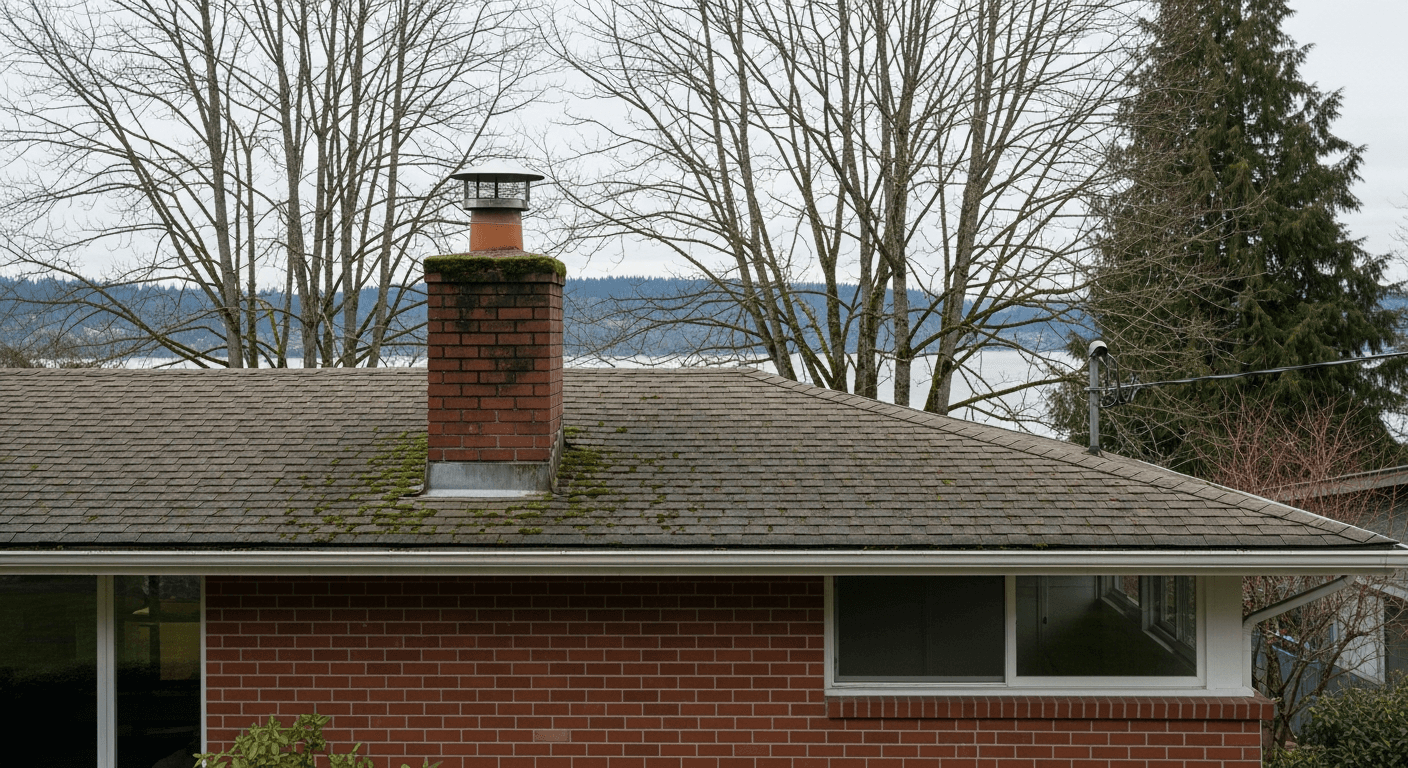
Starting at the top: the chimney cap is the first thing we assess. Caps on homes in the Totem Lake and Holmes Point neighborhoods take a real beating from the combination of heavy rainfall and the Douglas firs that drop debris year-round. A damaged or missing cap allows water, leaves, and nesting birds directly into the flue. We check the mesh, the crown seal, and the cap's fastening.
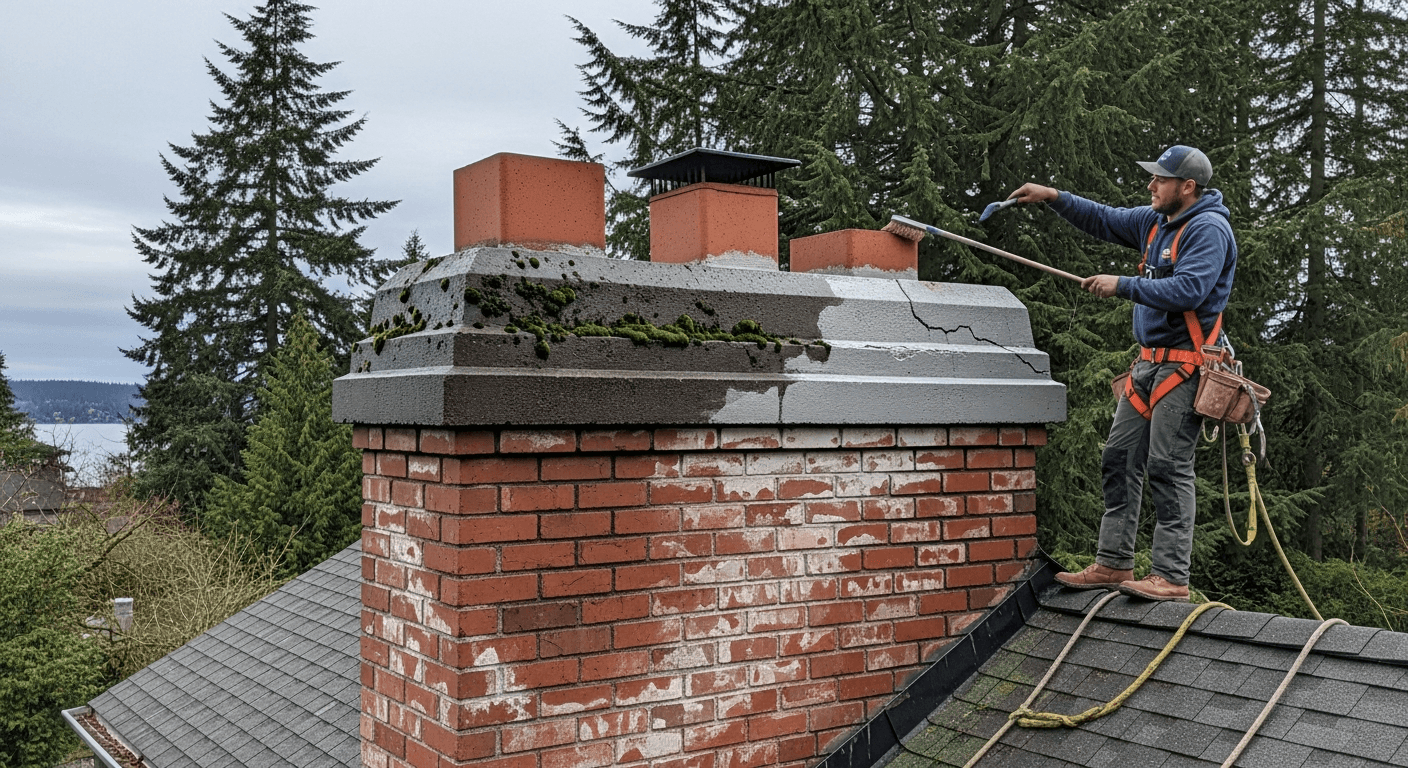
The chimney crown — the sloped concrete or mortar surface that surrounds the flue at the top of the masonry stack — is one of the most commonly neglected components on Kirkland homes. Freeze-thaw cycles during cold snaps crack crowns over time, and once water gets into those cracks, it accelerates deterioration fast. We probe the crown for spalling, gaps, and separation from the flue liner.
Moving down the exterior, we inspect the flashing where the chimney meets the roofline. Improperly sealed flashing is one of the leading causes of attic water intrusion in this area. We also look at the mortar joints in the masonry stack itself for signs of efflorescence — that white mineral staining — which tells us moisture is migrating through the brick.
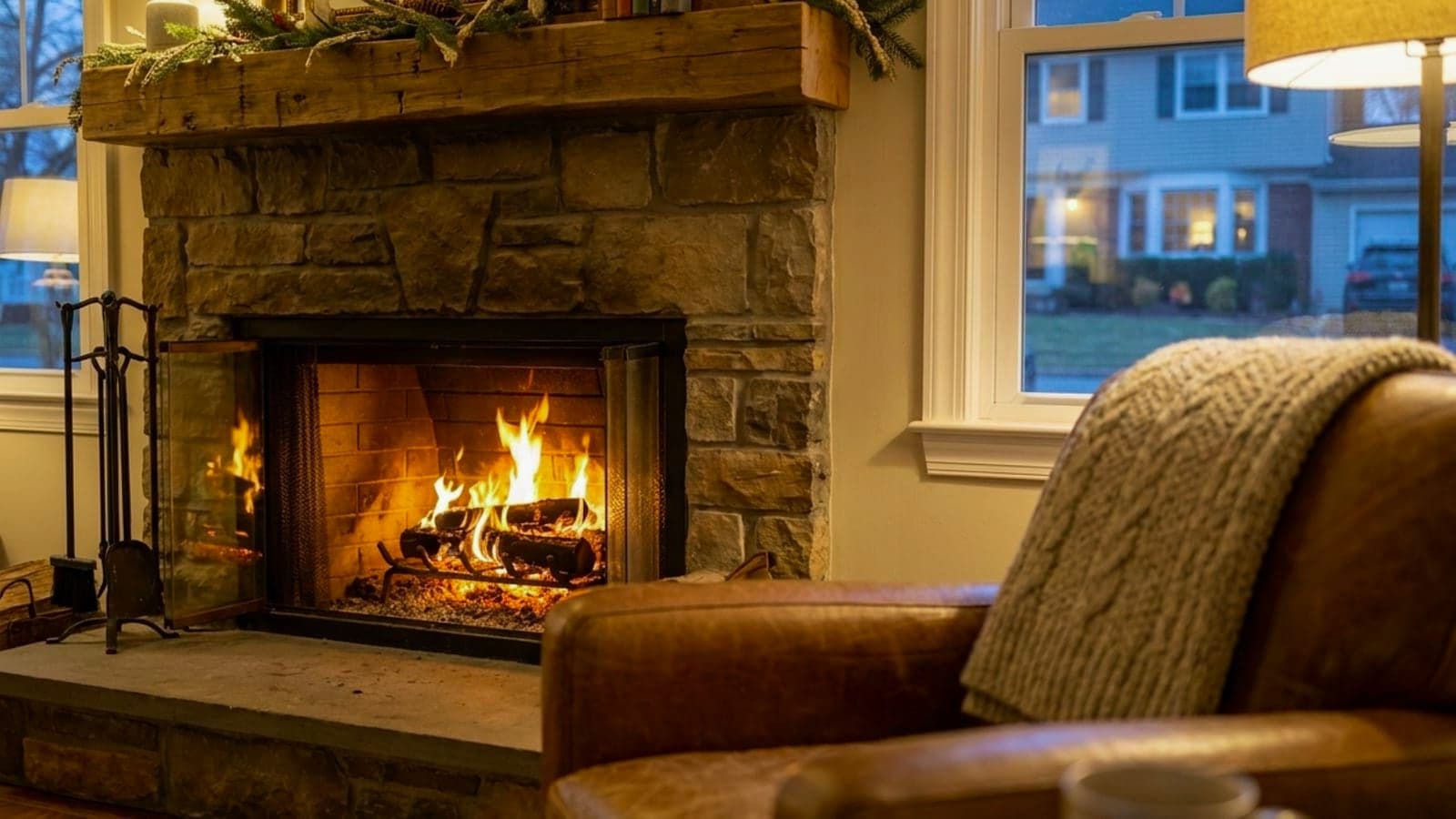
Inside the firebox, we're checking the damper for smooth operation, proper seating, and corrosion. We examine the smoke shelf for debris accumulation, and we look at the firebox walls and floor for cracked firebrick or deteriorating refractory panels. In gas insert systems, we also confirm that the burner, ignition, and venting connections are intact and that there are no signs of carbon tracking, which can indicate incomplete combustion.
Finally, we assess the flue liner itself. In homes built before the 1980s — and there are many of them in older Kirkland neighborhoods near downtown and along Juanita Drive — the liner may be unlined clay tile, which cracks over decades of thermal expansion and contraction. Modern homes often have stainless steel liner systems, but even those can develop gaps at joints if improperly installed. A deteriorated liner is a fire hazard, plain and simple, and it's the main reason we push for annual inspections rather than every-other-year ones.
Red Flags We Commonly Find on Kirkland Homes
After years of inspecting chimneys across Kirkland, Bothell, Kenmore, and Woodinville, certain patterns repeat. Heavy creosote buildup is the most frequent finding on wood-burning systems, especially in households that burn green or partially seasoned wood. Western Washington homeowners sometimes burn wood that hasn't dried long enough, and our damp climate makes proper wood storage genuinely challenging. Wet wood produces far more creosote than properly seasoned hardwood, and creosote is what fuels chimney fires.
Animal nesting is another recurring issue. Raccoons and squirrels are active in the tree canopy all around the Kirkland area, and a chimney without a quality cap is an attractive denning site. We've removed nesting material packed so tightly into a flue that airflow was almost completely blocked — a situation that creates dangerous carbon monoxide buildup when a fireplace is operated.
Water damage to the firebox interior is also common. Homes near the waterfront areas of Kirkland — Juanita Beach, Houghton, and the Carillon Point vicinity — deal with sustained high humidity that accelerates rust on damper components and spalling of masonry. If you're in one of those neighborhoods and you haven't had an inspection in more than two years, there's a reasonable chance we'll find moisture-related damage that's been quietly worsening.
What Happens After the Inspection
At the end of every inspection, we provide a written report that documents what we found, any safety concerns, and our recommended next steps. If the system is in good condition and ready to use, we say so clearly and you get a straightforward confirmation that you can file away. If repairs are needed, we categorize them by urgency: items that mean the fireplace should not be operated until fixed, items that should be addressed within the season, and items that can be monitored and addressed at your next annual visit.
We don't upsell repairs that aren't needed. If the cap is structurally sound, we're not going to recommend replacing it. Our business in Kirkland runs on repeat customers and referrals from neighbors, and that only works if homeowners trust what we tell them. We'll also walk you through any findings in person before we leave — photographs, explanations, and honest answers to your questions.
If you have a fireplace that was used last winter and hasn't been inspected since, now is the right time to get it on the calendar. Getting ahead of the fall rush means you'll have more scheduling flexibility, lower stress, and the confidence to light that first fire of the season knowing your chimney is ready for it.