Yes, your Kirkland chimney almost certainly needs waterproofing — and if it hasn't been treated in the last seven to ten years, it's overdue. Kirkland averages over 37 inches of annual rainfall, and the freeze-thaw cycles that arrive each November and persist through March force water into brick and mortar pores, expanding them with each freeze until spalling, cracked crowns, and eroded mortar joints appear. Waterproofing with a professional-grade vapor-permeable sealer is the single most cost-effective chimney service available: a $350–$500 treatment on a two-story Eastside home routinely prevents $1,500–$3,000 in masonry repairs down the road.
What Chimney Waterproofing Actually Does to Brick and Mortar
Brick and mortar are porous — at the microscopic level they function like a sponge, drawing in water through capillary action every time it rains. A professional waterproofing treatment penetrates that pore structure and deposits a vapor-permeable barrier that repels liquid water while still allowing water vapor to escape outward. That distinction is critical: film-forming sealers that trap moisture inside the masonry accelerate the exact freeze-thaw damage they're meant to stop.
On Kirkland's Eastside, homes face prevailing westerly Pacific storm systems from October through April. Chimneys on the north and west faces of a home absorb and release moisture almost continuously across those seven months. Over time that cycle loosens mortar joints, causes spalling (the brick face fractures and pops off in flakes), and opens pathways for water to migrate into the firebox or the framing around the chimney chase.
Professional-grade sealers such as ChimneySaver Water Repellent carry a 10-year manufacturer warranty when applied to clean, structurally sound masonry. Consumer-grade film-forming sealers sold at hardware stores typically last two to three years, are not vapor-permeable, and are not appropriate for Kirkland's climate — we don't use them and don't recommend them.
Warning Signs Your Kirkland Chimney Is Already Taking on Water
The most reliable early indicator is efflorescence — the white or gray chalky staining that appears on brick exterior surfaces. That residue is mineral salt carried to the surface by water moving through the masonry. It reads as cosmetic but signals active moisture migration through the brick or mortar joints.
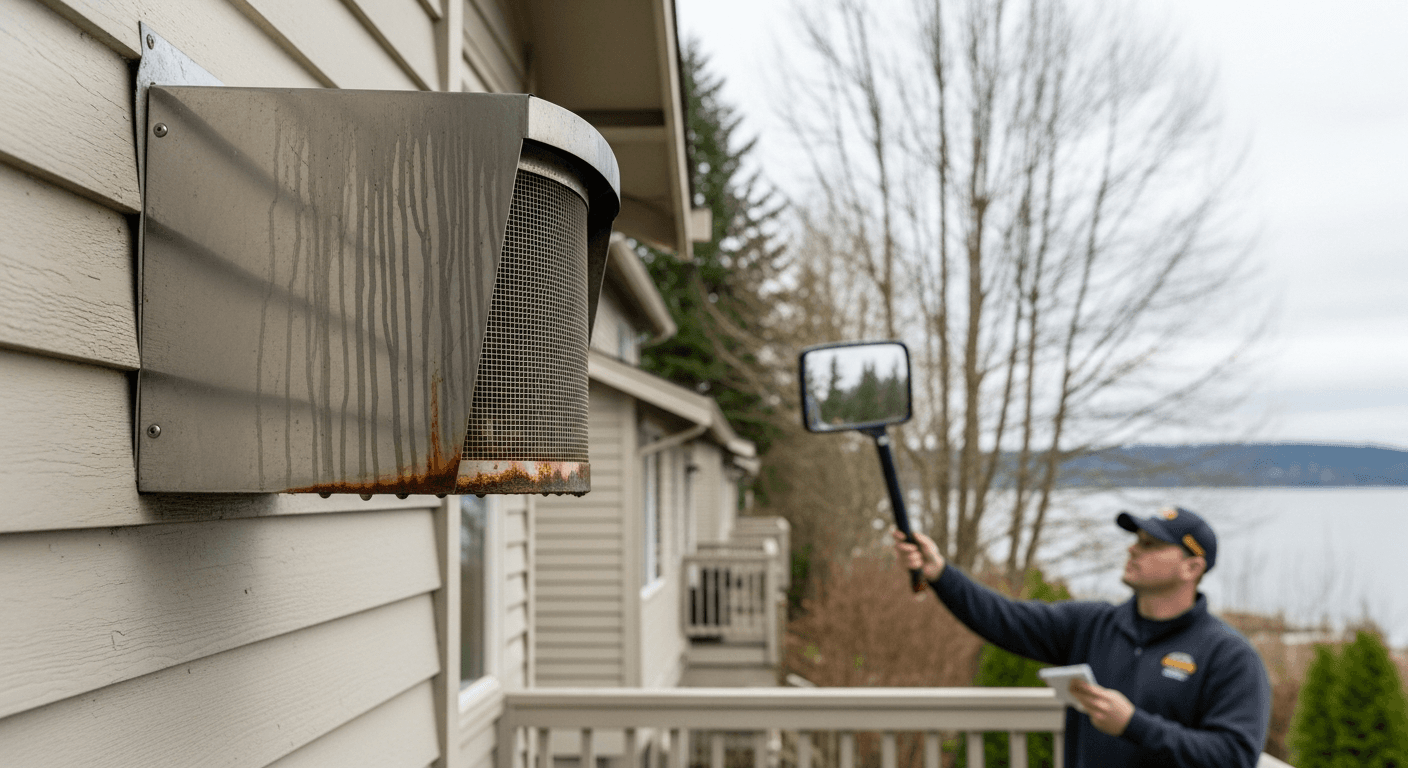
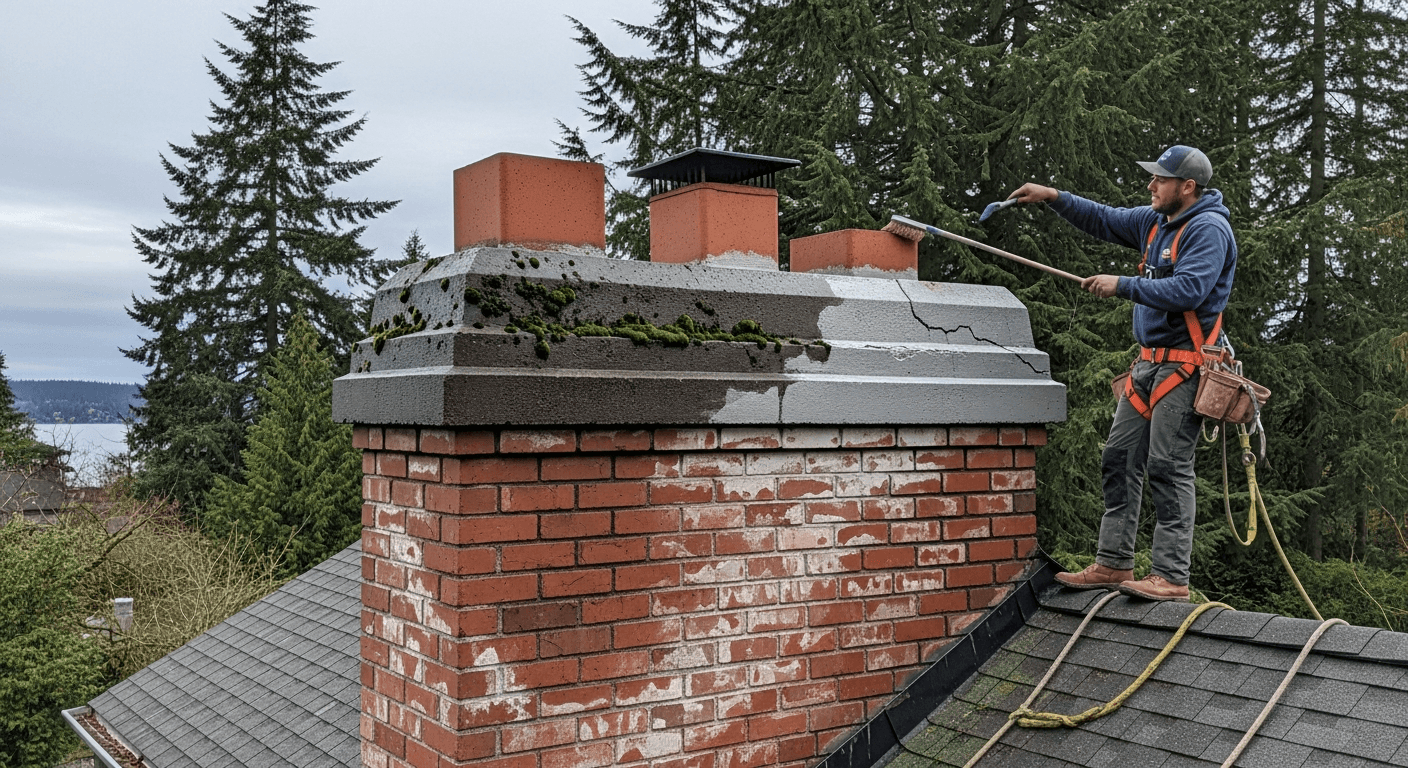
Other signs we regularly document on Kirkland homes include: mortar joints that look recessed more than a quarter-inch or feel crumbly when probed; spalling brick faces on the upper courses nearest the crown; rust-colored streaks or staining inside the firebox; peeling wallpaper or damp drywall on interior walls adjacent to the chimney stack; a musty odor from the firebox opening after heavy rain; and green moss or lichen colonizing the chimney crown or upper brick courses. Moss growth is particularly common on chimneys in Rose Hill, Juanita, and Bridle Trails, where mature Douglas firs and big-leaf maples shade rooflines and keep masonry wet for two to three days after each storm.
If your fireplace has a gas insert — a very common configuration on the Eastside, where many homeowners converted wood-burning systems between 2000 and 2015 — the masonry exterior and flue remain fully exposed to weather. Metal components inside a gas insert corrode when moisture infiltrates the masonry around them, so waterproofing is as important for a gas-insert chimney as for a traditional wood-burning one.
Symptom-to-Cause Reference for Kirkland Chimney Water Damage
The table below maps the most common symptoms Kirkland homeowners notice to their likely underlying causes. Identifying the correct cause before waterproofing is applied is essential — sealing over an active defect can trap moisture and void both the sealer warranty and any workmanship warranty on preparatory repairs.
| Symptom You Can See or Smell | Most Likely Cause | Typical Prep Required Before Waterproofing |
|---|---|---|
| White or gray chalky staining (efflorescence) on exterior brick | Active moisture migrating through masonry pores or mortar joints | Clean efflorescence, probe mortar joints, confirm no structural cracking |
| Spalling — brick faces flaking or popping off on upper courses | Repeated freeze-thaw expansion inside saturated brick | Replace or consolidate spalled bricks; tuckpoint surrounding joints |
| Recessed or crumbly mortar joints (more than ¼ inch deep) | Mortar erosion from sustained moisture exposure | Tuckpoint all deteriorated joints before sealer application |
| Rust-colored streaks inside the firebox | Water infiltrating through crown cracks or eroded mortar and contacting metal components | Inspect and patch crown; assess flashing; identify entry point |
| Peeling wallpaper or damp drywall adjacent to chimney stack | Moisture migrating from masonry into surrounding framing | Full inspection to locate water-entry point; address before sealing |
| Musty odor from firebox opening after heavy rain | Standing water or sustained damp inside the firebox or lower flue | Sweep and inspect flue; confirm cap and crown are intact |
| Moss or lichen on crown or upper brick courses | Chronically damp, porous masonry surface — common in shaded Kirkland neighborhoods | Remove organic growth; apply biocidal wash; allow to dry fully |
A Juanita Homeowner's Real Water-Damage Repair Sequence
In late February, a homeowner in the Juanita neighborhood called us after noticing rust-colored streaks running down the inside of their firebox and a persistent musty odor whenever the gas insert ran. The home was built in 1988 and had never had the chimney waterproofed.
Our inspection found that the original mortar joints on the north-facing side had eroded to a depth of roughly half an inch across the upper four courses of brick, the chimney crown had two hairline cracks wide enough to admit water, and the top two brick courses were visibly spalling. Based on the staining patterns inside the firebox, water had been infiltrating for at least two seasons.
The repair sequence was: tuckpoint the deteriorated mortar joints, patch and seal the chimney crown, then apply a full vapor-permeable sealer to the entire masonry exterior. The total came to approximately $1,100. Had the homeowner waited another season, the compromised bricks would have needed individual replacement — a job starting around $2,500 depending on brick-match availability. A preventive waterproofing treatment applied around 2015 would have cost roughly $325–$375 and made the repair unnecessary.
The Best Time to Waterproof a Chimney in Kirkland
Late summer — August through mid-October — is the optimal window in Kirkland. Sealer requires completely dry masonry before application and a minimum 24-hour dry-weather curing period after. Kirkland's July and August average less than 0.8 inches of rainfall per month, making those the most reliable scheduling months. Booking in August also positions you well ahead of the October rains that begin Kirkland's high-moisture season.
The second-best window is late spring — mid-May through June — after the heavy Pacific frontal systems have cleared but before midsummer heat makes working on a dark-brick chimney at roof level physically demanding.
Avoid scheduling waterproofing from November through March. Even a brief rain shower during or immediately after application can wash uncured sealer off in patches, leaving the masonry partially unprotected for an entire additional season. If a problem surfaces mid-winter, we can address cracked crowns and deteriorated mortar on a suitable dry day, but we'll defer sealer application to the following dry window.
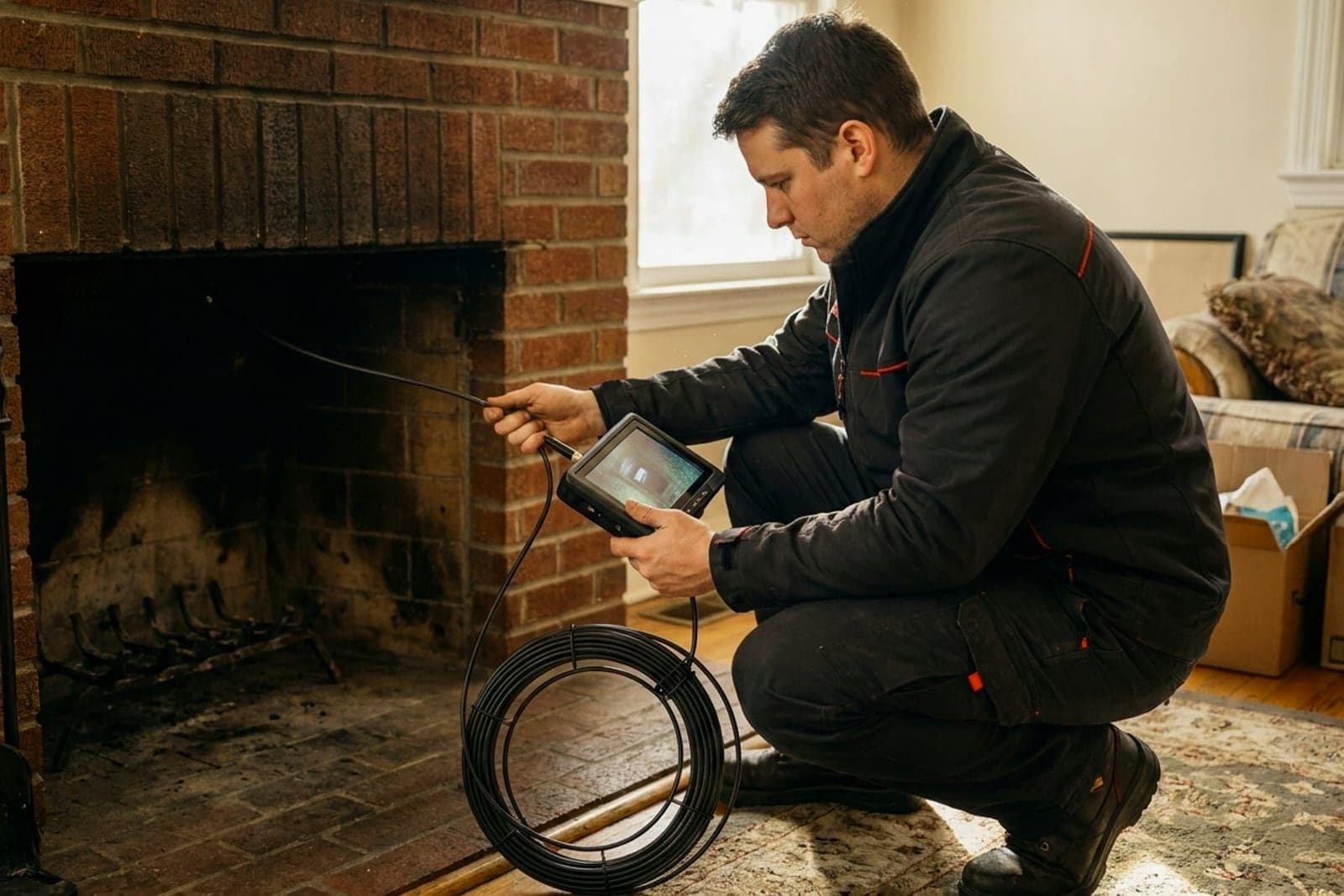
One scheduling tip that consistently saves homeowners money: bundle a chimney sweep or Level 1 inspection with the waterproofing consultation. Applying sealer over masonry with undetected structural cracks locks in an active problem and can void the sealer manufacturer's warranty. Confirming the masonry is sound before treatment is standard practice in our process.
What Chimney Waterproofing Costs in Kirkland (2024–2025)
Pricing depends on chimney height, number of flues, and whether preparatory work — crown patching, tuckpointing, or cap replacement — is needed before the sealer is applied. The ranges below reflect our current pricing for Kirkland and the surrounding Eastside area and assume the masonry is structurally sound. Preparatory repairs are quoted separately after inspection.
The most common scenario on Eastside homes is a two-story chimney with a single flue and masonry in serviceable condition — that job typically lands in the $350–$500 range for the waterproofing step alone.
| Service | Typical Kirkland Price Range (2024–2025) | Notes |
|---|---|---|
| Waterproofing only — single-story chimney, 1 flue | $275 – $375 | Masonry must be dry and structurally sound |
| Waterproofing only — two-story chimney, 1 flue | $350 – $500 | Most common configuration on Eastside homes |
| Waterproofing only — two-story chimney, 2 flues | $450 – $625 | Second flue adds surface area and staging time |
| Chimney crown repair + waterproofing (combo) | $550 – $900 | Includes crown patching or full resurfacing |
| Tuckpointing + waterproofing (combo) | $750 – $1,400 | Range reflects number of deteriorated joint inches |
| Chimney cap replacement (add-on) | $175 – $350 | Strongly recommended when cap is cracked or absent |
| Re-application interval — professional sealer | Every 7–10 years | Reduce to 5–7 years for heavily shaded or older masonry |
Should You Waterproof a Kirkland Chimney Yourself?
Consumer masonry sealers are available at local home improvement stores, but DIY waterproofing on a Kirkland chimney carries three practical risks that typically make it more expensive over time, not less.
First, the vast majority of consumer products are film-forming sealers rather than vapor-permeable ones. Applied to Kirkland's frequently damp masonry, they trap moisture inside the brick and accelerate freeze-thaw spalling — the exact damage you're trying to prevent. Second, correct application requires confirming that the masonry is clean, structurally intact, and completely dry — conditions that can only be verified by reaching the crown and probing mortar joints directly. Third, roof pitches on Eastside craftsman and mid-century homes are frequently steep, and chimney access without proper staging presents a serious fall hazard.
For a chimney that is confirmed sound and simply due for its next treatment cycle, a professional application using a warranted product gives you documented coverage and a clear warranty process if the sealer fails prematurely. For any chimney showing signs of existing water intrusion, a professional assessment before any sealer is applied is essential — treating damaged masonry without addressing the underlying defects can void both material and workmanship warranties and worsen moisture infiltration.
Frequently asked questions
How can I tell whether my chimney has already been waterproofed?
Splash a small amount of water on a brick near the top of the chimney. If the water beads and rolls off within a few seconds, an active sealer is likely present on that Kirkland chimney. If the brick darkens and visibly absorbs the water, the masonry is either unprotected or the previous sealer has worn through. For a definitive assessment, a close-up inspection of the mortar joints and crown will also show whether the surface was prepared and treated correctly.
Will waterproofing stop the moss growing on my chimney crown?
Waterproofing a Kirkland chimney crown discourages moss and lichen regrowth by keeping the masonry surface drier between rain events — moss and lichen require sustained damp, porous surfaces to colonize. However, existing moss must be removed and the crown treated with a biocidal wash before sealer is applied; waterproofing over active organic growth traps moisture beneath it. We include crown cleaning and biocide treatment as part of our standard crown prep service.
Will waterproofing affect my gas insert or help with Puget Sound Clean Air Agency burn bans?
Waterproofing treats the chimney masonry exterior only and has no effect on firebox operation, the flue liner, or gas insert function. It has no bearing on Puget Sound Clean Air Agency burn restrictions, which are triggered by particulate air-quality readings, not chimney condition. What chimney waterproofing does protect is the masonry structure that keeps a gas insert's venting system weather-tight and the metal flashing around the chimney base properly sealed.
My chimney is only four years old. Does it need waterproofing already?
New masonry on a Kirkland home is actually more absorbent than aged masonry because the mortar is still completing its cure and micro-pores are fully open. We recommend a first waterproofing treatment one to two years after construction — once the masonry has fully cured — then on a standard seven-to-ten-year cycle after that. Skipping early treatment on a new chimney and waiting until signs of damage appear is the most common preventable mistake we see on newer Eastside homes.
Can I schedule waterproofing at the same time as a chimney sweep?
Yes — and we recommend combining a chimney sweep with waterproofing service for Kirkland homeowners. A sweep clears debris from the crown and cap area and gives us the opportunity to inspect mortar joints and the crown surface before the sealer goes on. Combining services into a single visit eliminates a separate trip charge and is the most efficient way to head into Kirkland's October rainy season with the chimney fully documented and protected.
Related services