No — during a Puget Sound Clean Air Agency (PSCAA) Stage 1 or Stage 2 burn ban, you cannot burn wood in your Kirkland fireplace, wood stove, or outdoor fire pit. Yes — a certified gas insert lets you run a fire through any burn ban, because PSCAA explicitly exempts gas combustion appliances from all ban stages. Bans are most common between November and February, when temperature inversions trap smoke over the Eastside lowlands near Lake Washington, and a first-offense fine runs $1,000. If you're still relying on a wood-burning fireplace, understanding your options before mid-October — when permit timelines and equipment lead times begin to stretch — is the difference between a warm, compliant January and a cold, expensive one.
How Puget Sound Burn Bans Actually Work in Kirkland
The Puget Sound Clean Air Agency issues burn bans for all of King County — including every Kirkland neighborhood from Juanita to Bridle Trails to the lakefront — whenever forecast air quality is expected to reach unhealthy levels. The trigger is almost always a cold, still night when a temperature inversion holds smoke close to the ground over the Eastside lowlands. PSCAA posts bans 24 to 48 hours in advance at pscleanair.org and by opt-in text or email alert; a single ban event can last one night or run for several consecutive days.
Stage 1 bans prohibit all recreational wood burning with one narrow exemption: households where wood is the sole source of heat — meaning no furnace, no heat pump, no electric baseboard. In Kirkland's established residential neighborhoods, virtually every home has a central heating system, so that exemption almost never applies here. Stage 2 bans eliminate even that carve-out and prohibit essentially all wood combustion regardless of circumstances.
Certified gas inserts and gas fireplaces are not mentioned in burn ban restrictions because PSCAA does not regulate gas combustion appliances — period. A gas insert with a manufacturer's emission certificate can run on the coldest, stillest January night without any compliance concern. That single fact drives most of the gas insert conversations we have with Kirkland homeowners each fall.
Burn Ban Stage Comparison: What You Can and Cannot Do in Kirkland
The table above summarizes how each appliance type is treated under PSCAA ban stages in Kirkland. The critical takeaway is that gas combustion appliances — inserts, fireplaces, and propane heaters — face zero restrictions at any ban stage, while wood and solid-fuel appliances are prohibited for the vast majority of Kirkland households the moment a Stage 1 ban is issued.
Pellet stoves occupy a gray zone: PSCAA does not explicitly exempt EPA-certified pellet appliances the way it exempts gas, and enforcement guidance has varied by ban event. Kirkland homeowners relying on a pellet stove for compliance should confirm current PSCAA guidance at pscleanair.org before each ban season rather than assuming exemption.
| Situation or Appliance Type | Stage 1 Ban | Stage 2 Ban | No Active Ban |
|---|---|---|---|
| Wood fireplace — home has central heating | Prohibited | Prohibited | Permitted |
| Wood fireplace — sole heat source, no furnace or heat pump | Exempt (may burn) | Prohibited | Permitted |
| Wood stove — home has central heating | Prohibited | Prohibited | Permitted |
| Outdoor fire pit or chiminea | Prohibited | Prohibited | Permitted (check local codes) |
| Certified gas insert or gas fireplace | Permitted — no restriction | Permitted — no restriction | Permitted |
| Propane patio heater (gas combustion) | Permitted — no restriction | Permitted — no restriction | Permitted |
| EPA-certified pellet stove | Generally prohibited unless sole heat source | Prohibited | Permitted |
What Does a Gas Insert Cost, and How Long Does Installation Take?
A gas insert slides into your existing masonry or factory-built fireplace opening and vents through a new stainless-steel liner run inside your current flue. The liner is not optional — PSCAA and the City of Kirkland both require it, and an unlined flue sized for a wood fire will allow acidic condensate from gas combustion to backdraft into the firebox and living space, creating a carbon monoxide hazard.
The cost table above reflects actual project costs in the Kirkland area for 2024–2025. The biggest variable beyond the insert unit itself is whether a gas line stub-out already exists near your hearth. Many Kirkland homes built before 1985 were not roughed in for gas at the fireplace, so a licensed plumber running new pipe from the utility room is a frequent add-on.
Kirkland's older lakefront homes — many built in the 1960s and 1970s with large masonry fireboxes and 13-inch-by-13-inch terra-cotta flues — are the projects that most often land at the higher end of the cost range. The flue is sound, but lining it down to a modern insert's 4-inch or 5-inch exhaust collar requires a longer, custom-diameter liner than a newer factory-built fireplace does. Most installations are completed in a single day on-site; City of Kirkland permitting typically adds one to two weeks before the work can begin.
| Component | Typical Cost Range | Notes |
|---|---|---|
| Gas insert unit (mid-range, 25,000–35,000 BTU) | $1,800 – $3,500 | Decorative log set or ember bed included |
| Premium gas insert (35,000–50,000 BTU) | $3,500 – $6,000 | Suitable for zone-heating larger great rooms |
| Stainless steel flue liner (standard 25–30 ft run) | $700 – $1,400 | Required by code for all inserts |
| Gas line extension to firebox | $300 – $900 | When no stub-out exists; licensed plumber required |
| Chimney sweep + Level 2 inspection before install | $250 – $400 | Confirms flue condition and firebox dimensions |
| City of Kirkland mechanical + gas permit | $150 – $400 | Must be pulled before any gas work begins |
| Typical all-in project total | $3,200 – $9,500 | Most Kirkland jobs settle between $4,000 – $6,500 |
A Kirkland Homeowner Scenario: Caught Off Guard by a Burn Ban
Consider a hypothetical but representative situation: a homeowner in the Juanita neighborhood calls the morning after a PSCAA inspector knocked on their door during an active Stage 2 ban. Smoke had been visible from the street; they had missed the ban alert entirely. Because it was a first contact and they extinguished the fire immediately, they received a written warning rather than the $1,000 fine — but the inspector made clear that a second complaint would not end the same way.
The home in this scenario is a 1978 ranch-style with a large masonry fireplace, a 13-inch-by-13-inch terra-cotta flue in solid condition, and no gas stub-out anywhere near the hearth. A Level 2 inspection would confirm the flue can accept a liner; a licensed plumber would then run a new gas line from the utility room. Installing a 35,000-BTU insert with a stainless liner sized to the unit's 5-inch exhaust collar and pulling the required City of Kirkland mechanical and gas permits would bring the total timeline from first call to first flame to just under three weeks — with two of those weeks consumed by permit processing.
The outcome — reliable, compliant, zero-maintenance warmth through a Kirkland winter — is exactly the problem a gas insert solves. A homeowner in this position can run the insert on the coldest, stillest January night without checking the PSCAA ban site, because gas appliances are never restricted.
What Happens to Your Chimney When You Switch to Gas?
Switching to a gas insert does not make your chimney irrelevant — it changes what the chimney does and what can go wrong with it. Gas combustion produces water vapor and a mildly acidic condensate. Without the stainless liner, that condensate contacts the terra-cotta flue tile and mortar joints directly, causing slow but cumulative spalling and joint erosion. The liner the code requires is also the liner that protects your masonry investment for the life of the insert.
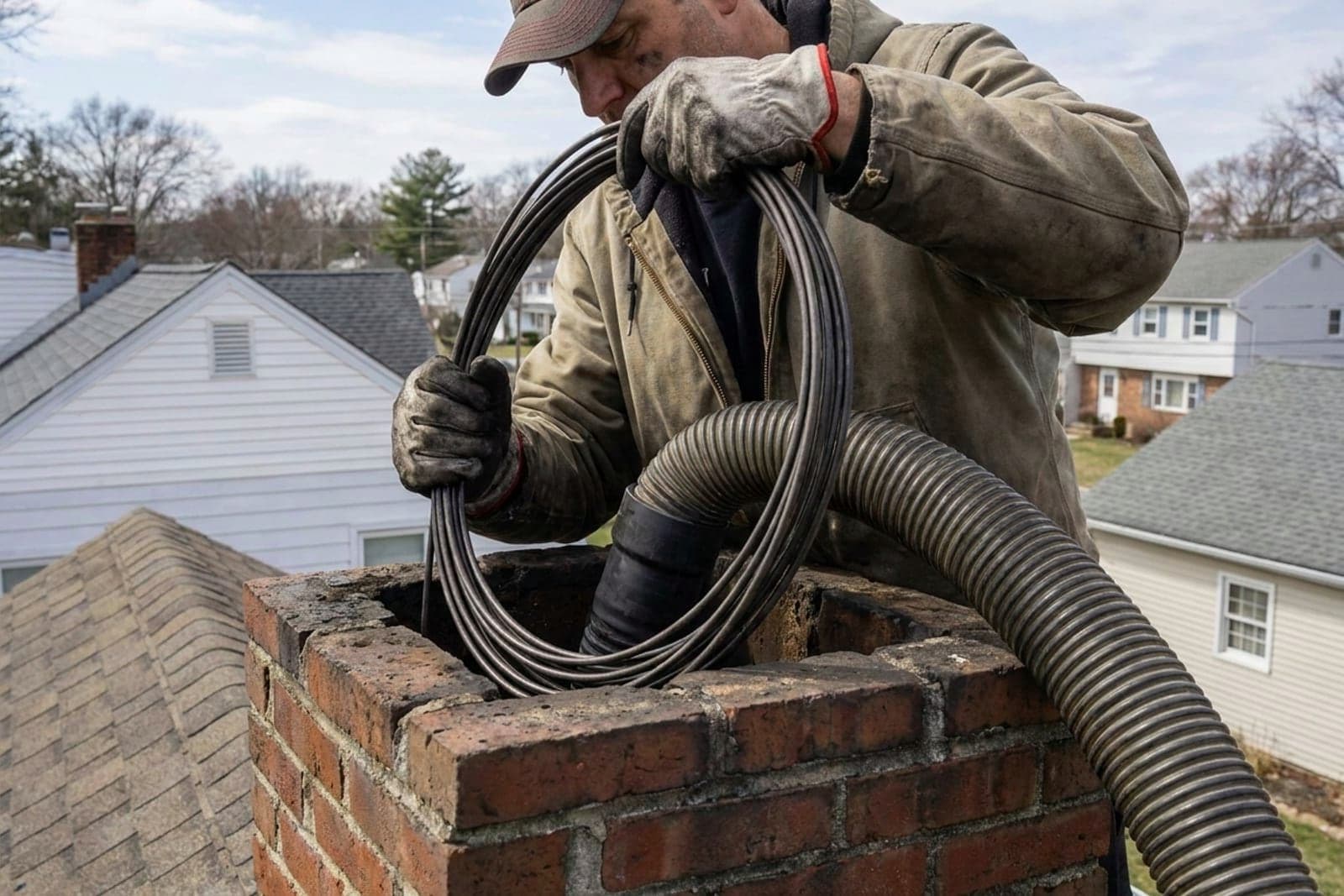
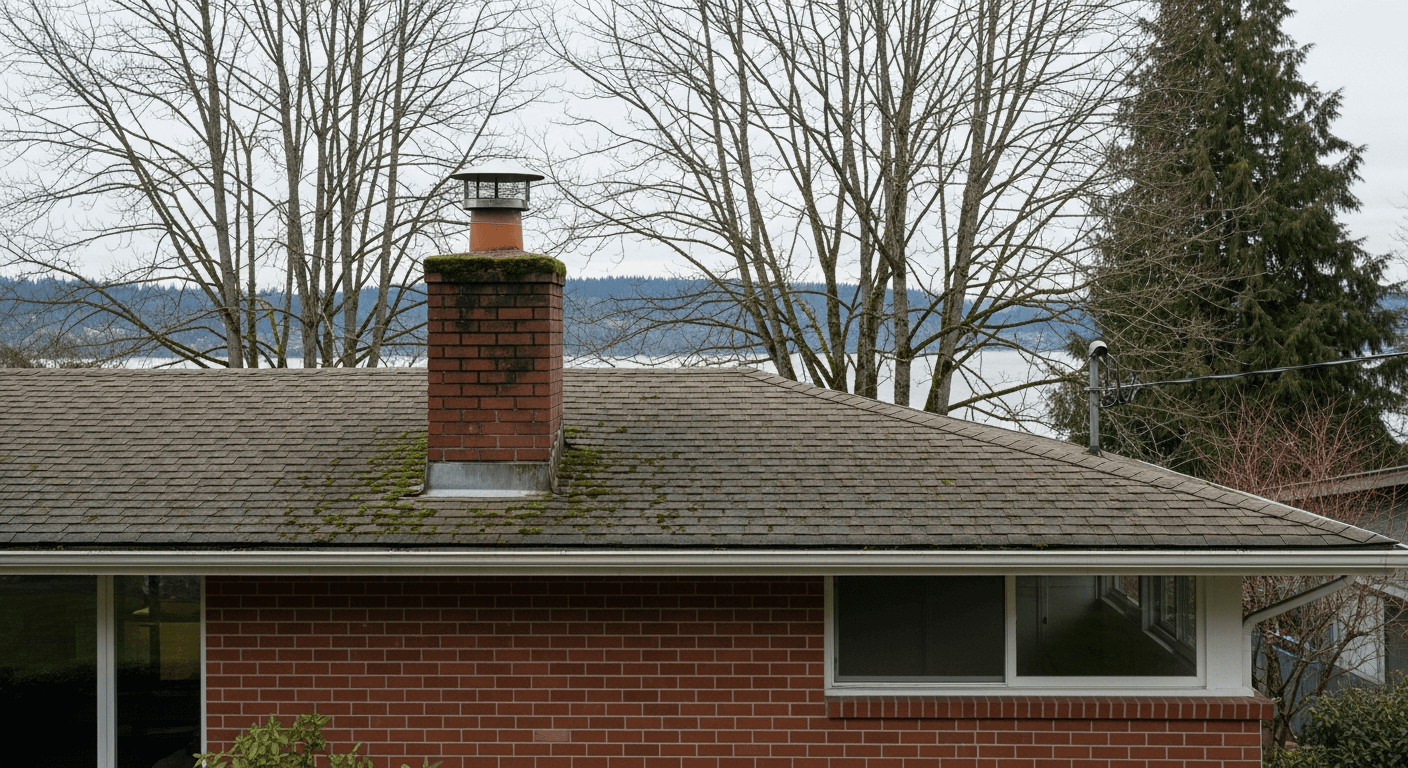
The chimney above the roofline still needs periodic attention, and in some ways needs it more after a gas conversion. A wood fire runs the upper flue hot and dry; a gas insert exhausts far cooler and wetter. The result is that chimney crowns on gas-converted chimneys in Kirkland's damp winters stay wet longer, accelerating moss growth and mortar-joint freeze-thaw cycling. We recommend an annual visual inspection of the crown, cap, and flashing — not because gas inserts create dramatic failures, but because the subtle moisture damage is easy to miss until it becomes a costly repair.
One item you can retire: the spark-arrestor chimney cap. You still want a cap — rain intrusion and nesting animals are real problems on any chimney — but it no longer needs a spark screen. Confirm that the new cap is sized to fit over the liner termination when installation is complete, not retrofitted from the old wood-burning setup.
Steps to Take Right Now Before the Next Burn Ban Season
Burn ban season on the Eastside runs roughly November through February, with the statistically highest-risk stretch in December and January when Puget Sound high-pressure systems stall and inversions settle over the Lake Washington basin. To have a gas insert running before that window, start the process by mid-October: equipment lead times from distributors and City of Kirkland permit processing together average three to four weeks, and that buffer disappears fast once the first cold front arrives.
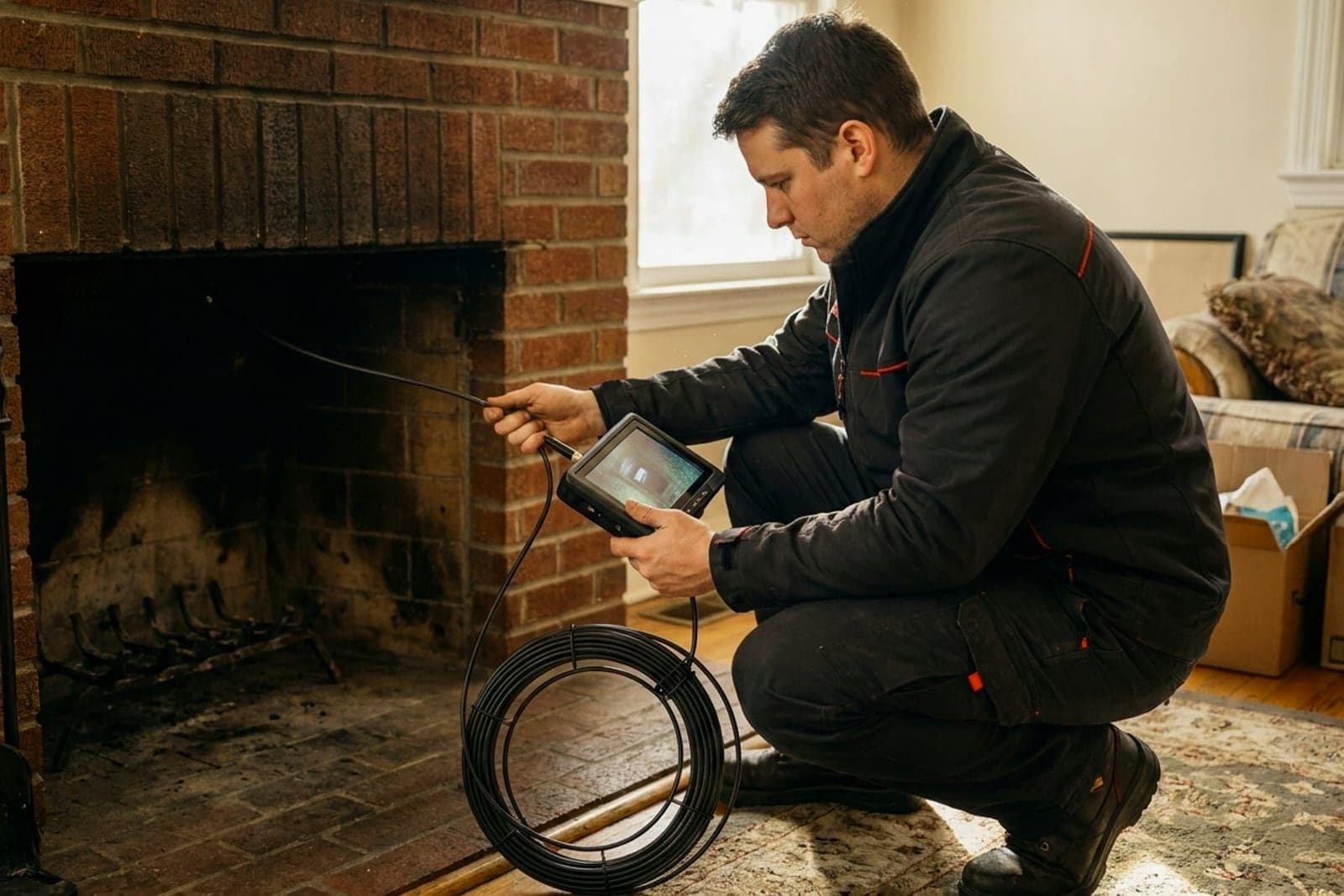
The right first step is a chimney inspection — specifically a Level 2 inspection if the fireplace has never been inspected or hasn't been inspected in more than three years. It confirms that the flue is sound enough to accept a liner and that your firebox opening dimensions are compatible with the insert models you're considering. Pair that with a gas line assessment from a licensed plumber; knowing whether a stub-out exists near the hearth is the single biggest cost variable in your project estimate.
In the meantime, sign up for PSCAA burn ban alerts at pscleanair.org — text or email, issued the evening before a ban takes effect — so you are never in the position of the Juanita homeowner described above. If you plan to burn wood this season while preparing for a future gas conversion, burn only dry, seasoned wood split and stacked for at least a full summer. Green or wet wood produces three to five times more particulate smoke than properly seasoned wood, which dramatically increases both your air quality impact and your visibility to neighbors who may file a complaint during a ban.
Frequently asked questions
Are gas inserts and gas fireplaces exempt from Puget Sound burn bans?
Yes, completely. PSCAA burn bans in the Kirkland and greater King County area apply only to wood-burning and solid-fuel appliances. Certified natural gas and propane appliances — including gas inserts and gas fireplaces — are not restricted at any ban stage, including Stage 2.
What is the fine for burning wood during a burn ban in Kirkland?
PSCAA fines for burning wood during an active burn ban in Kirkland start at $1,000 for a first confirmed violation. Inspectors respond to neighbor complaints and can issue citations on the same day a ban is active. Repeat violations carry higher penalties.
Do I need a permit to install a gas insert in Kirkland?
Yes. The City of Kirkland requires a mechanical permit for the gas appliance installation and a separate gas-piping permit if new line is run to the firebox. Your installer must pull both permits before work begins. Unpermitted gas work creates liability at resale and typically voids the appliance manufacturer's warranty.
How long does a gas insert last?
A quality gas insert installed in a Kirkland home typically lasts 15 to 25 years with annual servicing. The masonry firebox and chimney structure it sits in can last indefinitely with proper upkeep, so the switch to gas does not shorten the life of your chimney.
Can I convert back to wood burning after installing a gas insert in Kirkland?
Yes, but converting a Kirkland fireplace back to wood burning after a gas insert installation requires removing the insert and liner, a full flue inspection to confirm the flue meets wood-burning standards, and potentially repairing moisture damage accumulated during the gas-burning period — all of which adds significant cost. Given ongoing burn ban frequency and the convenience of gas, the overwhelming majority of Kirkland homeowners who make the switch do not convert back.
Related services