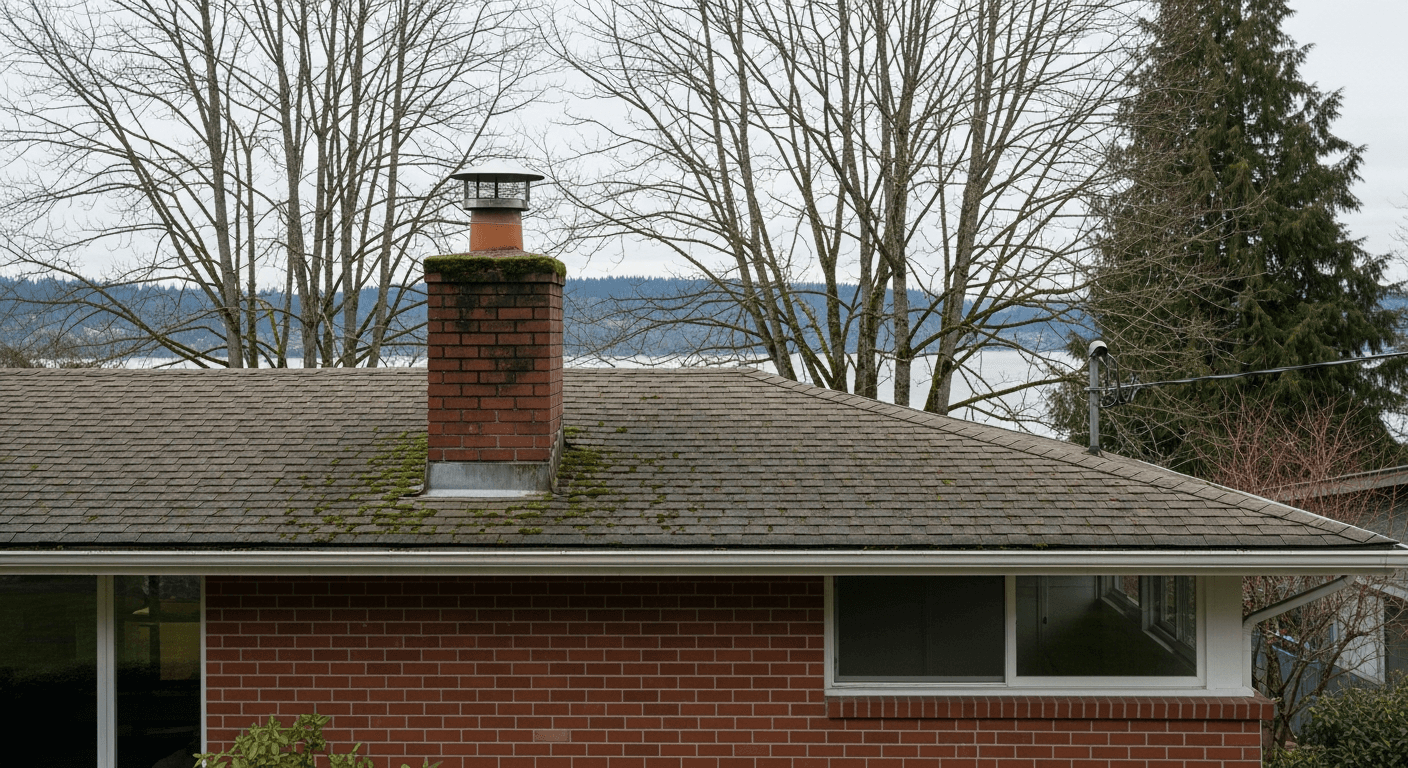
A standard chimney sweep in Kirkland, WA costs $149 to $299 for a wood-burning fireplace — and most repairs fall between $200 and $3,500, though full masonry rebuilds above the roofline can reach $6,000 or more. Those numbers reflect real Eastside conditions: persistent Puget Sound humidity, freeze-thaw mortar erosion, and creosote buildup that accelerates when homeowners delay service during extended Puget Sound Clean Air Agency burn bans.
What Is the Average Price to Sweep a Chimney in Kirkland?
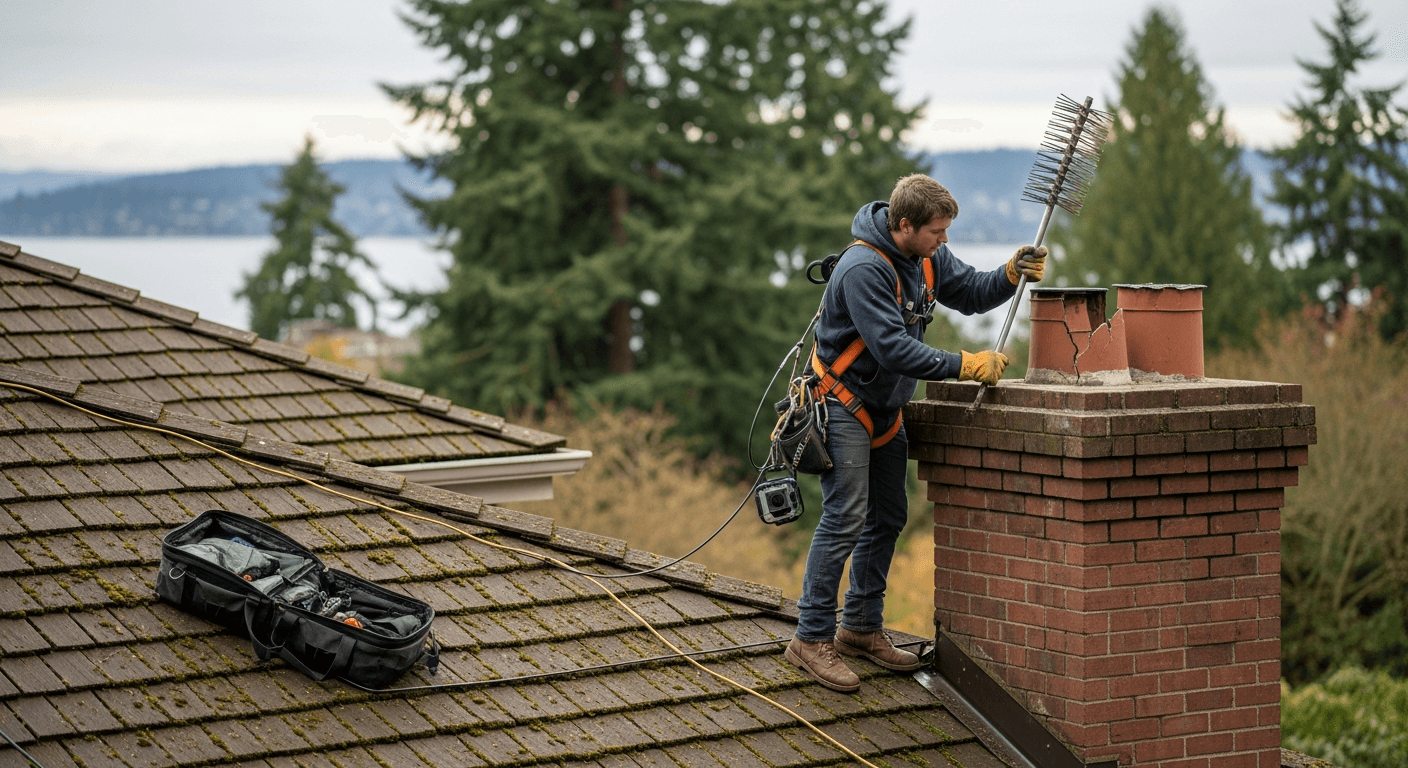
For a single wood-burning fireplace in Kirkland, a sweep-and-basic-inspection appointment typically runs $149 to $250. Gas fireplace inserts — common in newer construction in Juanita, Totem Lake, and along the Lake Washington waterfront — cost $99 to $175 to service, because gas appliances produce minimal residue and the cleaning is less labor-intensive.
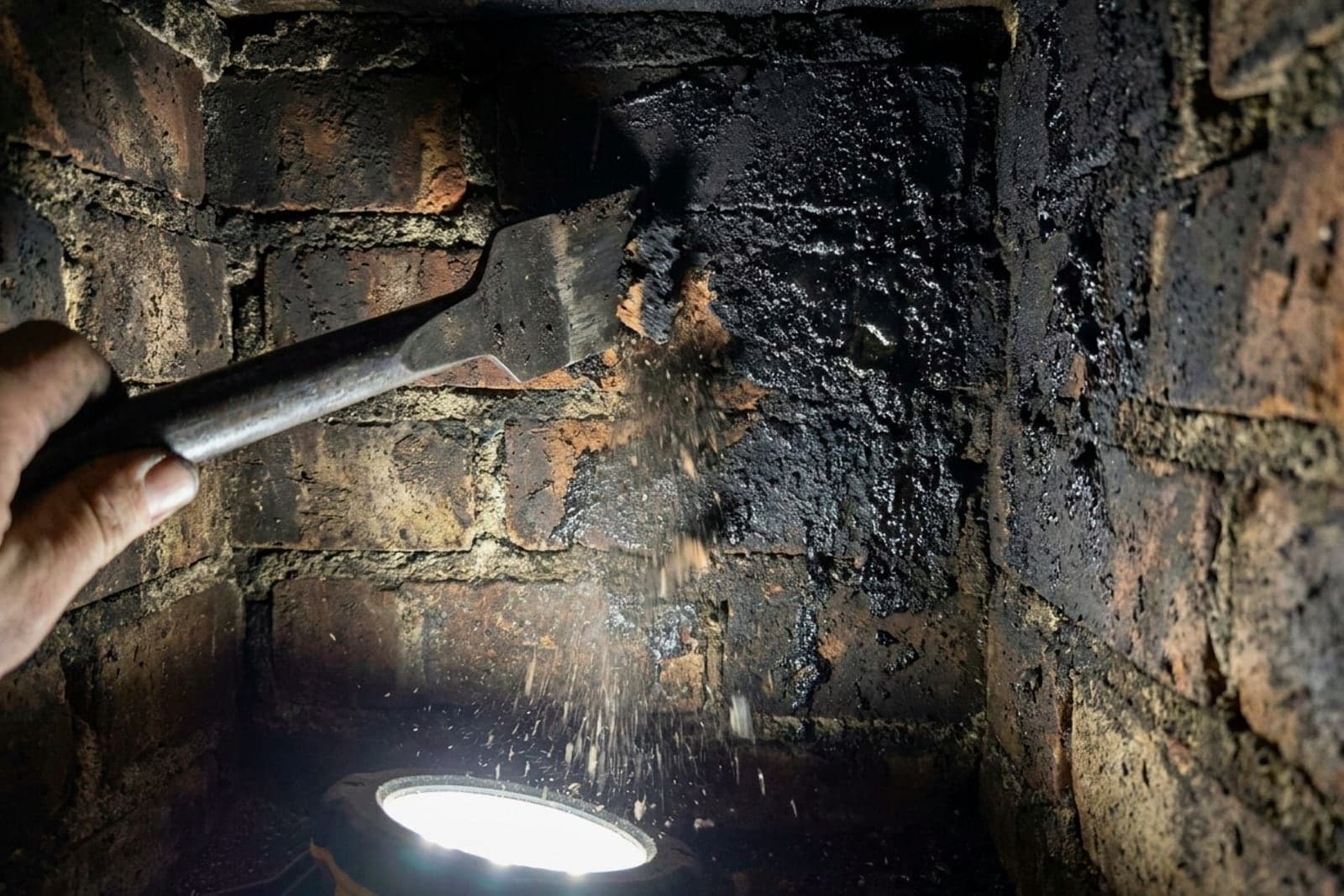
Prices climb when Kirkland's damp winters have been left to do their work. A home that went two or three seasons without service often has stage-two creosote — the tar-like glaze that bonds to flue tile and requires a chemical conditioning treatment before a brush can make contact. That treatment adds $75 to $150 to a base sweep price and cannot be skipped safely.
One honest note: if a quote sounds extremely low — $49 or $69 — it is almost always a loss-leader designed to get a technician in the door before upsells begin. A legitimate sweep that includes drop cloths, a camera inspection feed, and proper debris disposal cannot be done profitably at that price. Ask upfront exactly what the quoted amount covers before scheduling.
Kirkland Chimney Service Costs at a Glance
The table below reflects realistic price ranges for services requested most often by Kirkland homeowners. Actual cost varies based on chimney height, roof pitch, accessibility, severity of buildup, and materials. Treat these as honest local benchmarks.
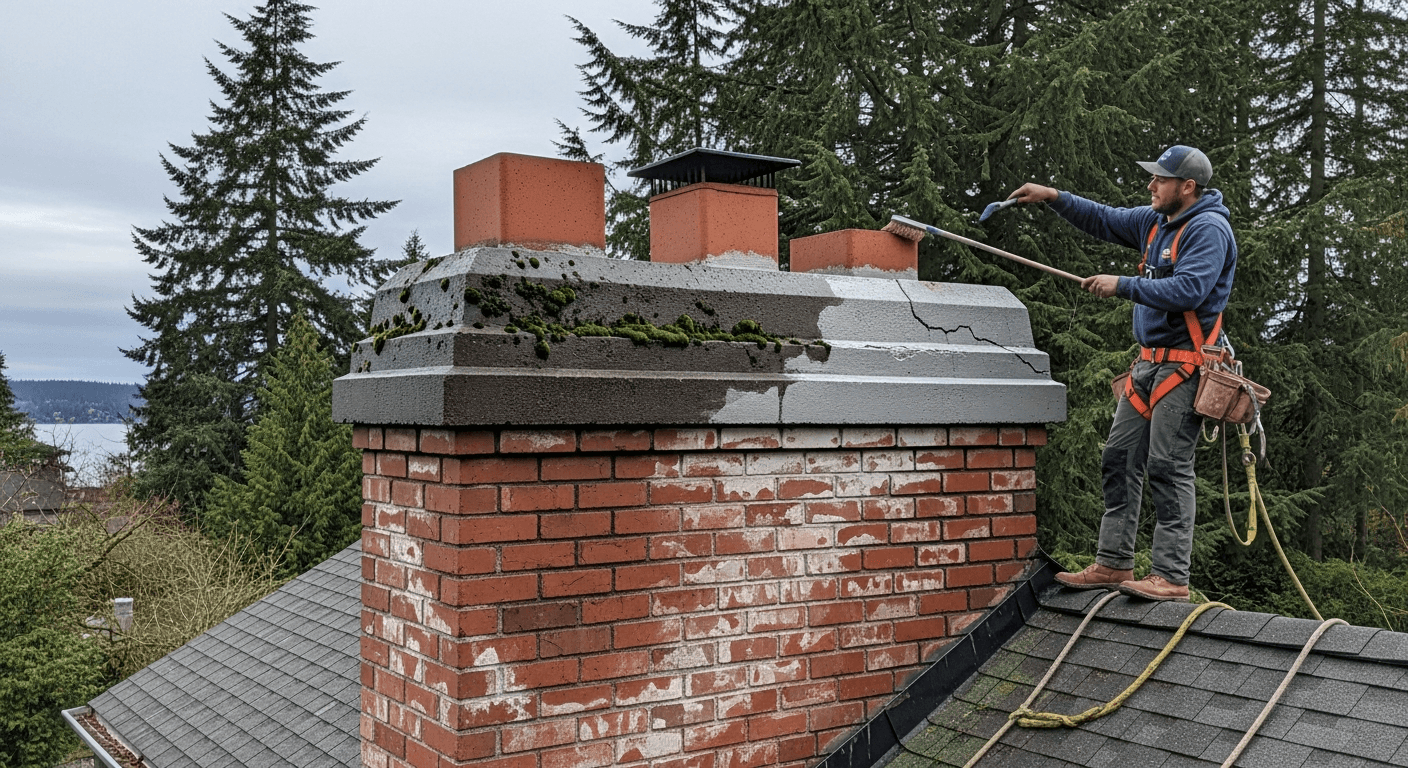
One factor that consistently pushes Kirkland repair estimates above national averages: moisture. The area's persistently humid air — even without salt — accelerates mortar erosion and moss growth on chimney crowns at a rate that surprises homeowners who moved here from drier regions. A crown that looks structurally sound from the ground can carry cracks deep enough to funnel water into the flue system. Repairs here frequently require more material removal and drying time before new mortar or sealant can bond correctly.
| Service | Typical Kirkland Price Range | Notes |
|---|---|---|
| Chimney sweep (wood-burning) | $149 – $299 | Includes basic visual inspection; add $75–$150 for stage-two creosote treatment |
| Chimney sweep (gas insert/fireplace) | $99 – $175 | Less residue; burner and valve check included |
| Level 2 video inspection (standalone) | $150 – $300 | Recommended at any home purchase or after a chimney fire |
| Chimney crown repair (patch) | $200 – $500 | Common on Kirkland homes 15–30 years old with freeze-thaw cracking |
| Chimney crown replacement (full pour) | $500 – $1,200 | Resolves moss-driven cracking that patching can no longer address |
| Flashing repair | $300 – $900 | High failure rate in wet Eastside winters; often misdiagnosed as a roof leak |
| Chimney cap installation (stainless steel) | $175 – $450 | Stainless preferred over galvanized in PNW humidity; extends liner life |
| Partial flue relining (flexible stainless liner) | $1,500 – $3,500 | Frequently needed after converting a wood-burning fireplace to a gas insert |
| Full masonry rebuild (above roofline) | $2,500 – $6,000+ | Depends on chimney height, brick sourcing, and roof-access complexity |
How Often Does a Chimney Really Need to Be Cleaned?
NFPA 211 — the national standard used by licensed chimney professionals — requires inspection at least once a year and a sweep whenever deposits reach 1/8 inch of creosote or any glazed buildup is present. That standard was written with good reason: creosote at that thickness is combustible enough to sustain a flue fire.
For a typical Kirkland household burning wood from October through March, an annual sweep before each burning season is the right rhythm. If you burn fewer than 40 fires per year or rely primarily on a gas insert, you can often extend the sweep interval to every two years — but the annual inspection remains non-negotiable, because flashing, crowns, and liner tiles deteriorate from weather whether or not you light a fire.
Puget Sound Clean Air Agency burn bans shift this calculus. During a ban-heavy winter when you burned only 10 or 15 fires, a full sweep may not be urgent — but a technician should still verify that moisture hasn't caused more structural damage than smoke residue during any long idle period. Condensation inside an unburned flue can accelerate liner cracking faster than active use.
The short version: inspect every single year without exception. Sweep at least annually if you burn wood regularly; every two years is acceptable for rare or gas-only users, with an annual inspection still required.
A Kirkland Homeowner Who Almost Overpaid — and What Changed
A homeowner in the Houghton neighborhood called us last November after a $79 advertised sweep had escalated to a $1,100 proposal. The out-of-area technician cited 'hazardous stage-three creosote' and recommended immediate full relining before the fireplace could be used again. Understandably alarmed, the homeowner wanted a documented second opinion before committing.
When we arrived, we found a 22-year-old wood-burning fireplace with moderate stage-one creosote — the dry, flaky deposit that a standard brush removes in a single visit — and a cracked chimney crown that had allowed minor moisture intrusion into the smoke shelf. The liner itself was intact. We swept the flue, confirmed liner condition with a camera inspection, and recommended a crown repair. The sweep and inspection came to $229. The crown repair, completed the following week, was $380.
The homeowner spent $609 instead of $1,100-plus, has a fully documented inspection record with camera footage, and knows precisely what to monitor next season. That is what a locally accountable chimney company delivers: an honest assessment of what is actually in front of us — no franchise performance targets, no upsell incentives tied to the size of the ticket.
Will Homeowners Insurance Pay for Chimney Repair?
Homeowners insurance sometimes covers chimney repairs, but coverage hinges entirely on the cause — not the cost. Insurers typically pay for sudden, accidental damage: a lightning strike that fractures the masonry, a windstorm that destroys a chimney cap, or fire damage that scorches a liner. Document the damage with photos immediately, preserve the scene before any cleanup, and obtain a written estimate from a licensed chimney professional before filing.
What insurance almost never covers is gradual deterioration — and that is where the overwhelming majority of Kirkland chimney work falls. Mortar joints that eroded over 20 wet winters, a crown that cracked slowly from freeze-thaw cycles, flashing that corroded from a decade of Eastside moisture: insurers classify these as maintenance failures, not insurable events, just as they would treat a roof that was never serviced.
One important leverage point homeowners often overlook: if a covered event such as a house fire damages your chimney and your insurer demands proof the liner was intact beforehand, a documented annual inspection record is precisely the evidence that protects your claim. Inspection reports create a timestamped paper trail that can mean the difference between a paid claim and a denied one.
If you believe damage is storm-related, contact your insurance agent before scheduling any repairs — photograph everything first, let the adjuster assess the scene, and request a written scope of loss. We routinely coordinate with adjusters and can provide detailed written findings to support your claim.
What Is the 3-2-10 Rule and Why It Matters for Kirkland Homes?
The 3-2-10 rule is the building-code minimum for safe chimney height relative to the surrounding roof. A chimney must rise at least 3 feet above the point where it exits the roof surface, and at least 2 feet above any portion of the roof or adjacent structure within a 10-foot horizontal radius. Those three numbers give the rule its name.
This matters in Kirkland for two compounding reasons. First, many Craftsman bungalows and mid-century homes in Rose Hill, Finn Hill, and the Norkirk neighborhood were built before current codes took effect and have chimneys that barely clear the ridge. A chimney that is too short creates persistent downdraft — cold air pushing back down the flue and rolling smoke into the living room, no matter how well the fireplace is cleaned. Second, the mature Douglas firs and big-leaf maples that overhang rooflines throughout the Eastside frequently encroach on the 10-foot radius, which can effectively require a chimney to stand taller than a strict reading of the rule would suggest.
If your fireplace has always smoked badly or the fire never draws cleanly, have a technician measure chimney height against the 3-2-10 standard before assuming the flue is dirty. A properly sized chimney extension can resolve in a single visit what years of routine sweeping never could.
Frequently asked questions
What does a chimney sweep cost in Kirkland, WA?
A wood-burning fireplace sweep in Kirkland runs $149 to $299, including a basic visual inspection. Gas fireplace and insert sweeps cost $99 to $175. Stage-two creosote — common when a fireplace has gone two or more seasons without service — adds a $75 to $150 conditioning treatment to any appointment.
How often should a Kirkland homeowner schedule chimney service?
Inspect every year without exception — Kirkland's wet winters degrade mortar, crowns, and flashing regardless of how often you burn. Sweep annually if you burn wood regularly (roughly 40 or more fires per season). Gas-only or infrequent burners can extend the sweep to every two years while keeping the annual inspection.
Does homeowners insurance cover chimney repairs in Washington State?
Insurance covers sudden, accidental damage — lightning strikes, windstorm destruction, fire damage. It does not cover gradual deterioration from moisture, freeze-thaw cycles, or deferred maintenance, which accounts for most chimney repairs in Kirkland. Annual inspection records serve as documentation that can support a future claim if a covered event occurs.
What is the 3-2-10 chimney rule, and does it apply to older Kirkland homes?
The 3-2-10 rule requires a chimney to stand at least 3 feet above its roof-exit point and at least 2 feet above any roof surface or structure within 10 horizontal feet. Many pre-1980 homes in Rose Hill, Finn Hill, and Norkirk fall short of this standard, causing chronic smoke rollback. Tall Eastside conifers overhanging the roofline can make the effective requirement even stricter.
Why do chimney repair costs in Kirkland sometimes exceed national estimates?
Kirkland's persistently humid Pacific Northwest climate accelerates mortar erosion, crown cracking, and flashing corrosion significantly faster than drier regions. Damage that might take 25 years to develop in a low-humidity climate can appear in 10 to 15 years here. Repairs also require additional drying and preparation time before new mortar or sealant can bond correctly, which adds labor.
Related services