A standard chimney sweep in Kirkland costs $149 to $299; a Level 2 inspection — required when buying a home or after any significant chimney event — runs $250 to $450. Whether your homeowners insurance will pay for chimney repairs depends almost entirely on one question: was the damage sudden, or was it the result of deferred maintenance? In Kirkland, that distinction matters more than most homeowners realize. Our wet winters — averaging 37 inches of rainfall annually — accelerate creosote buildup, crack chimney crowns through freeze-thaw cycles, and invite moss that slowly destroys mortar joints. When an adjuster can point to years without a cleaning or inspection as the root cause of damage, claims get denied. Staying current on maintenance is not just good fire safety practice — it is what keeps an insurance claim from being thrown out.
What Does a Chimney Sweep and Inspection Actually Cost in Kirkland?
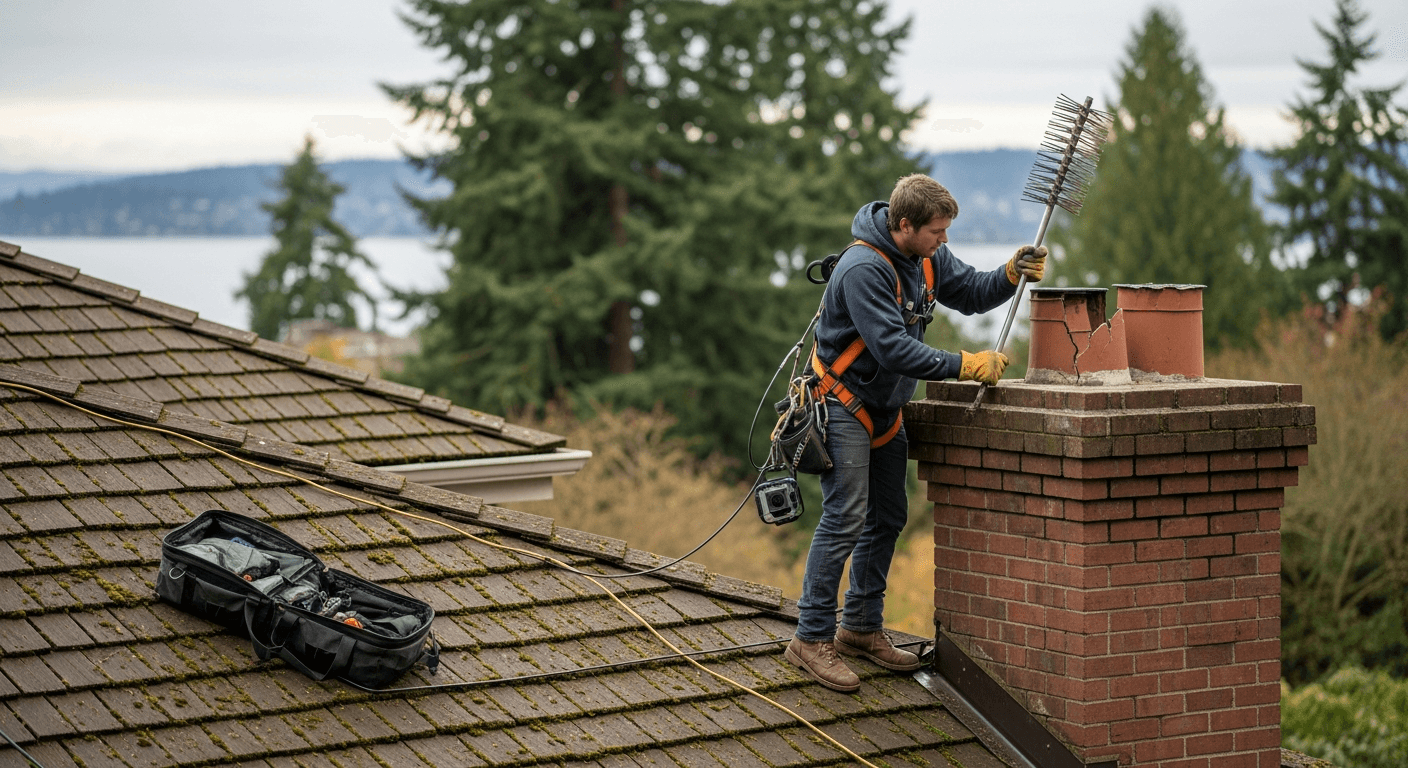
Pricing in Kirkland reflects the local market, system type, and scope of work. A Level 1 inspection paired with a sweep — the annual maintenance visit most homeowners need — generally falls between $149 and $299. That covers cleaning the firebox, flue, and smoke chamber, removing creosote deposits, and a visual inspection of all accessible components without special equipment.
A Level 2 inspection goes further. It includes a detailed camera scan of the interior flue and is required by NFPA 211 whenever a home changes ownership, after any chimney fire — including the small, fast-burning flue fires many homeowners never notice — or after a major weather event such as the ice storms that periodically affect the Eastside. Budget $250 to $450 for a Level 2 in Kirkland.
Level 3 inspections involve removing portions of the chimney structure to reach concealed areas and are reserved for cases where Levels 1 and 2 reveal a suspected hidden defect — a structural failure, a post-fire liner collapse, or persistent moisture migration with no identifiable source. They are rare and typically cost $1,000 or more. Most Kirkland homeowners will never need one.
System type affects pricing locally. Many Kirkland homes — particularly the craftsman and mid-century builds common in Juanita, Bridle Trails, and the older blocks off Market Street — have original brick chimneys that require more thorough cleaning due to rougher flue surfaces. Newer construction near Totem Lake and along the 405 corridor more often features prefabricated metal fireplace systems with gas inserts, which produce less creosote and generally price toward the lower end of the sweep range.
| Service | What's Included | Typical Kirkland Price Range |
|---|---|---|
| Level 1 Inspection + Sweep | Cleaning of flue, firebox, and smoke chamber; visual inspection of all accessible components; creosote removal | $149 – $299 |
| Level 2 Inspection (with camera) | All Level 1 checks plus interior camera scan of flue; required at home sale, after a chimney fire, or after a significant weather event | $250 – $450 |
| Level 3 Inspection | Destructive access to concealed areas; reserved for suspected major structural defects identified at Level 1 or 2 | $1,000+ |
| Sweep Only (no inspection) | Creosote and soot removal with a basic visual check; not a substitute for a full inspection | $99 – $179 |
| Gas Fireplace / Insert Inspection | Burner, venting, gas connections, and cap inspection for gas systems; minimal sweeping required | $125 – $225 |
| Dryer Vent Cleaning (add-on) | Lint removal from full vent run; frequently bundled at a discount when scheduled with a sweep | $89 – $149 |
Will Homeowners Insurance Actually Pay for Chimney Repairs?
The answer depends on cause, not cost. Standard Washington State homeowners policies typically cover chimney damage from sudden, accidental events: a windstorm that topples your chimney crown, a falling tree branch that fractures the masonry, or a fire that scorches the flue liner. If something fails fast and without warning, you likely have a legitimate claim worth filing.
What insurance almost never covers is damage from neglect, gradual wear, or deferred maintenance. If an adjuster finds that your flue liner has been slowly spalling over multiple seasons, that mortar joints eroded through repeated wet Kirkland winters, or that a chimney fire resulted from a thick creosote deposit that went uncleaned — that is a maintenance failure, not a covered peril. This distinction surprises many homeowners only after they file a claim and the adjuster asks for service records that do not exist.
Documented maintenance history is your strongest protection. Keeping receipts from annual sweeps and inspections creates a paper trail showing the chimney was actively maintained. When you file a claim for a genuine sudden event, that record makes it harder for the insurer to reframe the damage as neglect. No records, and even a legitimate sudden-event claim becomes harder to defend.
Washington homeowners should also check their policy's exclusions for chimney liner and masonry damage attributed to 'earth movement' — a relevant concern in a seismically active region. Call your agent and ask two direct questions: 'Does my policy cover chimney liner damage resulting from a chimney fire?' and 'Does it cover masonry cracking from freeze-thaw cycles?' Those answers will define exactly where your coverage begins and ends.
How Often Does a Chimney in Kirkland Really Need to Be Cleaned?
NFPA 211 calls for annual inspection of all chimneys and cleaning whenever buildup reaches one-eighth of an inch or more. For a Kirkland home with an actively used wood-burning fireplace, that standard almost always translates to once per year. The practical window is late summer or early September — after the off-season and before the Puget Sound Clean Air Agency's winter burn-curtailment periods complicate scheduling.
Frequency should track use and fuel quality, not just the calendar. A household burning four or five cords of wood per season needs cleaning more often than one lighting occasional weekend fires. More critically, firewood stored outside in Kirkland's wet winters without ground clearance and a waterproof cover will absorb enough moisture to burn at lower temperatures — producing heavier, stickier creosote per fire and filling the flue faster than the same volume of properly seasoned wood would.
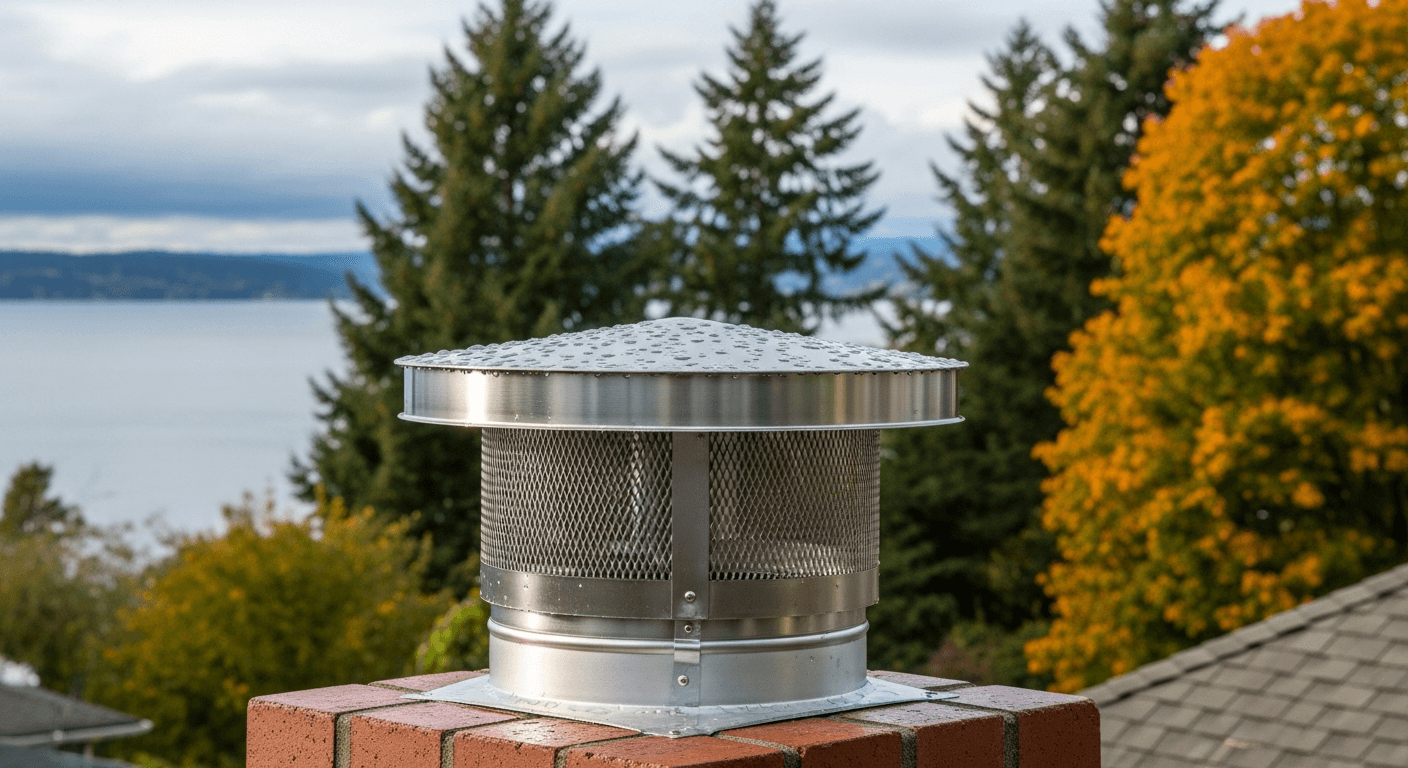
Gas fireplace owners often assume they can skip service because gas burns clean. The flue does stay cleaner, but the system still needs annual inspection to confirm the cap is free of bird nests and debris, verify venting integrity, and check gas connections and burner components for safe operation. Carbon monoxide intrusion from a cracked vent connector on a gas insert is an invisible risk that an inspection catches; skipping the visit because 'it's just gas' is one of the most common — and preventable — oversights we see on Kirkland service calls.
A practical local benchmark: if you burned wood more than 50 times last season, schedule a cleaning regardless of when you last had service. If a professional sweep was completed within the past year and noted minimal buildup, stretching to 18 months is reasonable. If you cannot recall the last service visit or it has been two or more years, book an appointment before the next burn season — even if you used the fireplace infrequently.
A Kirkland Homeowner's Experience: The Insurance Claim That Almost Got Denied
Last winter, a homeowner in the Juanita neighborhood contacted us after noticing a persistent smoke smell in their upstairs hallway and dark staining around the firebox that had appeared during the prior week. They had purchased the home two years earlier and used the wood-burning fireplace throughout both winters — but had never scheduled a sweep or inspection, assuming the previous owners had left the system in serviceable condition.
We performed a Level 2 inspection and found heavy third-degree glazed creosote coating the upper flue and a hairline crack in the terracotta liner consistent with a fast-burning flue fire that had likely occurred weeks earlier without the homeowner's awareness. Combustion gases had been migrating into the wall cavity through the crack. The homeowner filed an insurance claim the same day.
The adjuster's first request was for the chimney's service history. The homeowner had none — no receipts, no prior inspection reports, nothing from the home purchase two years earlier. The insurer flagged the claim for deferred-maintenance review rather than immediate approval, citing the heavy creosote deposit as evidence the system had not been maintained.
We provided our full Level 2 inspection report documenting the crack's characteristics, its likely progression timeline, and the homeowner's account of moderate but regular use. After several weeks of back-and-forth, the insurer approved partial coverage for the liner repair under the fire damage provision. The relining cost $2,800. Had the claim been denied entirely, it would have come fully out of pocket — and the homeowner would still have needed the repair to use the fireplace safely. A single prior inspection receipt, costing roughly $200, would very likely have prevented the weeks of uncertainty. That is the real cost of skipping annual service.
What Kirkland's Climate Does to Chimneys — And Why It Affects Your Costs
Kirkland averages about 37 inches of rainfall per year, and the combination of sustained winter moisture, occasional hard freezes, and persistent cloud cover creates chimney wear patterns that are specific to this climate. Understanding them helps homeowners anticipate costs rather than react to them.
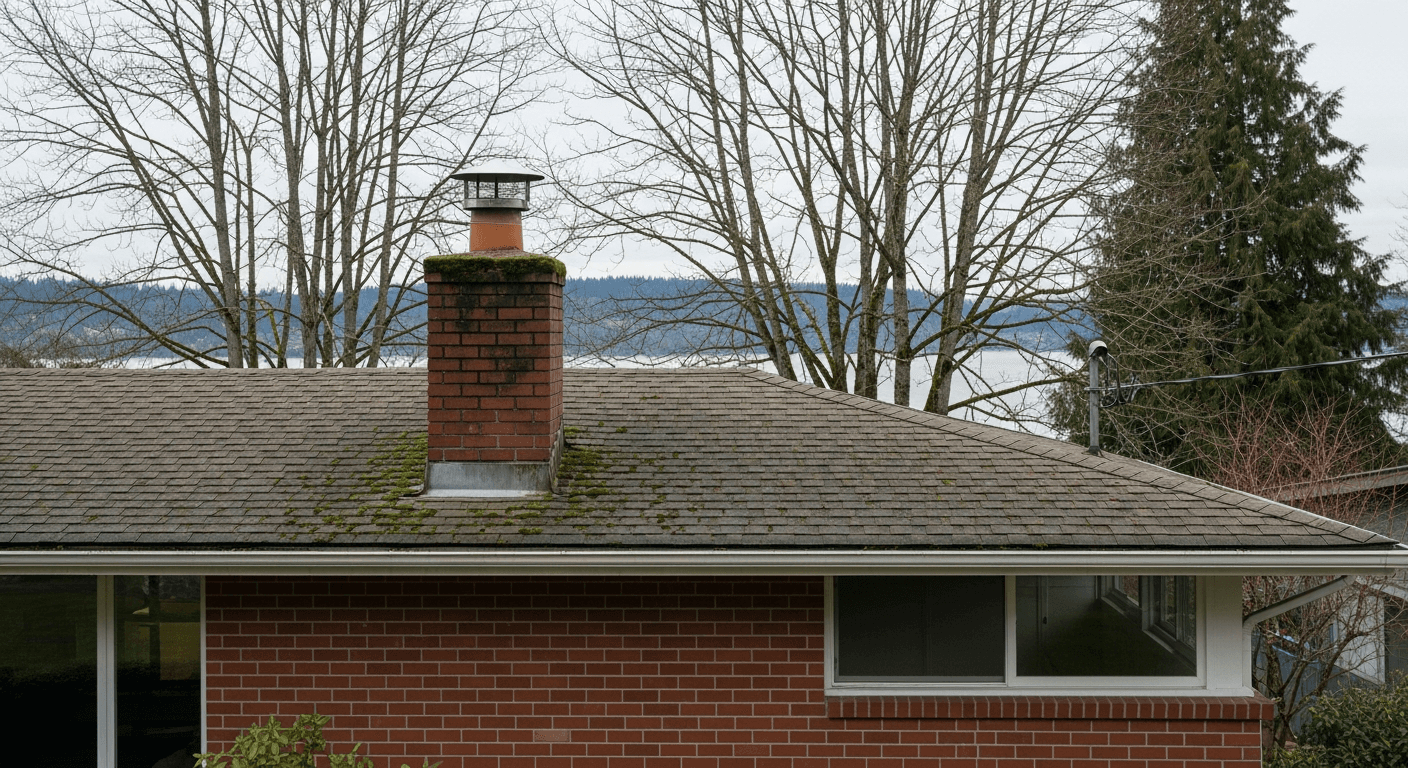
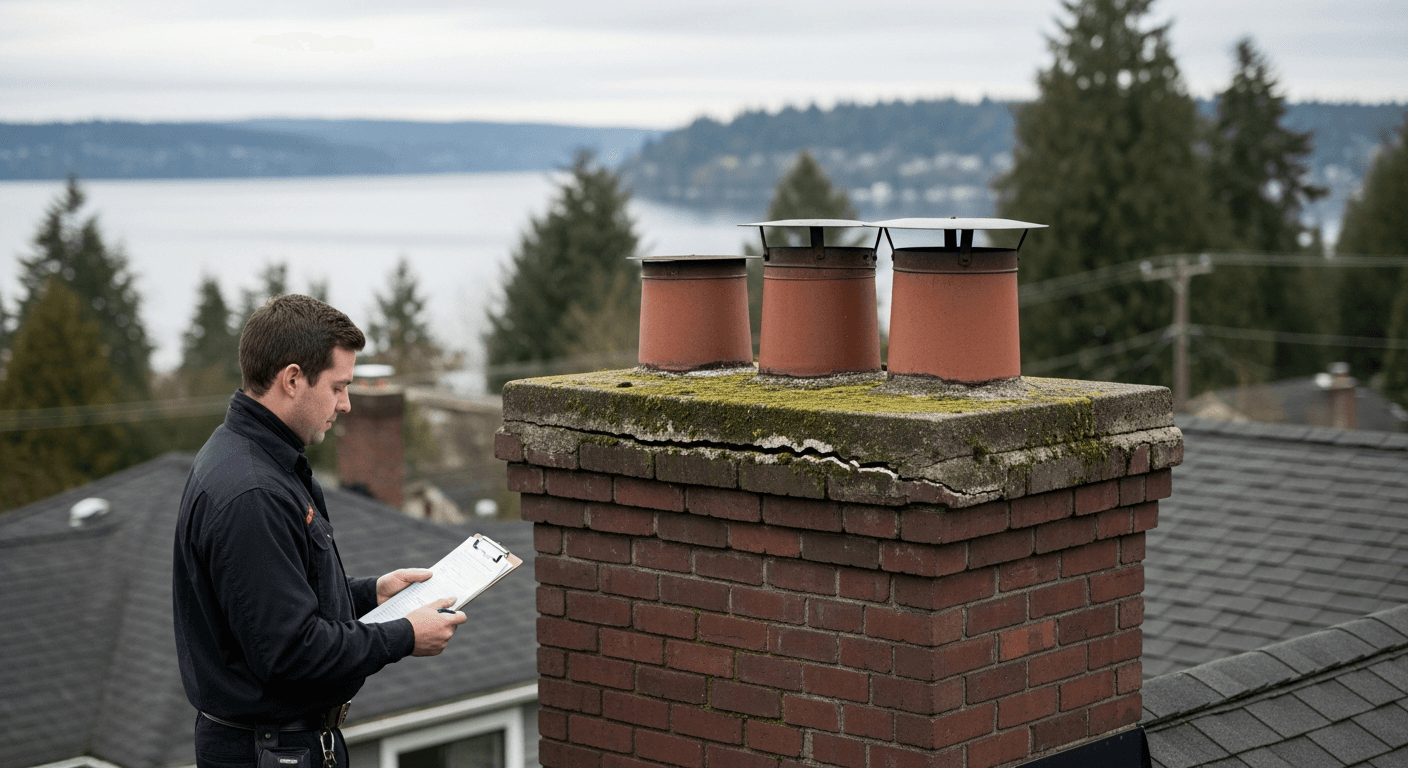
Chimney crowns — the concrete cap poured across the top of the masonry — absorb water throughout Kirkland's rainy season. On the handful of nights per year when temperatures drop below freezing, that absorbed water expands inside hairline pores and the crown cracks. Moss and algae, which thrive in constant dampness, colonize the crown and upper brick courses; their root systems progressively widen mortar joints. This pattern is especially common on homes near Lake Washington and in the older neighborhoods off Market Street, where original brick chimneys have had decades to accumulate damage.
The practical cost implication: budget for chimney crown inspection and waterproofing treatment every three to five years, on top of annual sweeps. A minor crown crack caught early costs $150 to $300 to seal. Left unaddressed for another wet season, the same crack can require full crown replacement at $400 to $800 — or allow water intrusion into the firebox and smoke chamber, where repair costs climb into the thousands.
Kirkland's damp climate also affects creosote character. Firewood that absorbs moisture during outdoor winter storage burns at lower combustion temperatures, producing heavier, more tar-like creosote that adheres more stubbornly to flue walls than the drier, flakier deposits typical of low-humidity climates. Properly seasoned hardwood stored off the ground under cover is not a minor preference — it measurably reduces cleaning frequency and creosote severity, with a direct effect on both your service costs and your fire risk.
Frequently asked questions
What does a chimney sweep cost in Kirkland, WA?
A standard sweep with a Level 1 inspection runs $149 to $299 for a wood-burning fireplace in Kirkland. Gas fireplace inspections typically cost $125 to $225. Final pricing depends on system type, amount of creosote buildup, and access conditions.
What does a Level 2 chimney inspection cost in Kirkland?
A Level 2 inspection costs $250 to $450 in the Kirkland area. It includes a camera scan of the interior flue and is required when buying or selling a home, after any chimney fire, or after a significant weather event that may have affected the chimney structure.
Will my homeowners insurance pay for chimney repairs?
Washington homeowners policies generally cover chimney damage from sudden events — windstorms, falling trees, or fire. They do not cover damage from neglect, gradual wear, or deferred maintenance. If you have no service history and the damage appears maintenance-related, the claim may be denied or reduced. Annual inspection receipts are the documentation that keeps a legitimate claim on solid ground.
How often should a Kirkland chimney be cleaned?
NFPA 211 requires annual inspection and cleaning whenever buildup reaches one-eighth of an inch or more. For active wood-burners in Kirkland, that means once a year — ideally late summer before burn season. Light users may safely extend to 18 months between cleanings, but two or more years without service is not advisable regardless of how little the fireplace was used.
Does a gas fireplace in Kirkland need an annual inspection?
Yes. Gas fireplaces produce minimal creosote, so sweeping is limited — but annual inspection is still necessary to check for vent blockages, confirm gas connections are intact, and verify the system is venting combustion gases safely. An undetected cracked vent connector on a gas insert is a carbon monoxide risk that only an inspection will catch.
Related services